Garage Door Repairs for Algonquin's 1990s-Built Homes
Most Algonquin homes date to the early 1990s and still run original torsion springs. Mundelein Garage Door Pros travels 18 miles to repair or replace them.
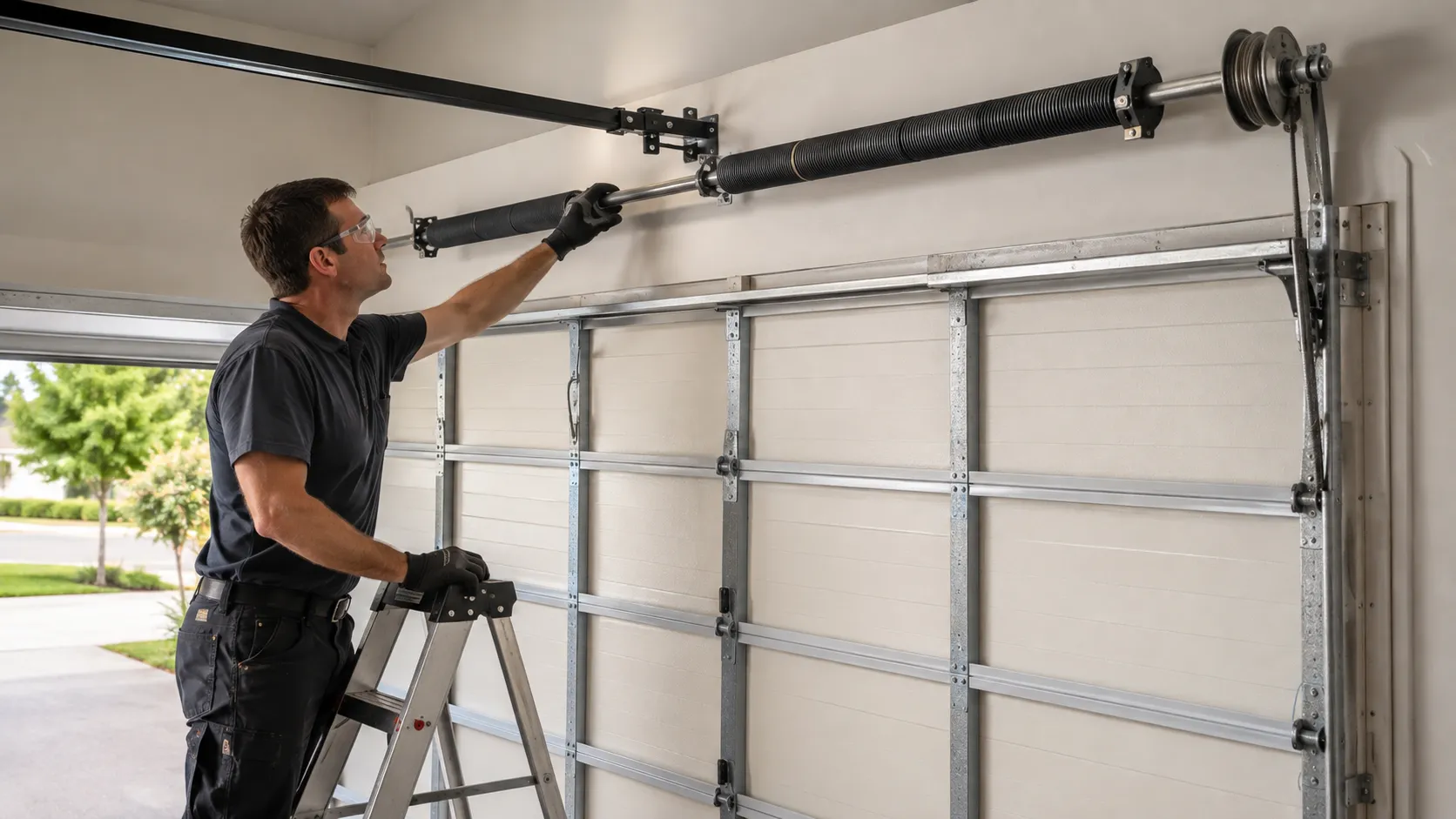
A house in Algonquin built around the median year here, 1994, is now roughly thirty years old. That matters because a lot of what's holding the door up was never touched after the builder walked off the job. The torsion spring, the cable drum, sometimes even the opener itself - all original, all rated for a cycle count that's now been used up or close to it.
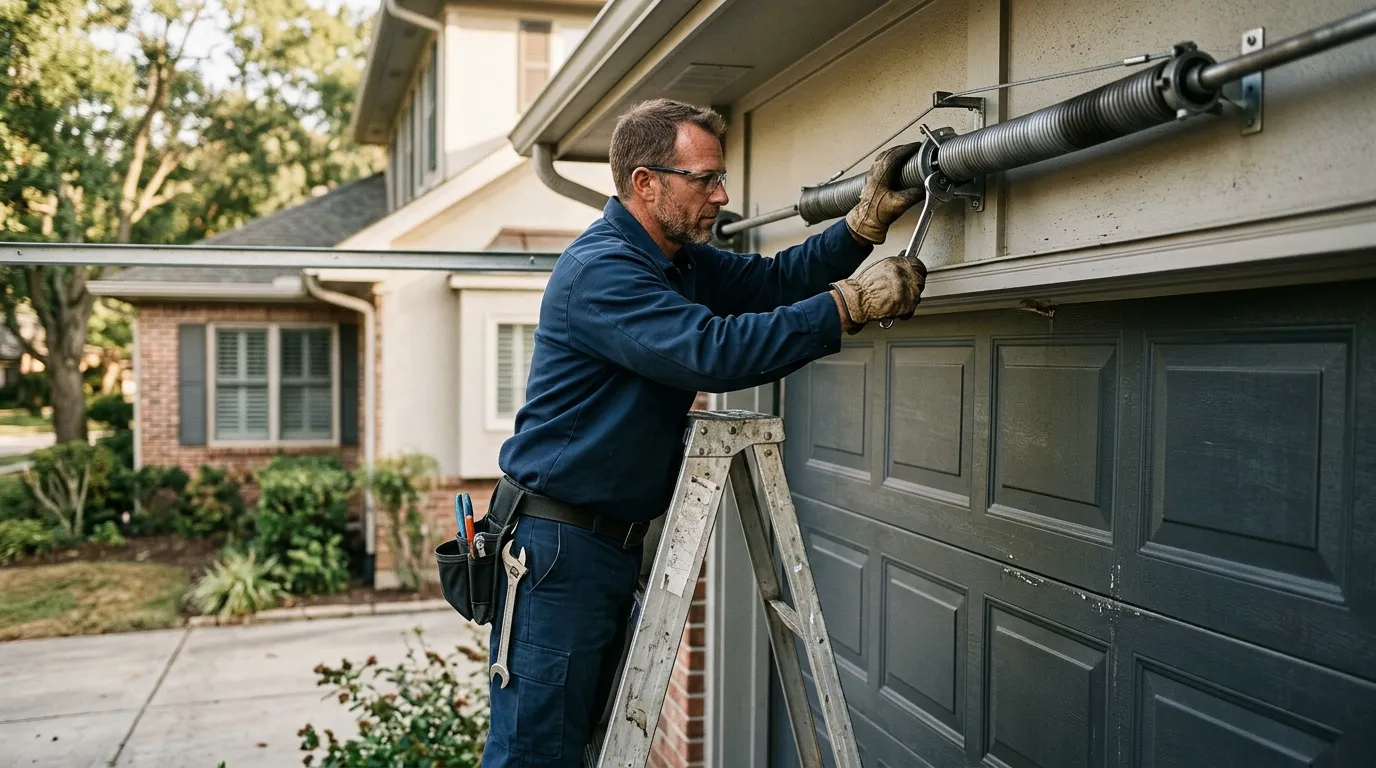
That's the reason we don't love blanket DIY advice for a house this age. Swapping a remote battery or clearing a track of debris, fine, do it yourself. But a torsion spring that's thirty years old isn't a part you want to wind by hand in your own garage - the failure mode is sudden and the spring is under enough tension to break a bone or crack a windshield if it lets go while you're working on it.
Where DIY makes sense is diagnosis, not repair. If the door is slow to respond, if it reverses partway up, if the opener grinds before it lifts - that's useful information to have ready when you call, and it can save a wasted trip. But once you're looking at a spring, a cable, or the drum itself on a house this age, that's a job for someone standing next to it with the right bar and the right winding cone.
Getting It Booked In
We run out of Mundelein, and Algonquin sits about 18 miles out - farther than most of the towns we cover day to day. That distance doesn't change what we can fix, but it does mean we're not the outfit to call if you need someone standing in your driveway inside the hour. We schedule the drive, we don't wing it.
What that means in practice: when you call, tell us what the door is doing, not just that it's "broken." A door that won't open and a door that opens crooked are two different jobs needing two different things in the truck, and knowing which one it is before we make the trip means we show up with the part instead of showing up to look at the part.
The honest limitation here is lead time on less common parts. Most torsion springs and standard openers we carry stock for. Some older or less common drum sizes and track hardware - the kind of thing that shows up more on original 1990s installs than on anything newer - sometimes take an extra day to source. We'll tell you straight if that's the situation rather than guess and leave you waiting on a promise we can't keep.
What You Are Seeing
This area sits in a severe cold climate band, and cold is hard on garage door hardware in specific, predictable ways. Steel springs lose a little tension as temperature drops, so a spring that's borderline in October can fail outright in January. Nylon rollers on original 1990s doors get brittle and start cracking around the same time. Opener gear sets bind up when grease that's decades old thickens in the cold.
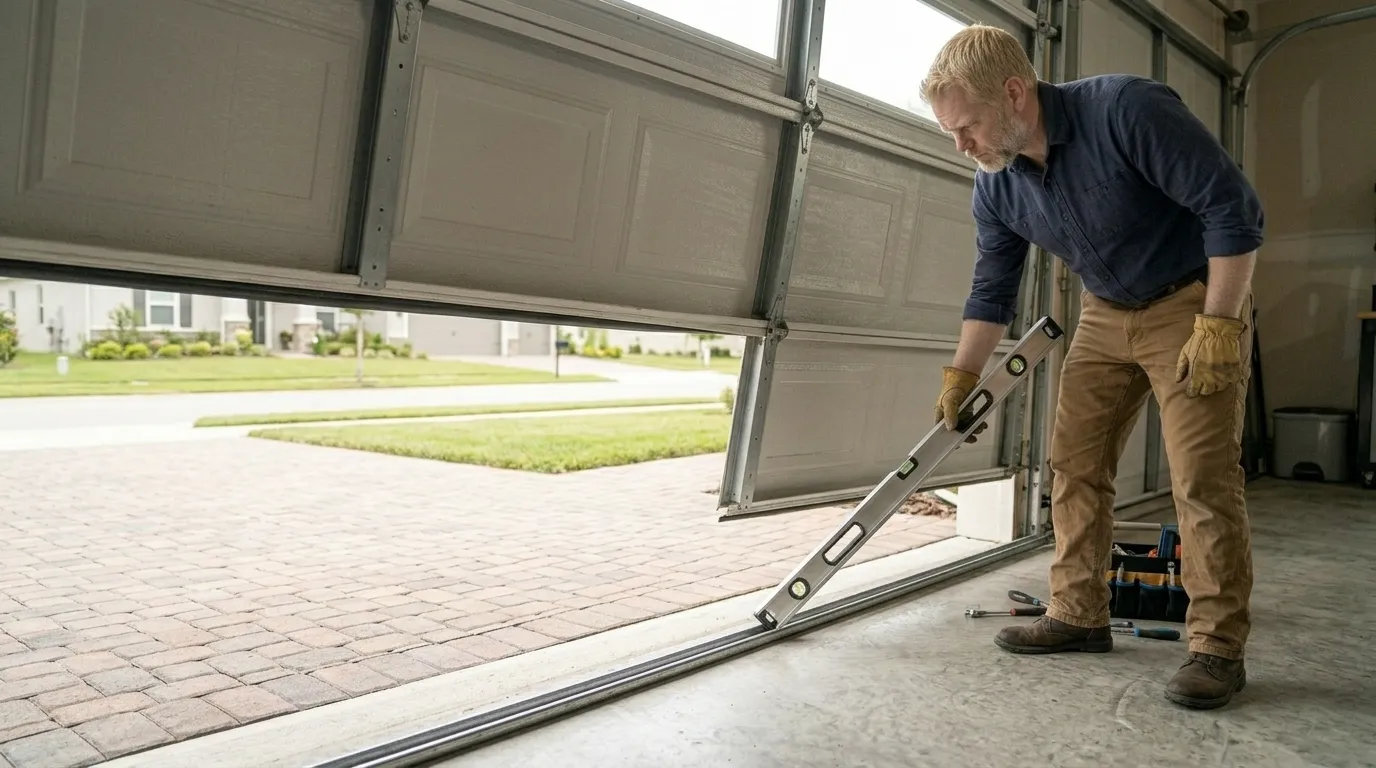
What that looks like at your door: it hesitates before it starts moving, or it starts and then stalls halfway. The opener light blinks a code you don't recognize. The door closes unevenly, one side dragging low. None of that is unusual for a door built when Algonquin's housing stock went up - the hardware is doing what thirty-year-old hardware under seasonal cold stress does.
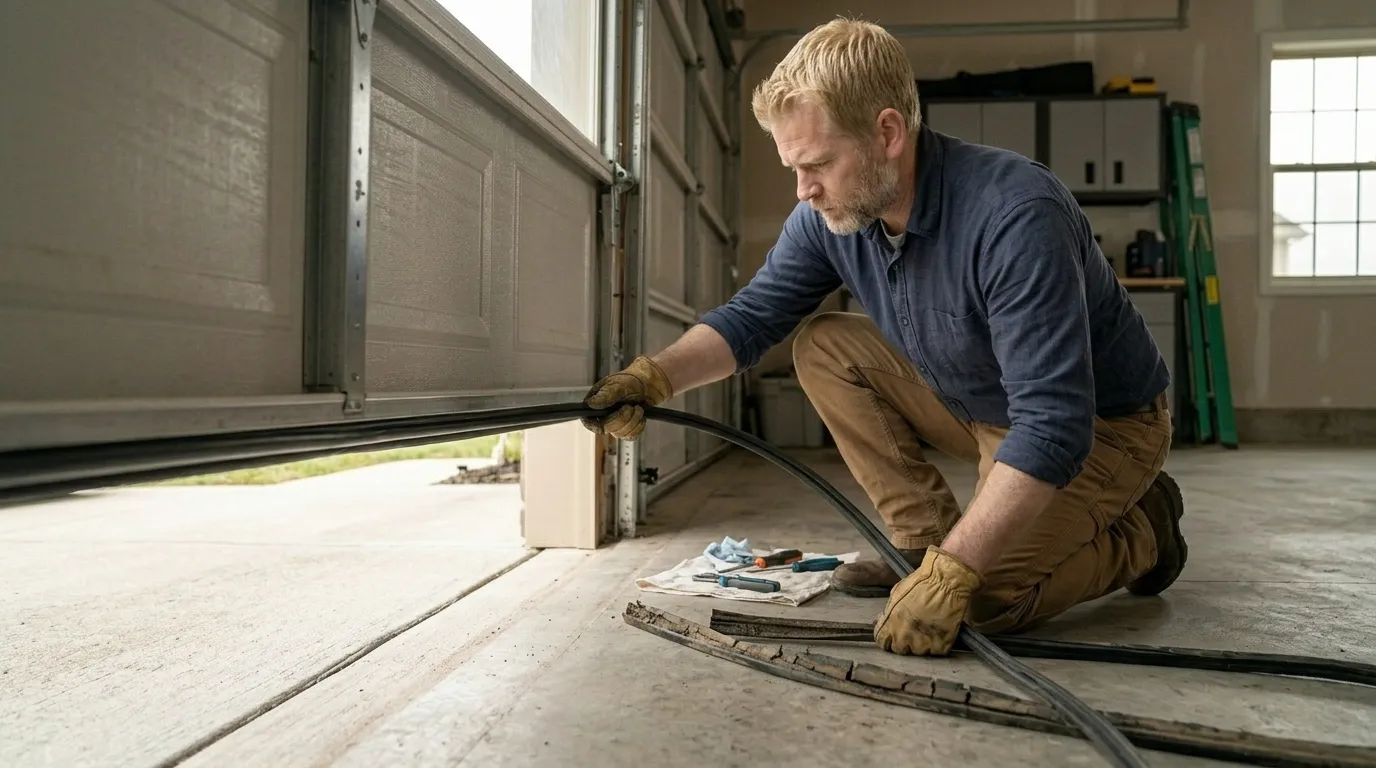
We'd also flag: a door that's merely noisy isn't necessarily failing. A dry hinge squeal is a five-minute fix with the right lubricant. What we're watching for is the difference between noise and a part actually giving out - and on a house this age, both show up more than they would on newer construction.
Why This Fails Locally
Algonquin's 10,914 households are a small piece of the 213,471 across the whole area we cover, and the median household income here, $131,753, runs above the wider area's $121,583. That gap matters for one practical reason: homeowners here are more likely to choose full replacement over patch repair once a door starts failing in more than one place at once, rather than stretching a repair further than it's worth.
The housing stock itself is the bigger story. Most of the 67 named areas we serve carry 1980s-90s construction, and Algonquin's 1994 median build year sits right in that band - a decade newer than the area-wide median of 1984, but still old enough that original hardware is at or past its working life. A spring rated for a set number of open-close cycles doesn't care what the house is worth; it cares how many times it's been wound and released.
Where this actually fails locally: an original spring sized for a lighter door doesn't hold up if the door was ever swapped for a heavier insulated panel without a matching spring upgrade. We see that mismatch more on 1990s builds than on newer ones, because that's when a lot of upgrade work quietly happened without touching the hardware underneath it.
How it works
From “it’s stuck” to “it’s fixed”
01
Tell us what’s wrong
Describe the symptom - won’t open, loud bang, opener runs but the door won’t move.
02
On-site diagnosis
A technician tests the door under power and by hand and finds what actually failed.
03
Clear, up-front plan
You get the fix that’s needed and what drives the cost - before any work starts.
04
Repaired & tested
The repair is done, the door is set true and tested, and the work area left clean.
Serving Mundelein, IL - tell us what your door’s doing and we’ll take it from there.
How old are most garage door parts in Algonquin homes?
Algonquin's median home was built around 1994, so original torsion springs, drums, and sometimes openers are approaching thirty years old. Most spring types have a rated cycle life that a door this age has usually reached, which is why spring failure is one of the more common calls we get from houses built in this window.
How far out is Algonquin from your shop?
About 18 miles from Mundelein. We schedule the trip rather than treat it as a drop-in stop, so it helps to describe what the door is doing when you call - that lets us bring the right part instead of making a second trip.
Do you keep parts in stock for older 1990s doors?
Standard torsion springs and common opener models, yes. Some older drum sizes and less common track hardware occasionally take an extra day to source. We'll tell you upfront if that's the case rather than guess at a timeline we can't back up.
Is it ever better to replace than repair?
On a door this age, if you're looking at a spring failure plus cracked rollers plus a tired opener all at once, replacement often costs less over time than repeatedly patching original hardware from a 1990s build. We'll walk you through the actual comparison rather than push one option by default.
Ready to get your garage door sorted?
Tell us what it’s doing and where you are in Mundelein - we’ll take it from there.