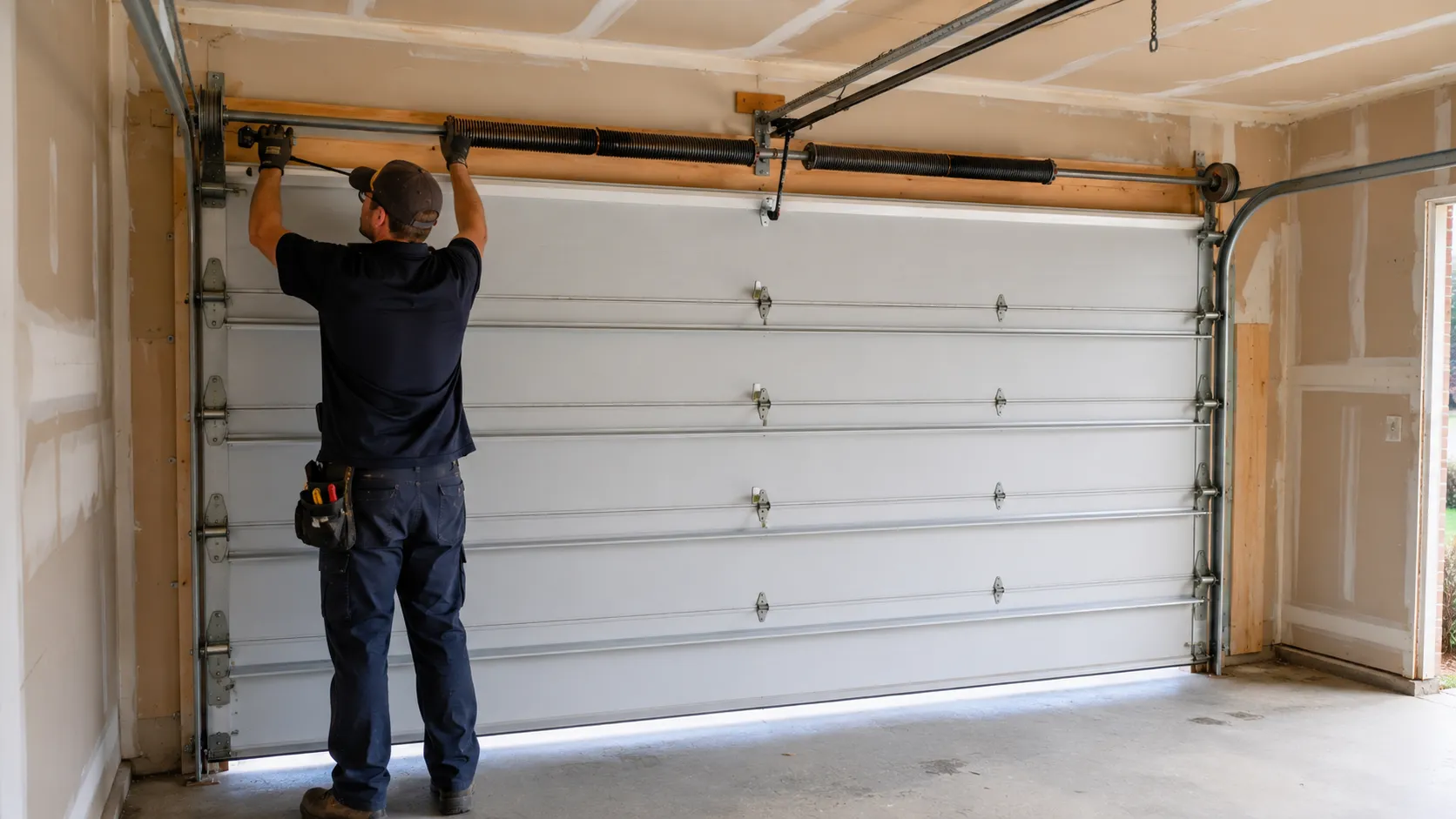
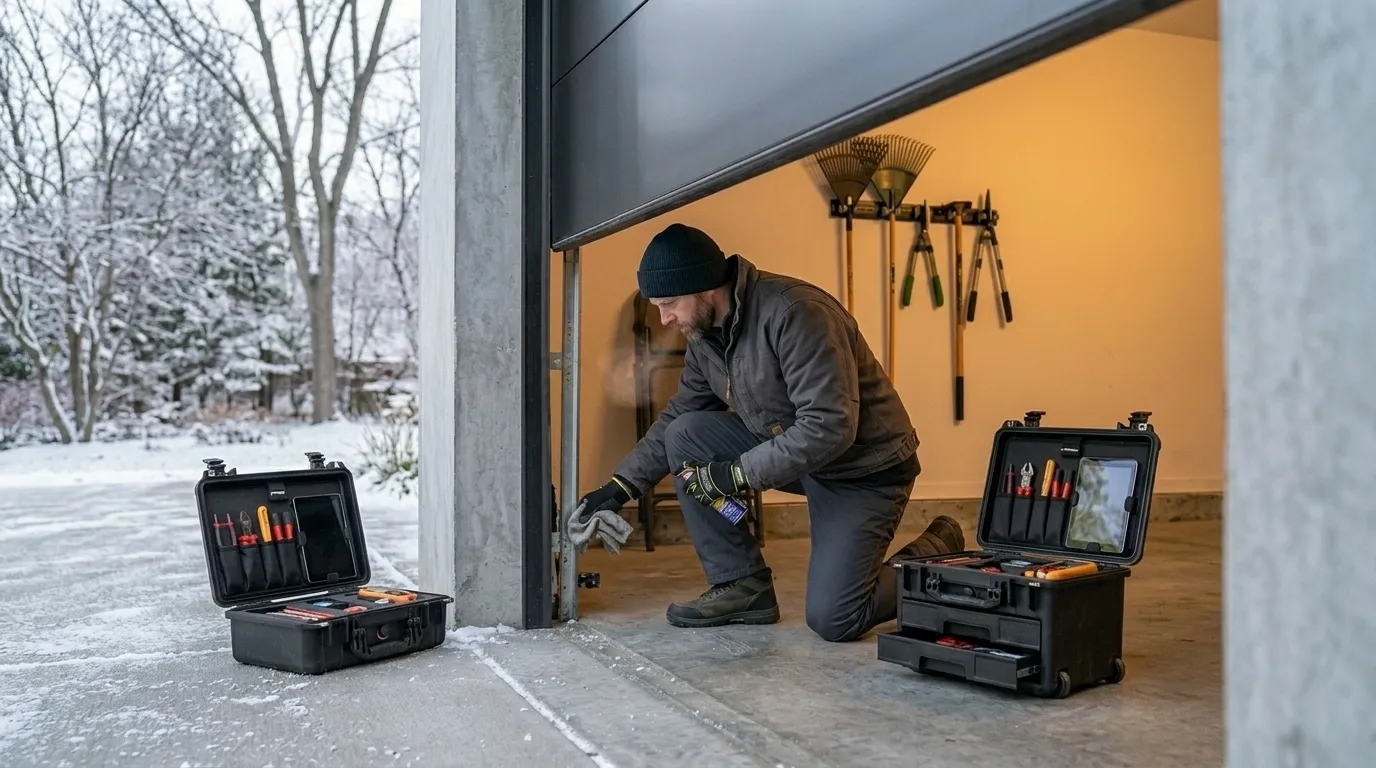
Opener repair for Mundelein homes built mostly in the 1980s and 90s, where cold winters and aging circuit boards are the top cause of dead or erratic openers.
We're not going to throw a number at you before we've seen the opener, because opener repair covers a wide range of jobs. A dead circuit board, a stripped gear, a failing logic board from a chain-drive unit installed when the house was built, and a safety-sensor alignment problem are four different repairs with four different price tags. What we can tell you is what drives the cost: whether the motor itself still runs, whether the drive gear or belt has worn out, and whether the opener is old enough that parts are getting hard to source. Homes in this service area were built anywhere from 1938 up through 2009, with most construction landing in the 1980s and 90s, so we see a lot of openers from that era still in service, or replaced once already with a newer unit that inherited the original wiring. If your opener is original to a house from that window, we'll tell you straight whether it's worth repairing or whether you're better off replacing the unit outright. We'd rather give you that honest read on-site than quote a number over the phone that doesn't hold up once we're looking at the actual board.
What You Are Seeing
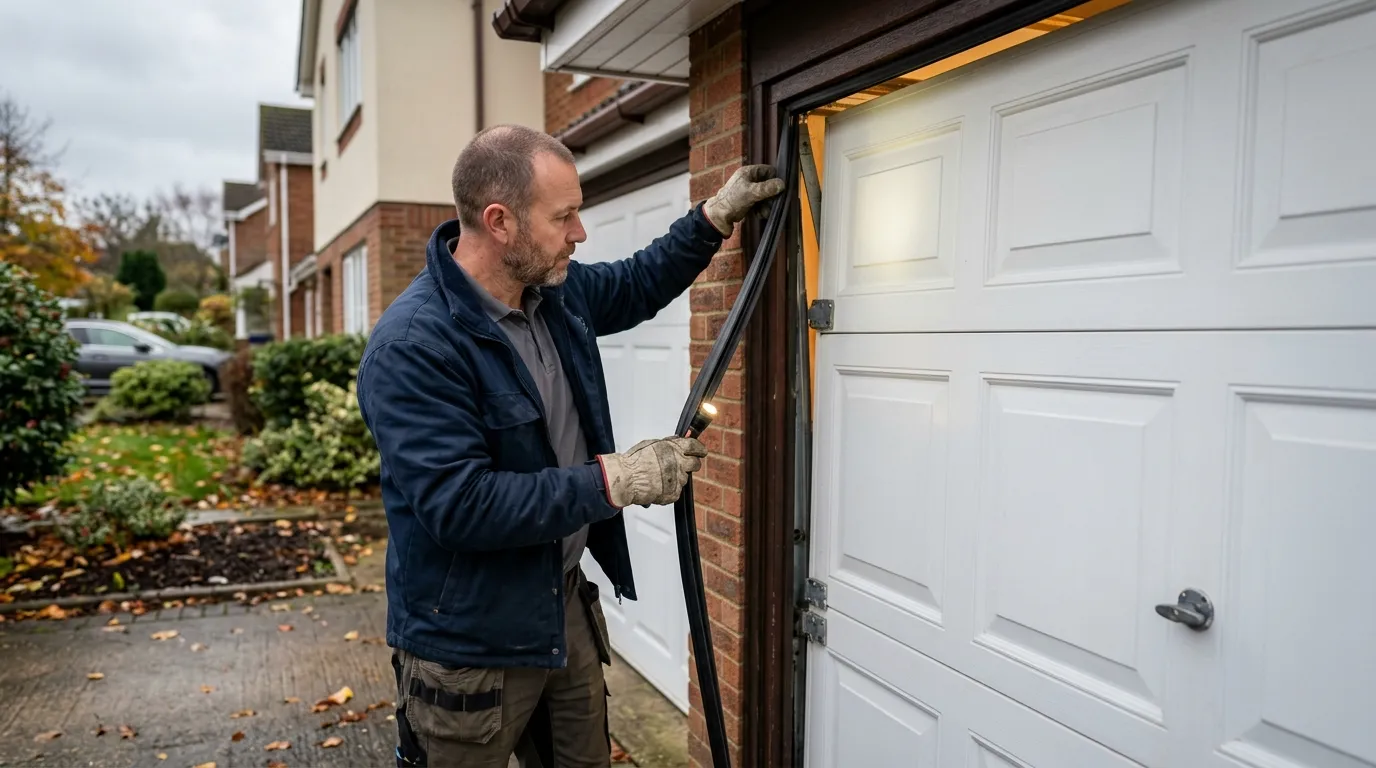
The most common call we get is a door that won't respond to the remote or the wall button at all, or one that starts to open and then stops partway with a click and nothing else. Sometimes it's a light that blinks a set number of times, which is the opener trying to tell you what failed. Other times the door reverses on its own before it touches the floor, which usually points to the safety sensors near the bottom of the track rather than the opener itself. In a lot of the 1980s and 90s houses across this area, we also see chain-drive openers that have simply worn out their gear after decades of use, grinding instead of pulling smoothly. Circuit boards are the other big failure point, especially once they're past 15-20 years old, since the capacitors on those boards degrade with age and with temperature swings. None of these symptoms mean the same repair every time, which is why a phone description only gets us so far before we need eyes on the unit.
Time on the Job
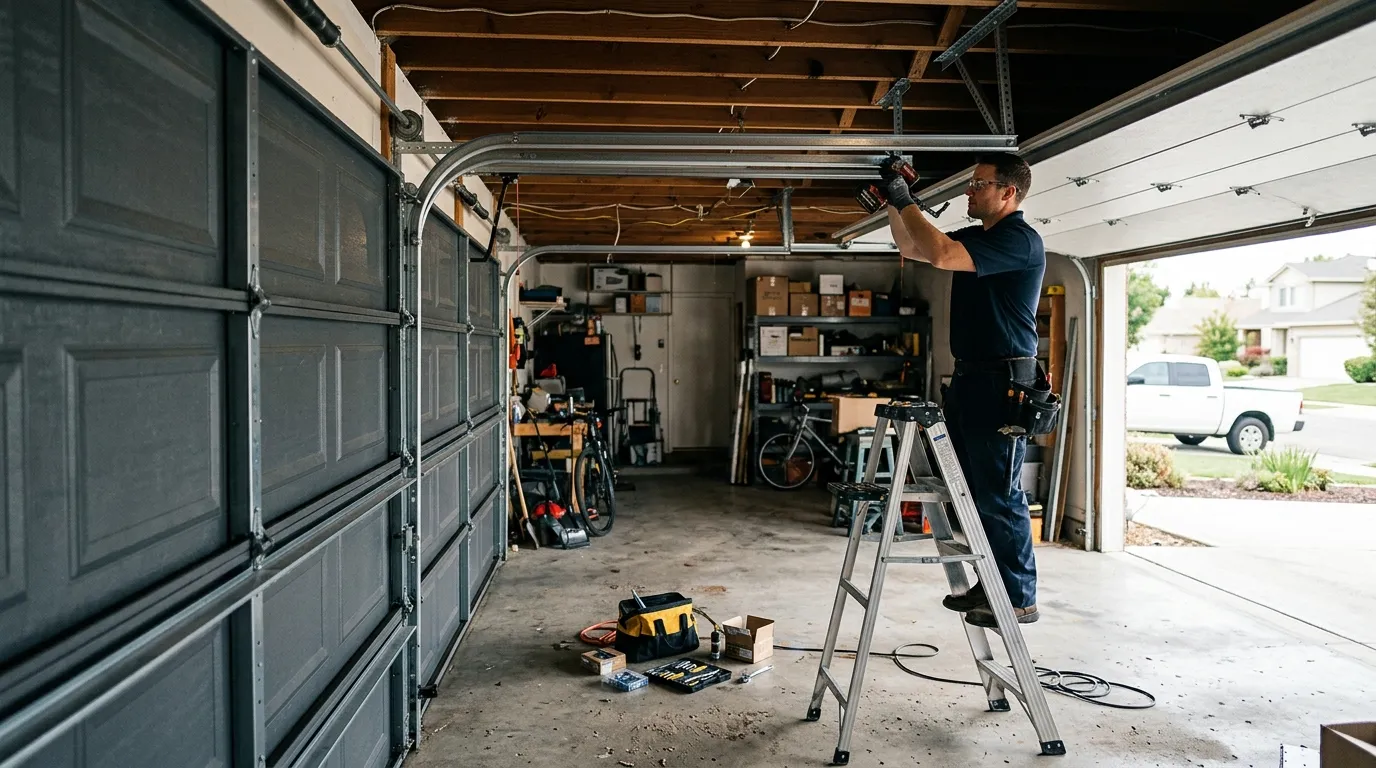
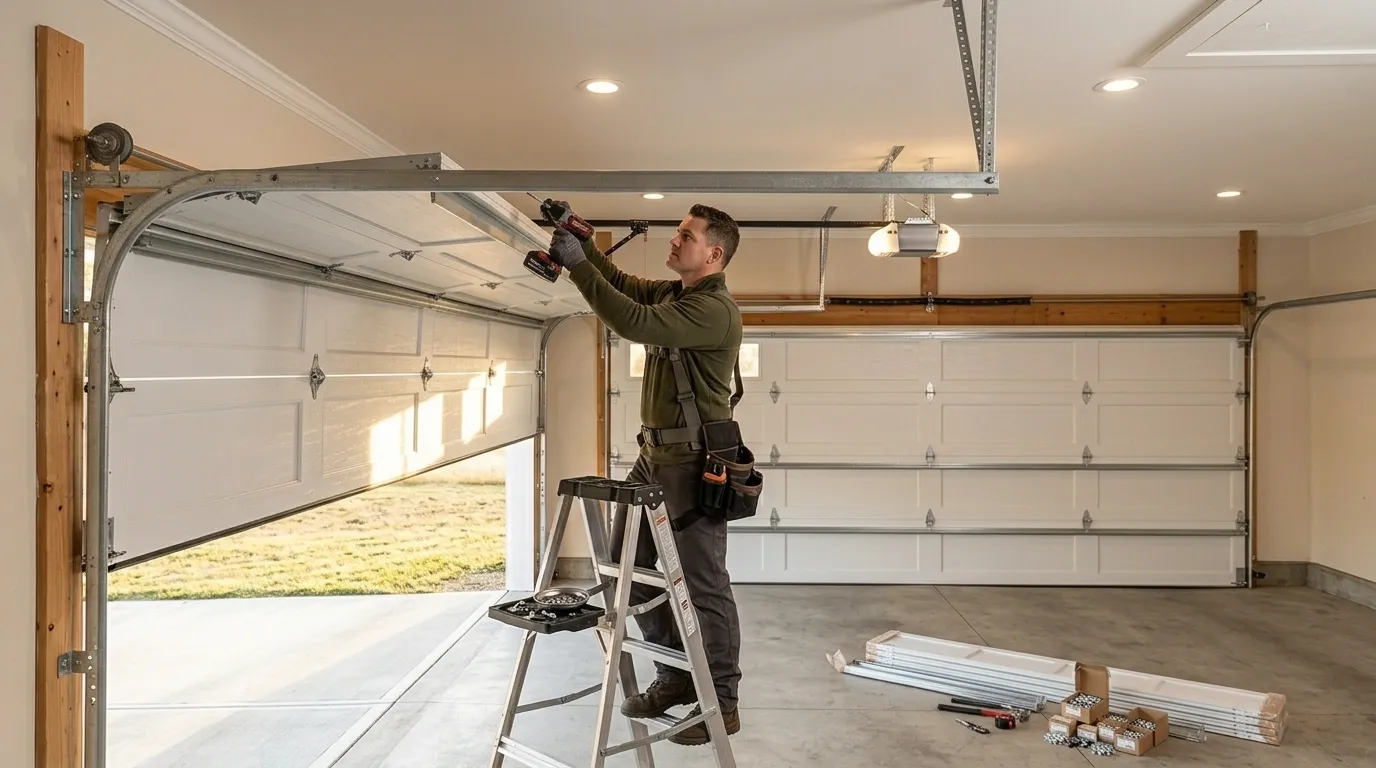
Most opener repairs are a same-visit fix once we've diagnosed the problem: a sensor realignment, a logic board swap, or a gear replacement on a chain-drive unit usually gets the door running again before we leave. Full opener replacement, when the motor or board is too far gone to justify repair, also typically finishes in one visit since we carry common units on the truck. Where it takes longer is when a board or a specific part isn't something we stock, and that's the honest limitation here: on some of the older chain-drive units from the 1980s stock still running in this area, the exact replacement board isn't always something we can hand you same-day, and we'll tell you that up front rather than promise a fix we can't deliver on the spot.
Why This Fails Locally
This area sits in a cold, severe winter climate, and that matters more for openers than most homeowners expect. Cold doesn't just stiffen springs and tracks, it also stresses the capacitors and relays on an opener's circuit board, and repeated freeze-thaw cycles through a Mundelein winter shorten the working life of boards that would otherwise last longer in a milder climate. Combine that with a housing stock that's mostly 1980s and 90s vintage across the 67 named areas we track, and you get a lot of openers that are now 25-40 years old, right at the age where board failure and gear wear become common rather than rare. Homes built earlier in the 1938-2009 range often have chain-drive units that were never upgraded, and those units take the cold harder than a newer belt-drive with a modern board. That's the pattern we see repeat across the service area: age of the unit plus winter stress equals the calls we get most.
How it works
From “it’s stuck” to “it’s fixed”
01
Tell us what’s wrong
Describe the symptom - won’t open, loud bang, opener runs but the door won’t move.
02
On-site diagnosis
A technician tests the door under power and by hand and finds what actually failed.
03
Clear, up-front plan
You get the fix that’s needed and what drives the cost - before any work starts.
04
Repaired & tested
The repair is done, the door is set true and tested, and the work area left clean.
Serving Mundelein, IL - tell us what your door’s doing and we’ll take it from there.
Why does my garage door opener stop working in cold weather?
Cold temperatures stress the capacitors and relays on an opener's circuit board, and repeated freeze-thaw cycles over a winter here wear those components down faster than in a milder climate. Older boards, especially ones from openers installed in the 1980s or 90s, are more prone to this kind of failure once the weather turns.
Is it worth repairing an old opener or should I replace it?
It depends on what's failed and how old the unit is. If the motor and drive are sound and it's just a board or sensor, repair usually makes sense. If the opener is original to a house built decades ago and the gear, board, and drive are all worn, replacement is often the better value, and we'll tell you which situation you're in.
Can you fix a chain-drive opener from the 1980s?
Often yes, if the motor itself is still good and the failure is a gear or a board we carry. Some parts for older chain-drive units aren't something we stock on the truck, and in that case we'll let you know if it needs to be ordered before we can finish the job.
Why does my door reverse before it hits the floor?
That's almost always the safety sensors near the bottom of the track, not the opener motor itself. Dust, misalignment, or a knocked sensor can trigger this. It's usually a quick fix once we're on-site and can check the alignment directly.
Ready to get your garage door sorted?
Tell us what it’s doing and where you are in Mundelein - we’ll take it from there.