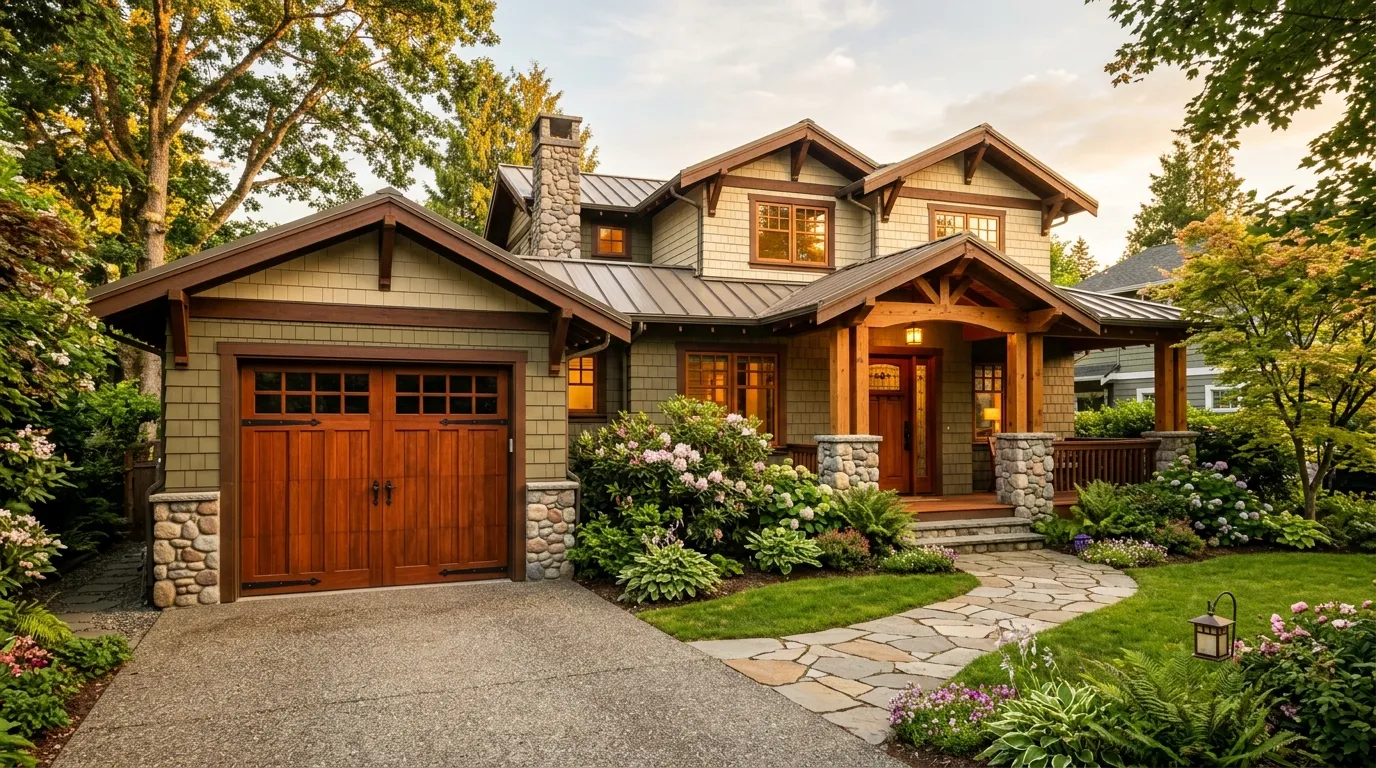
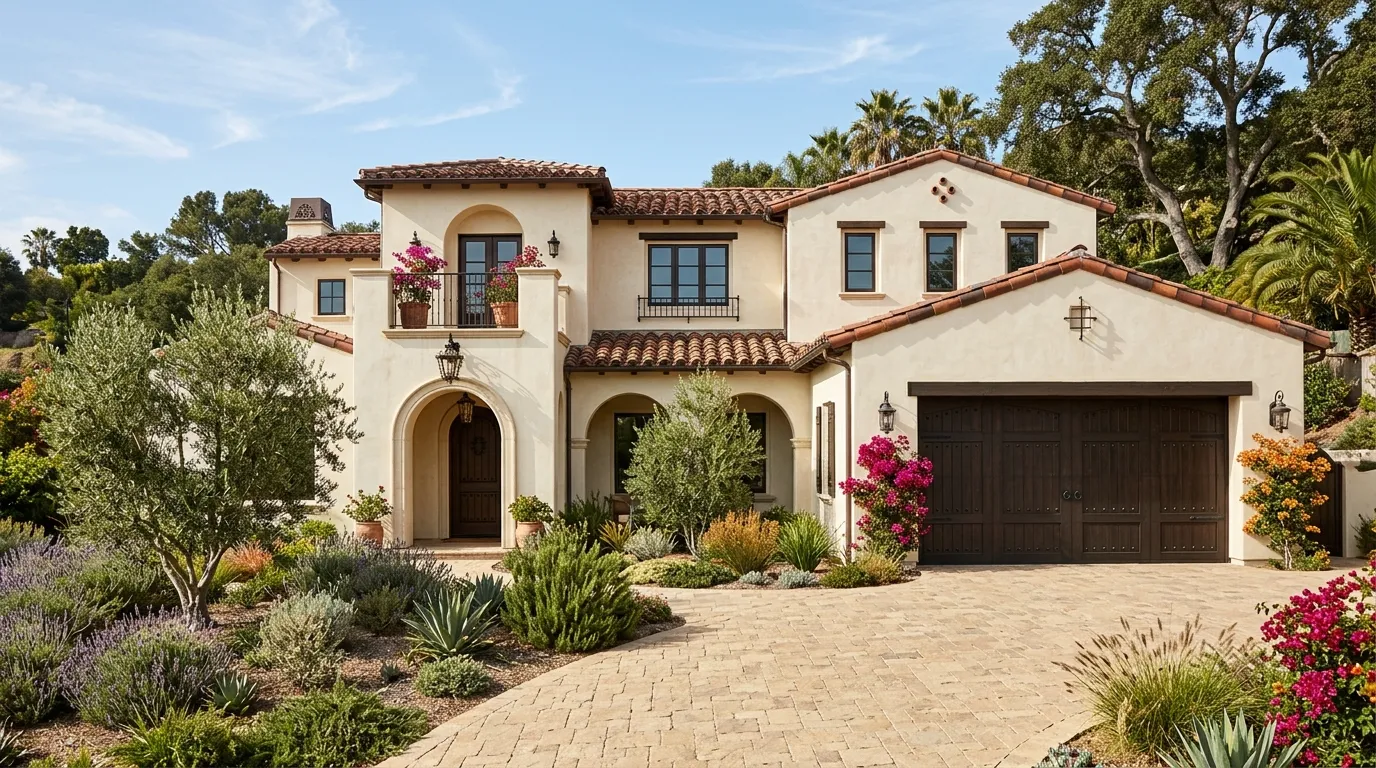
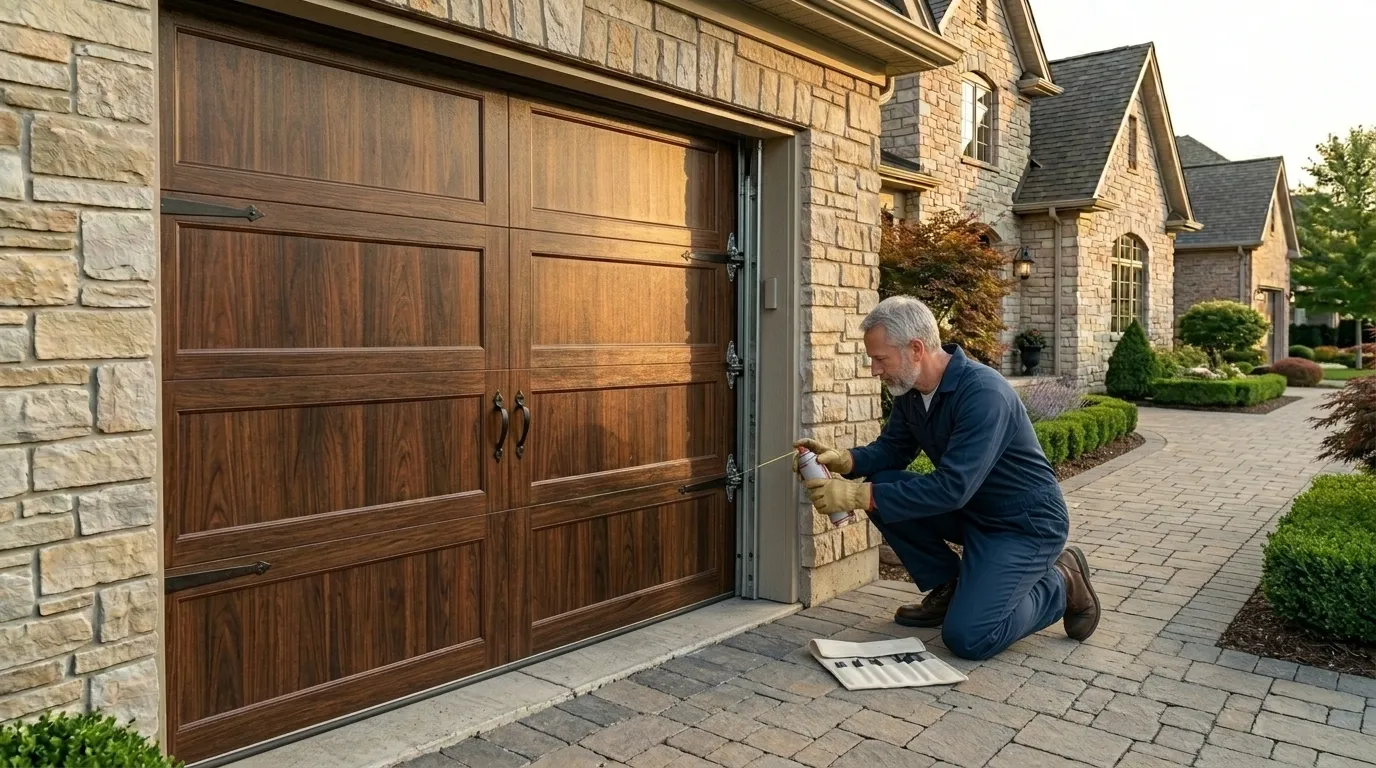
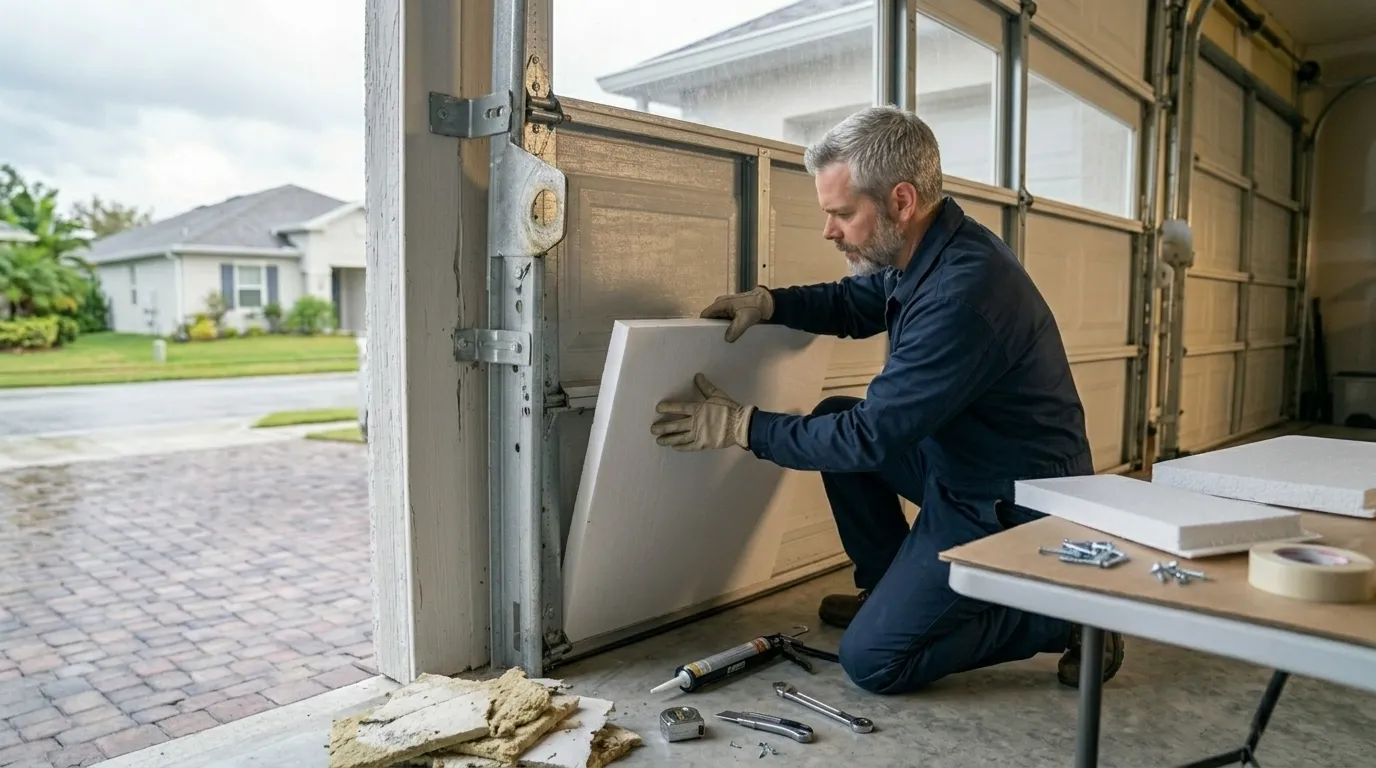
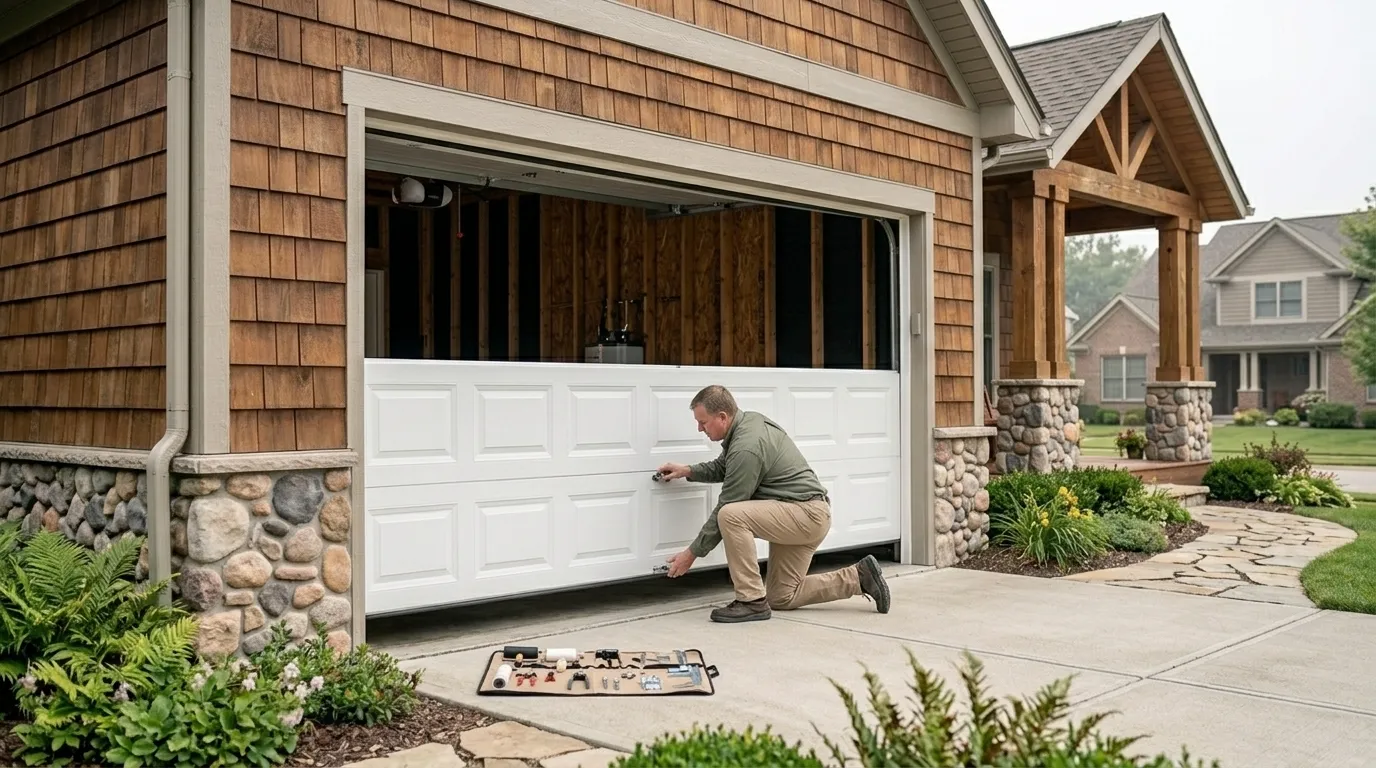
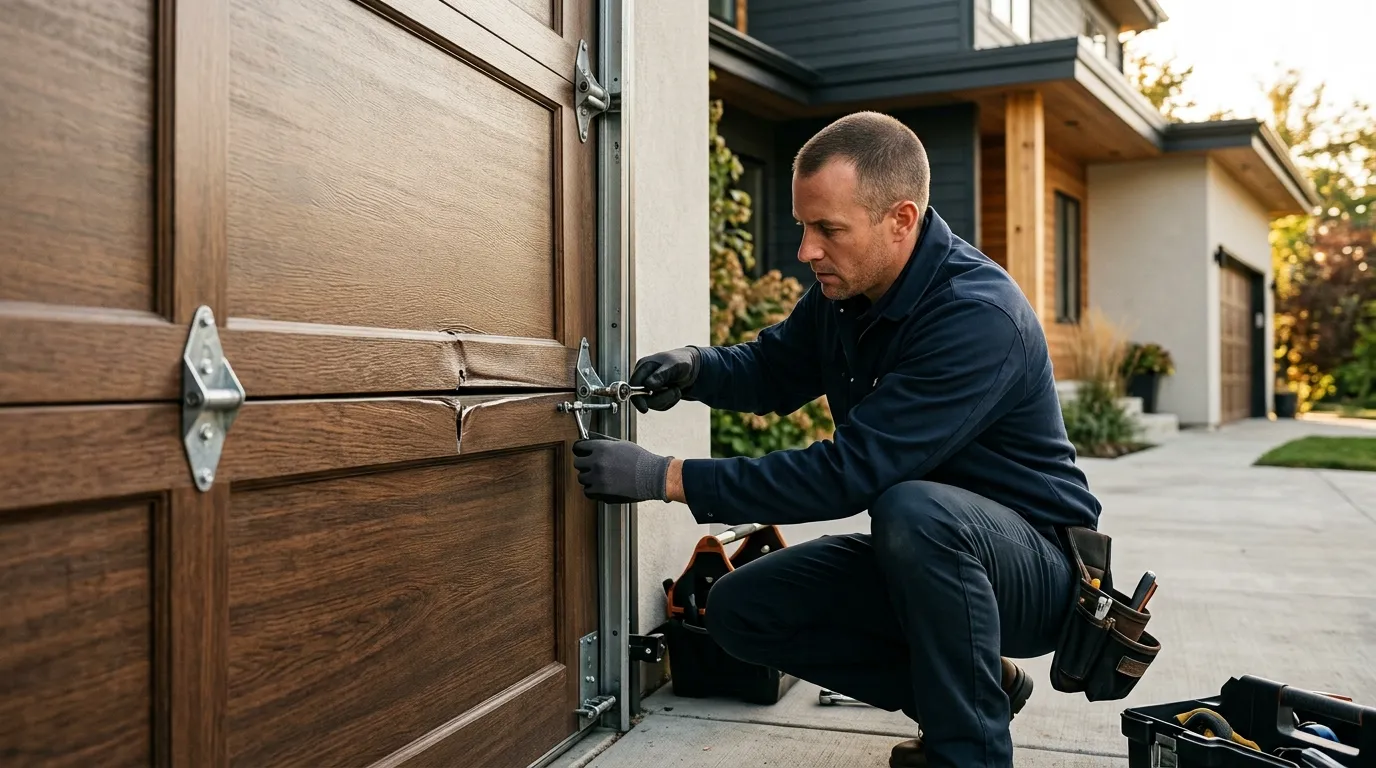
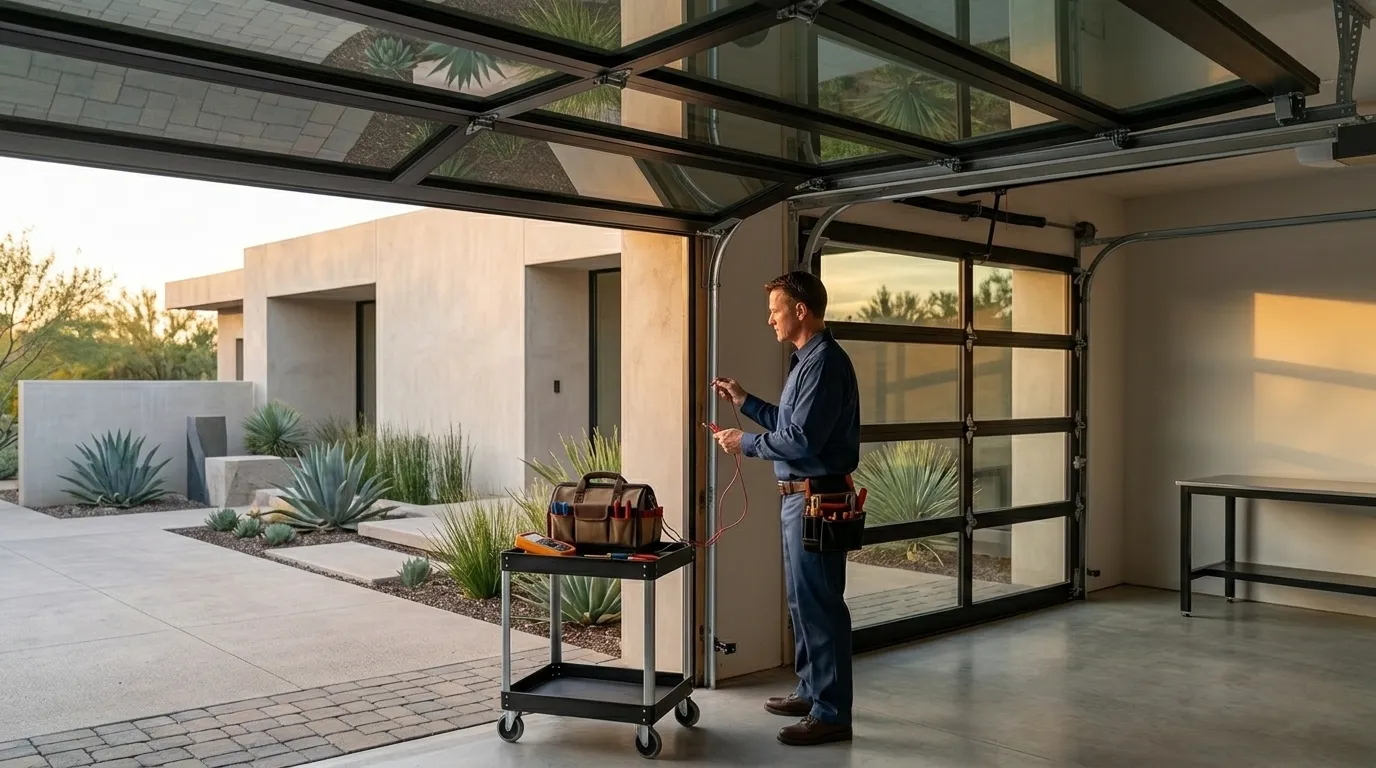
Before you get to what's wrong, look at what's actually hanging in the garage. Round Lake Beach's own housing stock centers on 1987, a shade later than the wider service area's median of 1984, and most of that stock runs a steel sectional door - usually a 16-by-7 double or an 8-by-7 single - paired with a chain-drive opener from the same build era, bolted to a rail that's aged right along with the house. That's the unit we're pricing when we come out.
We don't quote a flat number sight unseen, because a slipped chain and a fried logic board cost different money even on the same style of opener. What we can say: at $86,632, the median household income in Round Lake Beach runs well below the service area's $121,583 median, and that gap shapes a lot of our calls here - more repair requests to keep an older unit running, fewer straight-to-replacement jobs than in higher-income parts of the territory. The honest limit is parts. Circuit boards for openers from the 1980s and early 90s are getting harder to source, and sometimes the board that failed just isn't made anymore. When that happens we say so before you spend money chasing a part that won't show up.
The DIY Question
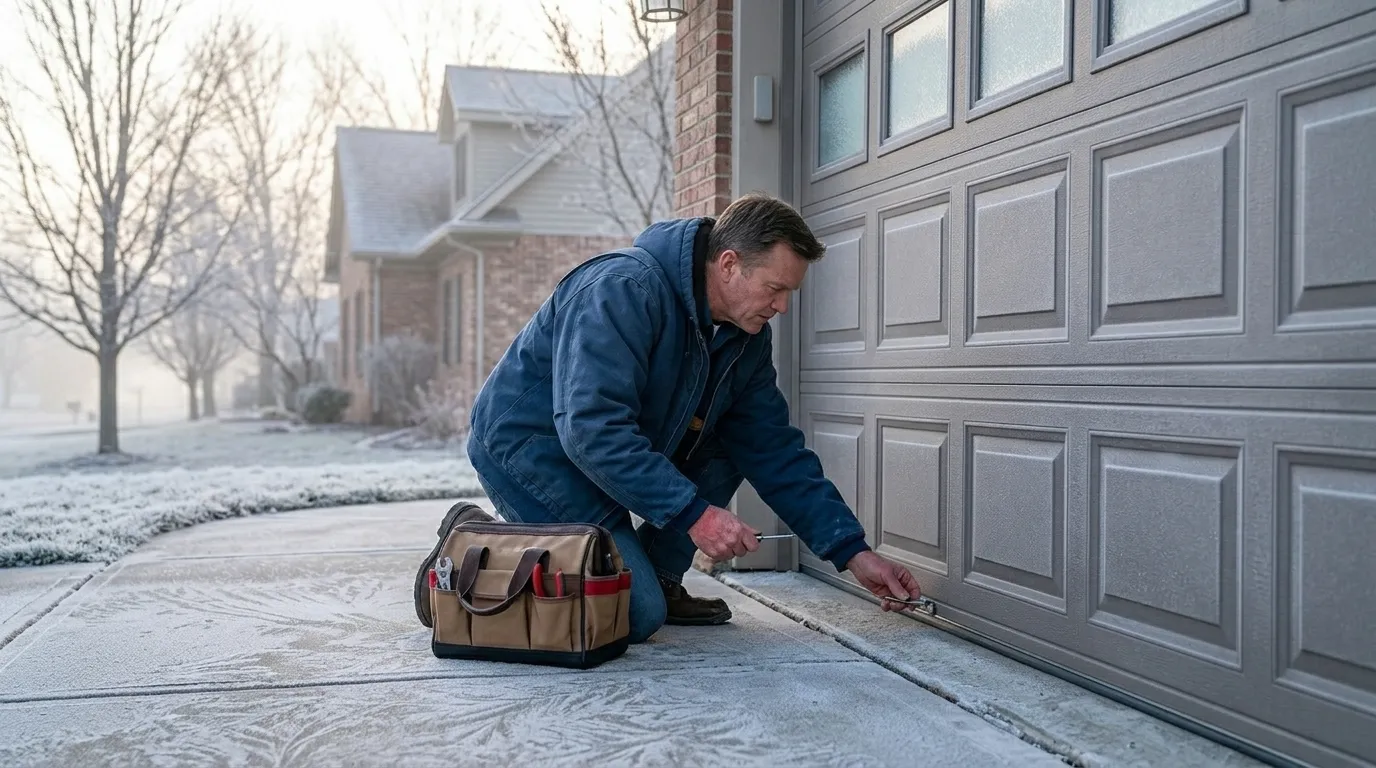
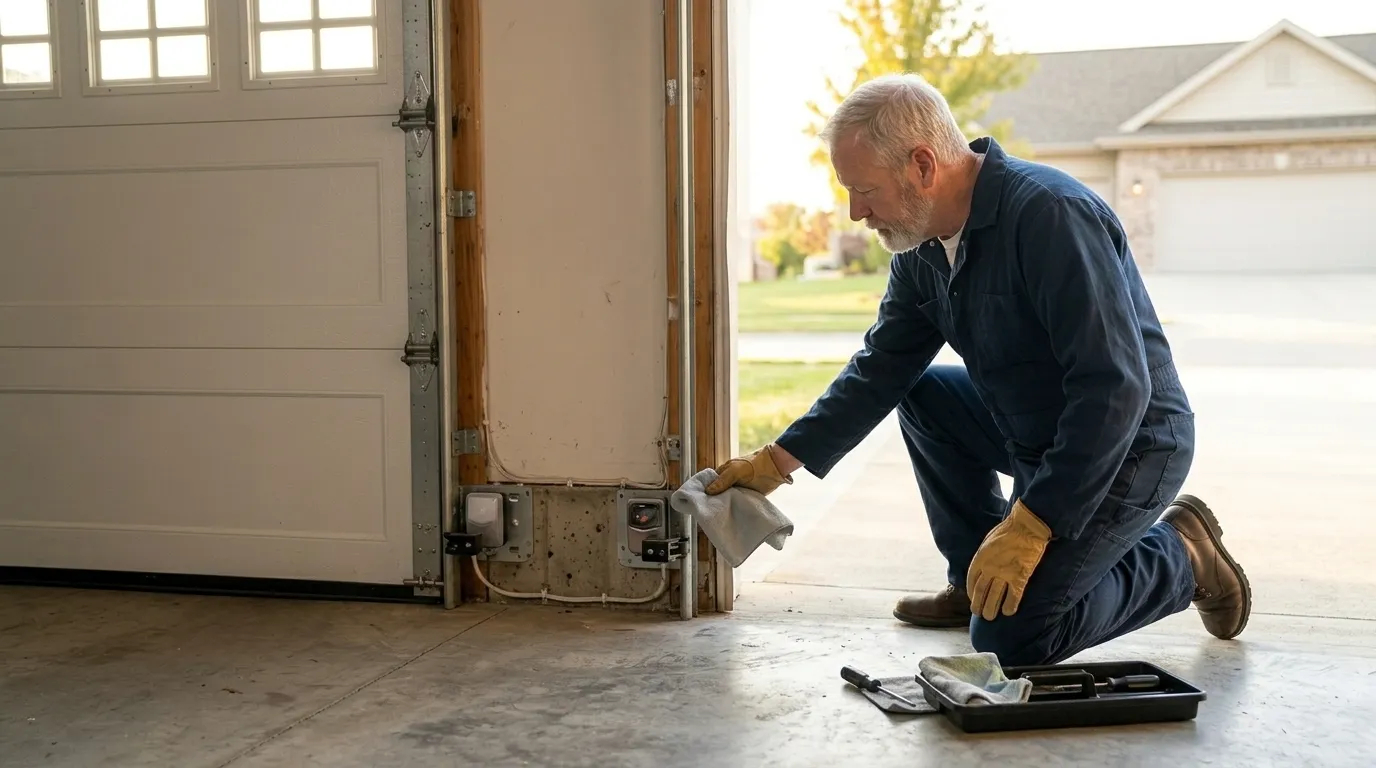
A lot of what's wrong with a chain-drive opener from this era is stuff you can check yourself before calling anyone. Loose chain, dead remote batteries, a sensor knocked out of alignment - all fair game for a homeowner with a stepladder and ten minutes. The service area's cold, severe winter climate is worth knowing about here too: the same sensors that get bumped in summer get iced over or frost-fogged in January, and a lot of "broken opener" calls in the cold months turn out to be a sensor lens that just needs wiping down.
Where DIY stops making sense is the circuit board and the drive gear. Openers built when this town's housing stock was going up don't have the diagnostic lights and app troubleshooting that newer units do - you're working blind on the electronics, and a wrong wire under load is how people get hurt or fry a board that was still fixable. If your unit is original to a house built anywhere near 1987, we'd rather you call before you open the housing than after.
Time on the Job
The trip out from Mundelein is nine miles, which we build into scheduling rather than into a rushed job once we're on site. A straightforward fix - sensor realignment, a new remote, a chain tightening - doesn't take long once the truck's in the driveway. What stretches a job is age-matched wiring: openers original to a house from the late 1980s or early 90s often run wire runs and switch types that don't match anything on the truck for a same-day like-for-like swap.
With 8,565 households in Round Lake Beach, we see enough of these units to know the pattern, but we're not going to promise a length of visit before we've seen the specific opener and how it's wired into the garage. Cold weather adds its own variable too - a chain that's gummed up with old grease moves slower and takes longer to free up safely on a January call than it would in July.
What You Are Seeing
The symptoms we get called out for here track pretty closely with the age of the stock. A chain-drive unit from the 1980s or 90s that's starting to slip usually shows up as a door that reverses partway, or a motor that hums without moving the door at all - worn gear, not necessarily a dead motor. In the service area's cold, severe winters, we also see openers that work fine in the garage during a service call but stall out on genuinely cold mornings, which usually points to old lubricant that's stiffened up rather than anything electrical.
Capacitor failure is common on units this old too - the door works sometimes, or takes two tries, or the motor runs but doesn't fully engage. None of that is unique to Round Lake Beach, but the fact that so much of the opener stock here dates to the same narrow window means we see the same handful of failure modes on repeat, which is part of why we can usually name the likely cause before we've opened the housing.
How it works
From “it’s stuck” to “it’s fixed”
01
Tell us what’s wrong
Describe the symptom - won’t open, loud bang, opener runs but the door won’t move.
02
On-site diagnosis
A technician tests the door under power and by hand and finds what actually failed.
03
Clear, up-front plan
You get the fix that’s needed and what drives the cost - before any work starts.
04
Repaired & tested
The repair is done, the door is set true and tested, and the work area left clean.
Serving Mundelein, IL - tell us what your door’s doing and we’ll take it from there.
Not automatically. A lot of the openers we see in Round Lake Beach are chain-drive units from the late 1980s or 90s, and plenty of them are still fixable - new capacitor, new gear, tightened chain. The one thing that ends a repair is a dead circuit board we can't source a match for. We'll tell you straight if that's the case rather than keep billing hours toward a dead end.
Why does my opener act up in winter but not summer?
The service area sits in a cold, severe winter climate, and old grease on a chain-drive rail stiffens up in low temperatures, which slows the motor's ability to pull the door. Sensors can also frost over or fog on cold mornings, which reads as a dead opener but is really just a lens that needs a wipe.
Do you have a local office in Round Lake Beach?
No. We run out of Mundelein, about nine miles away, and travel to Round Lake Beach for opener calls. There's no branch location here, just the truck coming out for the job.
How long will parts take if my opener needs a board replacement?
It depends on the make and how old the unit is. Boards for openers original to houses built in the 1980s can be slow to source, and sometimes a match isn't made anymore. We'll tell you upfront if that's the situation rather than let a job drag on an unavailable part.
Ready to get your garage door sorted?
Tell us what it’s doing and where you are in Mundelein - we’ll take it from there.