Commercial garage door repair for Lake in the Hills businesses, serviced from Mundelein. Built mostly in the 1990s, these bays run different hardware than older stock.
The fault we see most on Lake in the Hills commercial buildings isn't a broken spring - it's a chain-drive operator that's finally given out after running two or three shifts a day since the building went up. This town's commercial stock skews newer than a lot of what we cover out of Mundelein: median year built here is 1995, well past the 1984 median for the wider service area, which puts most of these bays into the era of early jackshaft-compatible track and heavier-gauge steel sections rather than the older wood or thin-skin doors you'll find on the pre-1980s side of the territory.
What that means for cost: parts for a 1990s commercial operator are generally still available, which keeps repair jobs from turning into full-system swaps as often as they do on older buildings. We don't quote a number here because a broken spring on a 12-foot sectional door and a dead logic board on a jackshaft opener are not the same invoice, and guessing at one would be worse than saying nothing. What we can tell you is that replacement usually only makes sense when the section steel itself is failing - rust-through, bent tracks, warped panels - not just because the opener is old.
One honest limit: we travel to Lake in the Hills from Mundelein, about 17 miles out, so we don't hold a same-day guarantee for this town the way we might closer in.
Getting It Booked In
Because we're coming from Mundelein, roughly 17 miles away, booking a commercial call in Lake in the Hills works best when you can tell us what the door is doing before we load the truck - grinding on the way up, opener humming without moving the door, a cable that's jumped the drum. That lets us bring the right spring size or track hardware instead of making a second trip.
Most of the commercial buildings we've looked at in this part of the territory went up in the 1990s, so we ask about the operator brand and whether it's chain-drive or belt-drive up front. That single detail changes what's in the van. We also ask about building use - a warehouse bay that opens forty times a day wears differently than a retail loading door that opens twice.
We don't dispatch a crew that lives in Lake in the Hills, so there's no walk-in counter here - every job starts with a call, and we'd rather spend five extra minutes on the phone getting the door and opener details right than show up with the wrong torsion spring for a building running 1990s hardware.
Time on the Job
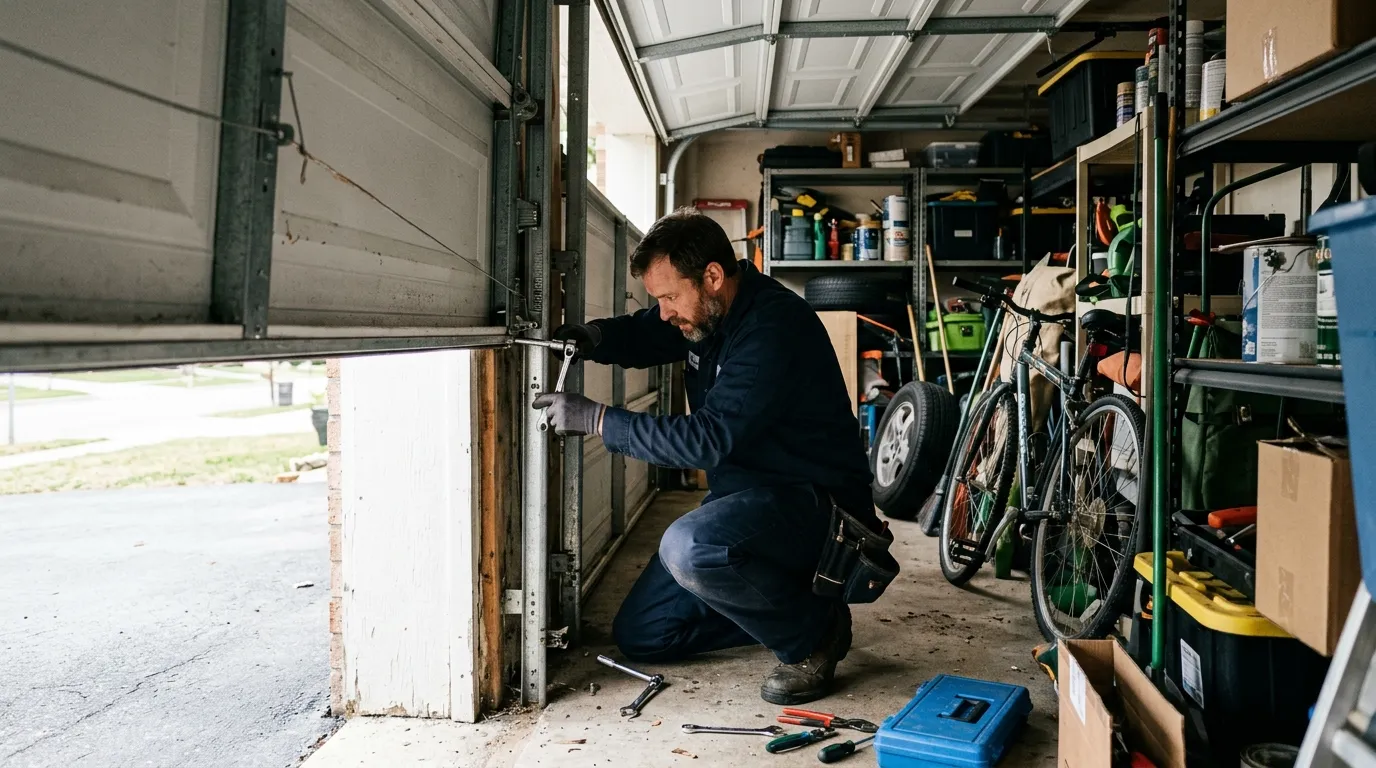
A straightforward spring replacement or cable job on a commercial sectional door doesn't take long once the truck is on site - most of the actual repair time on these 1990s-era doors goes into working around whatever's been bolted on or adjusted over thirty years of use, not the base hardware itself, which tends to be straightforward compared to older, custom-built commercial doors.
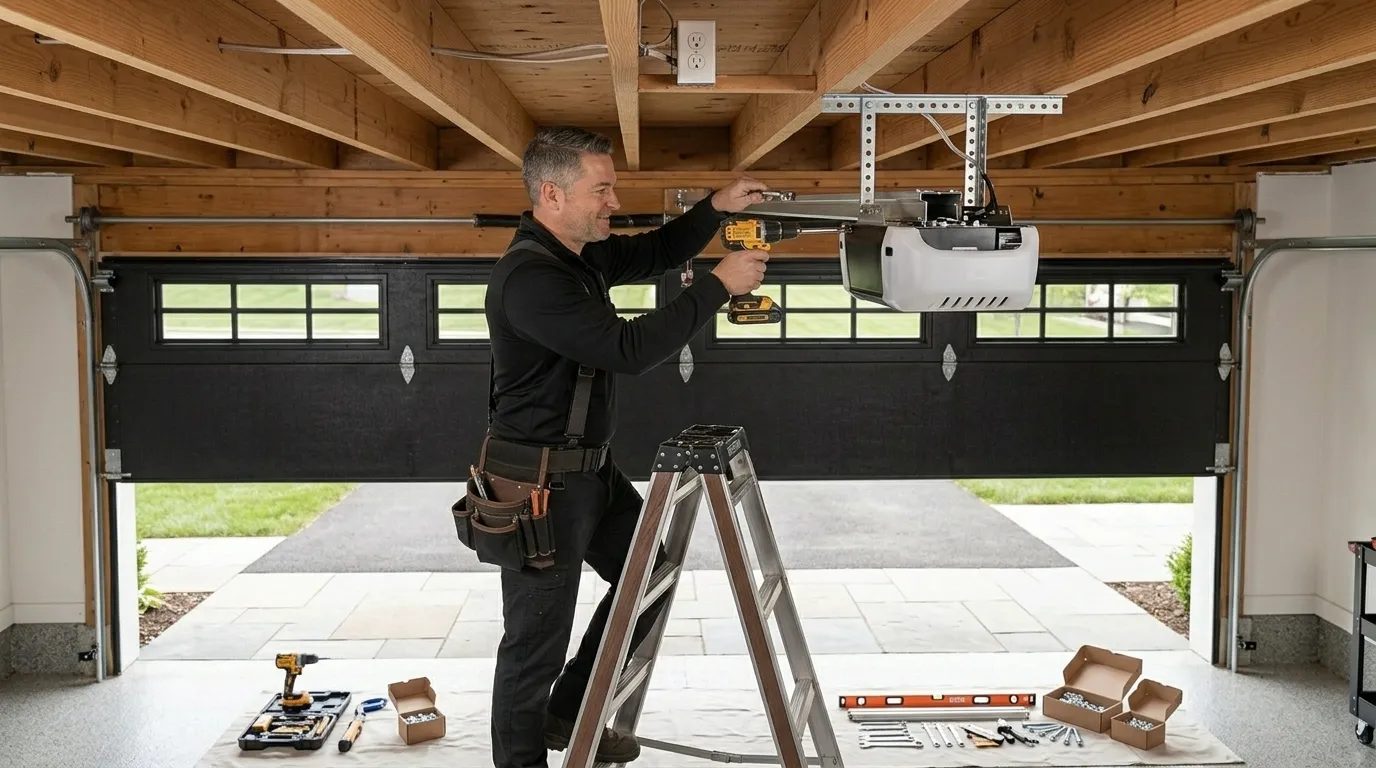
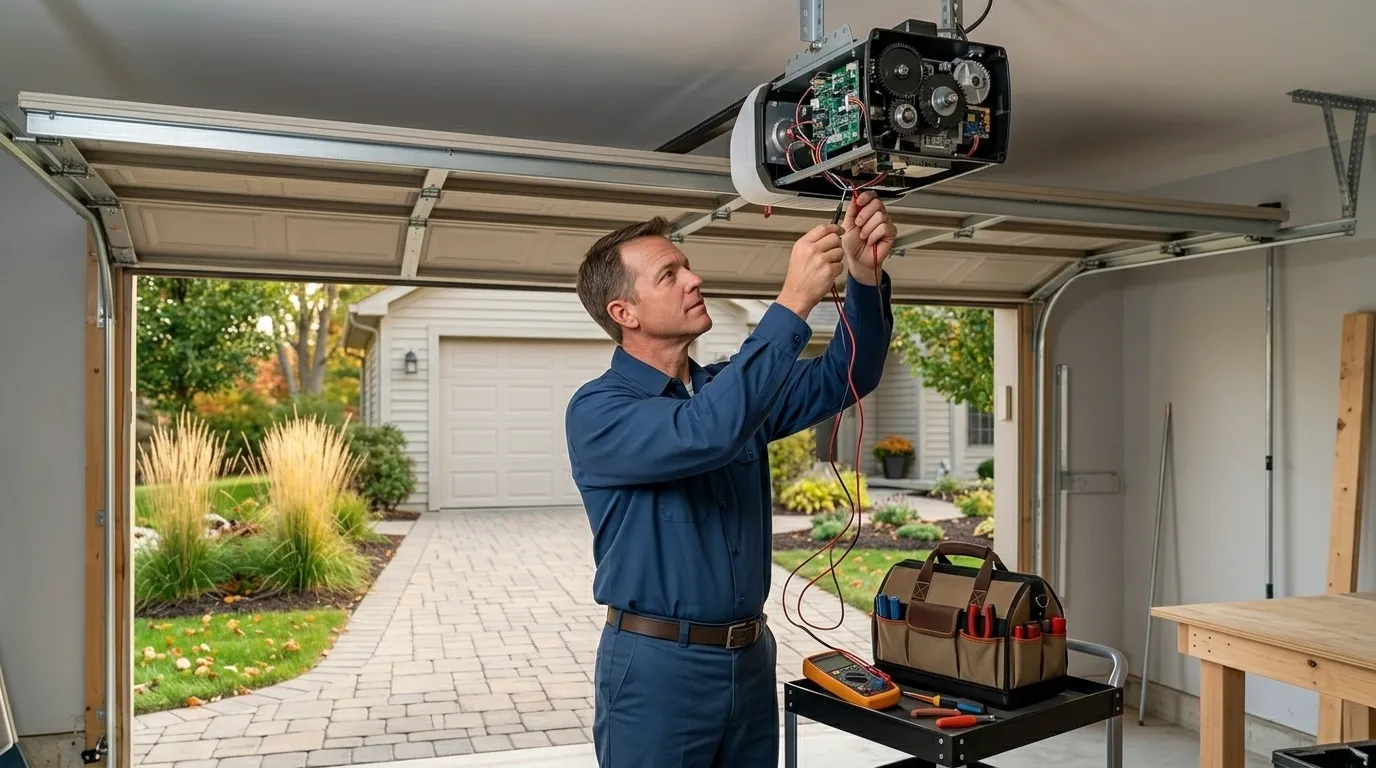
Opener work runs longer when the unit itself is the problem rather than a sensor or a limit switch. A chain-drive commercial operator from the 1990s that's lost its logic board sometimes can't be fixed with a part swap - the board itself may not be manufactured anymore, and at that point we're talking about a new operator, not a repair.
Winter adds time too. This region sits in a cold-climate band with severe conditions, and steel doors that have sat unused overnight can bind or stick before they ever move - we budget extra time in winter months for doors that need to be worked loose before any actual repair starts. We're upfront when a job is going to run longer than expected rather than rushing a fix that won't hold.
What the Repair Takes
On a building built in the 1990s, the repair usually comes down to one of two things: the spring system or the opener logic, not the door panels themselves, which tend to hold up well at this age. Torsion springs on commercial doors are sized to the door's weight and width, so we measure rather than guess, especially on wider bay doors common to warehouse and light-industrial buildings in this part of the territory.
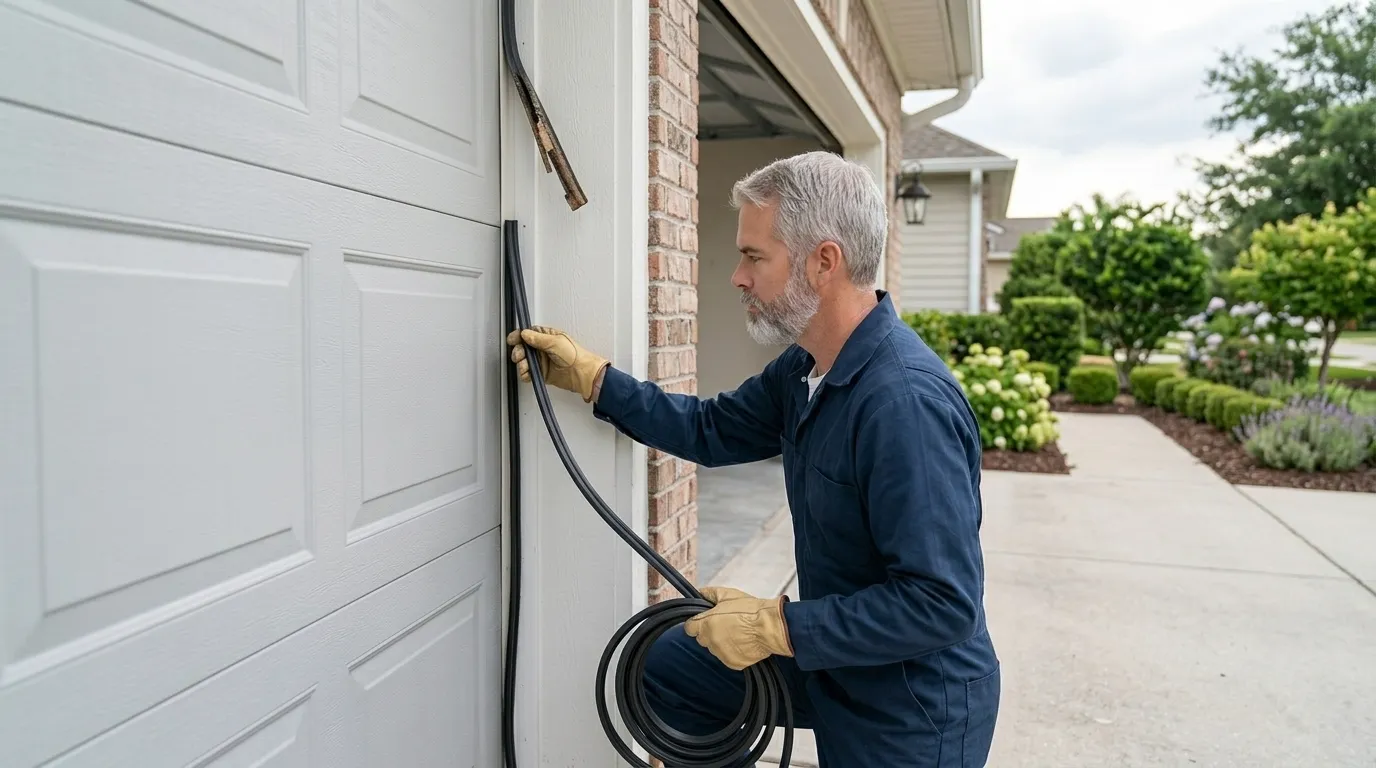
We carry standard cable, roller, and spring stock for doors of this era, since it's the most common hardware age we run into east of Mundelein. What we don't carry on the truck is obsolete circuit boards for operators no longer in production - if that's the failure, we'll tell you straight rather than promise a part we can't get.
Cold matters here too. Lubricant that's fine in summer stiffens up in the severe winter conditions this region sees, and a door that seems to need a new opener sometimes just needs the right grease and a re-balance. We check that before we recommend replacing anything.
How it works
From “it’s stuck” to “it’s fixed”
01
Tell us what’s wrong
Describe the symptom - won’t open, loud bang, opener runs but the door won’t move.
02
On-site diagnosis
A technician tests the door under power and by hand and finds what actually failed.
03
Clear, up-front plan
You get the fix that’s needed and what drives the cost - before any work starts.
04
Repaired & tested
The repair is done, the door is set true and tested, and the work area left clean.
Serving Mundelein, IL - tell us what your door’s doing and we’ll take it from there.
No. We're based in Mundelein, about 17 miles from Lake in the Hills, and we travel out for commercial calls rather than keeping a local branch or depot here. Every job starts with a phone call so we can bring the right hardware for the trip.
Why does the building's age matter for a commercial door repair?
Most commercial buildings in Lake in the Hills went up around 1995, later than the wider service area's 1984 median. That means different hardware generations - chain-drive and jackshaft operators, heavier steel sections - and different parts availability than older buildings we service elsewhere.
Is it ever better to replace than repair a commercial opener?
Yes, when the failure is in the logic board of an older chain-drive unit that's no longer in production. At that point there's no part to source, and putting money into a repair that can't happen isn't a service we'll sell you. A new operator is the honest answer.
Does winter weather affect commercial door repairs here?
It does. This region sits in a severe cold-climate band, and steel doors left unused overnight can bind before a repair even starts. We build extra time into winter jobs to work the door loose and check lubrication before diagnosing anything further.
Ready to get your garage door sorted?
Tell us what it’s doing and where you are in Mundelein - we’ll take it from there.