Time on the Job
We run out of Mundelein, and Libertyville is about two miles from the shop. That's short enough that we don't build extra drive time into a service window the way we would for a job out past Round Lake. It doesn't mean we keep a crew stationed in town - we don't have a depot here, and we're not going to pretend otherwise. It means the trip itself isn't the part of the job that eats the clock.
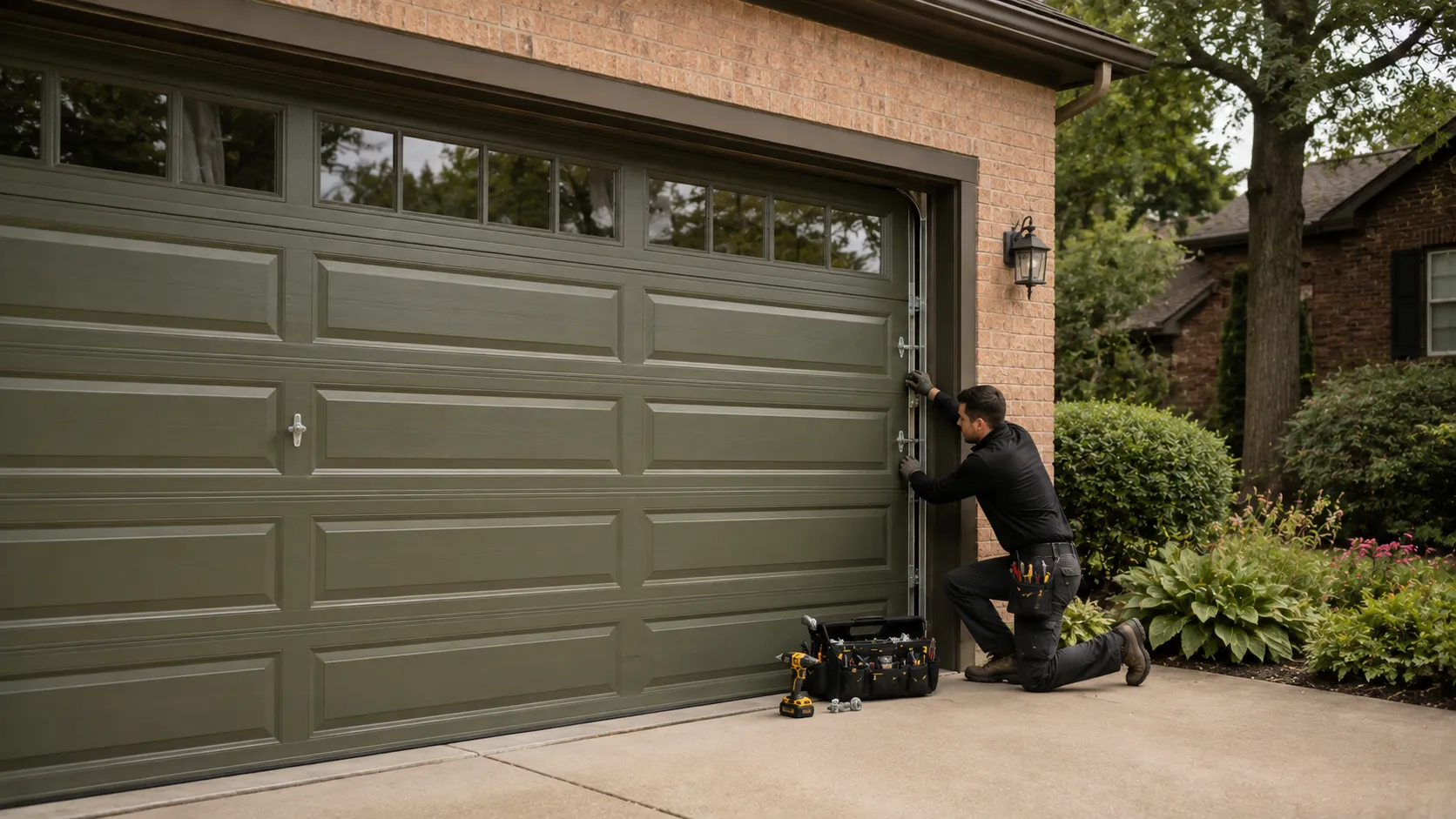
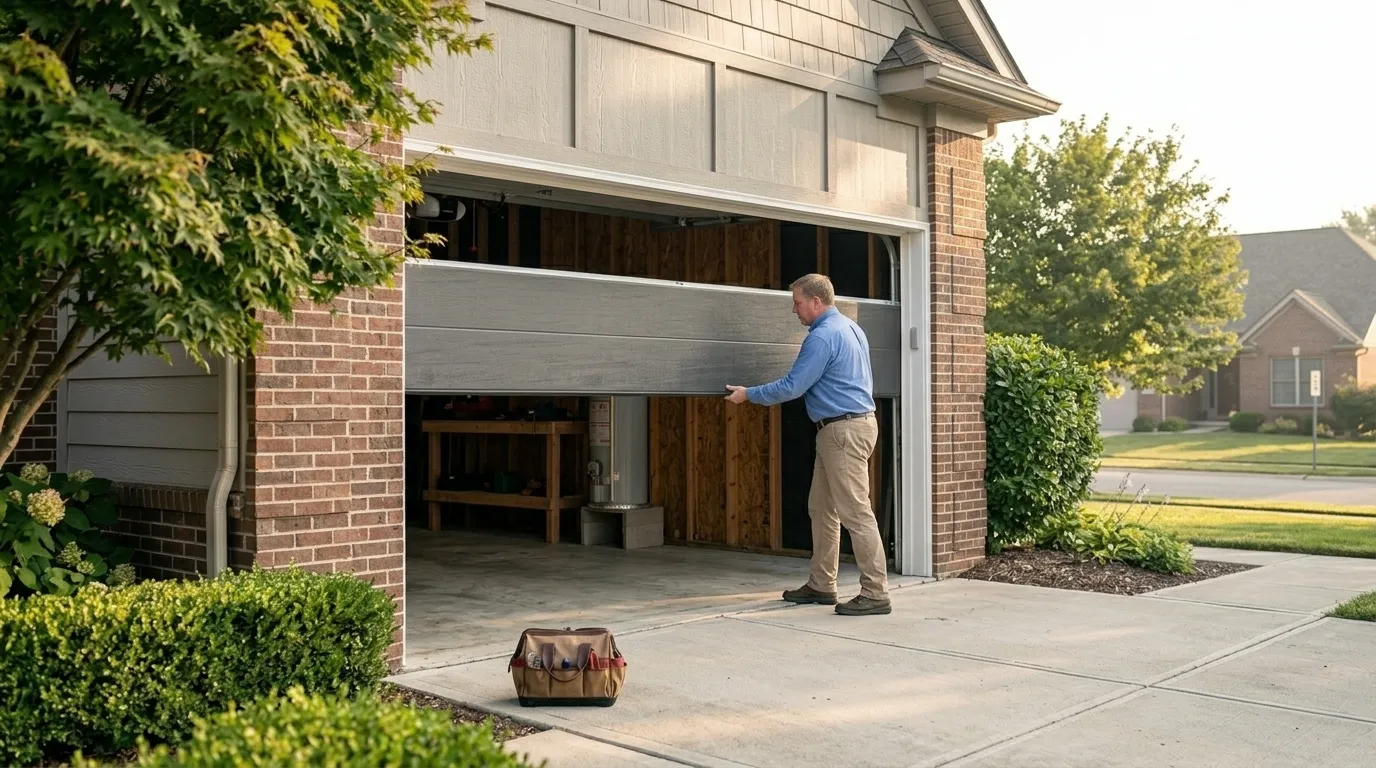
On a commercial call, the time that actually gets spent is diagnosing what's failed on a door that's been running since the building was new, pulling the right spring or roller off the truck, and making sure the opener is talking to the safety sensors the way code expects it. Two miles doesn't change any of that work. It just means we're not adding a half-hour of highway to it first.
Parts We Carry
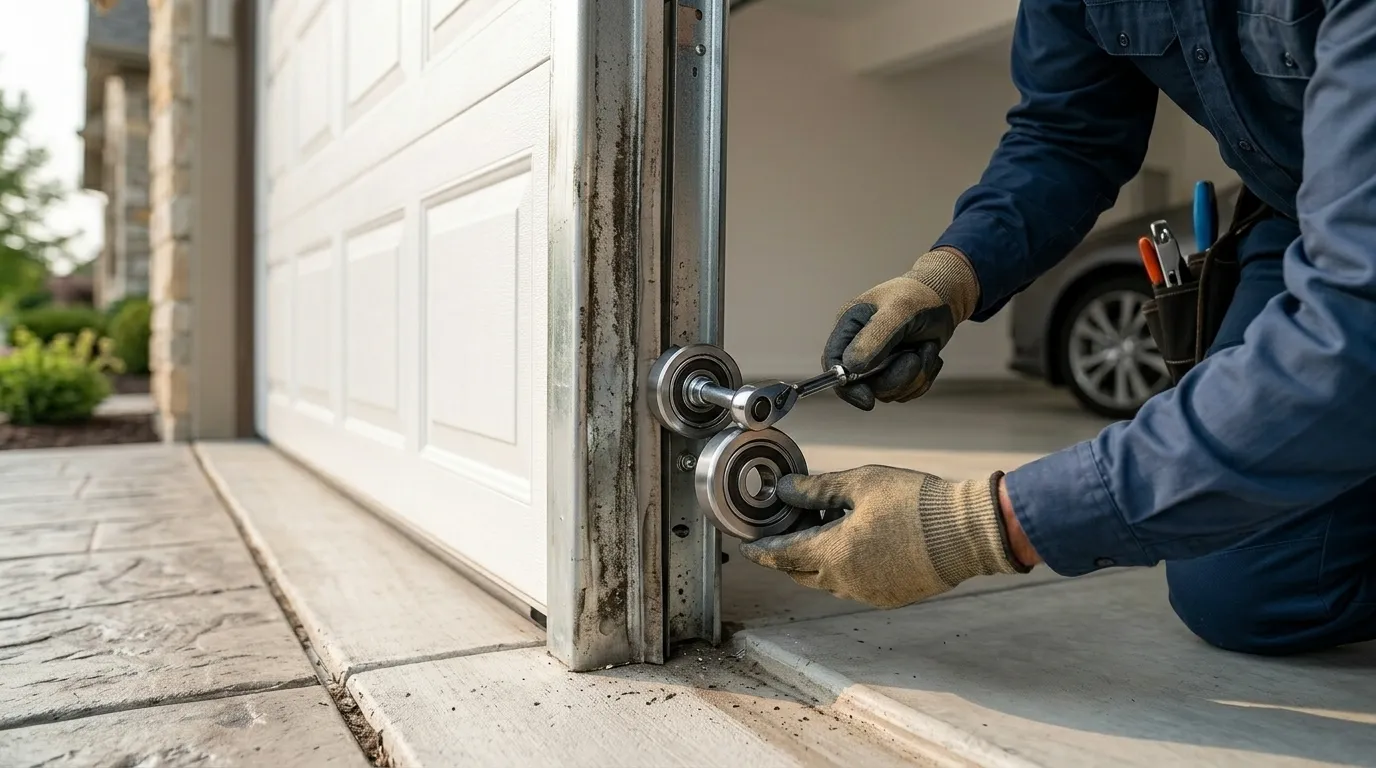
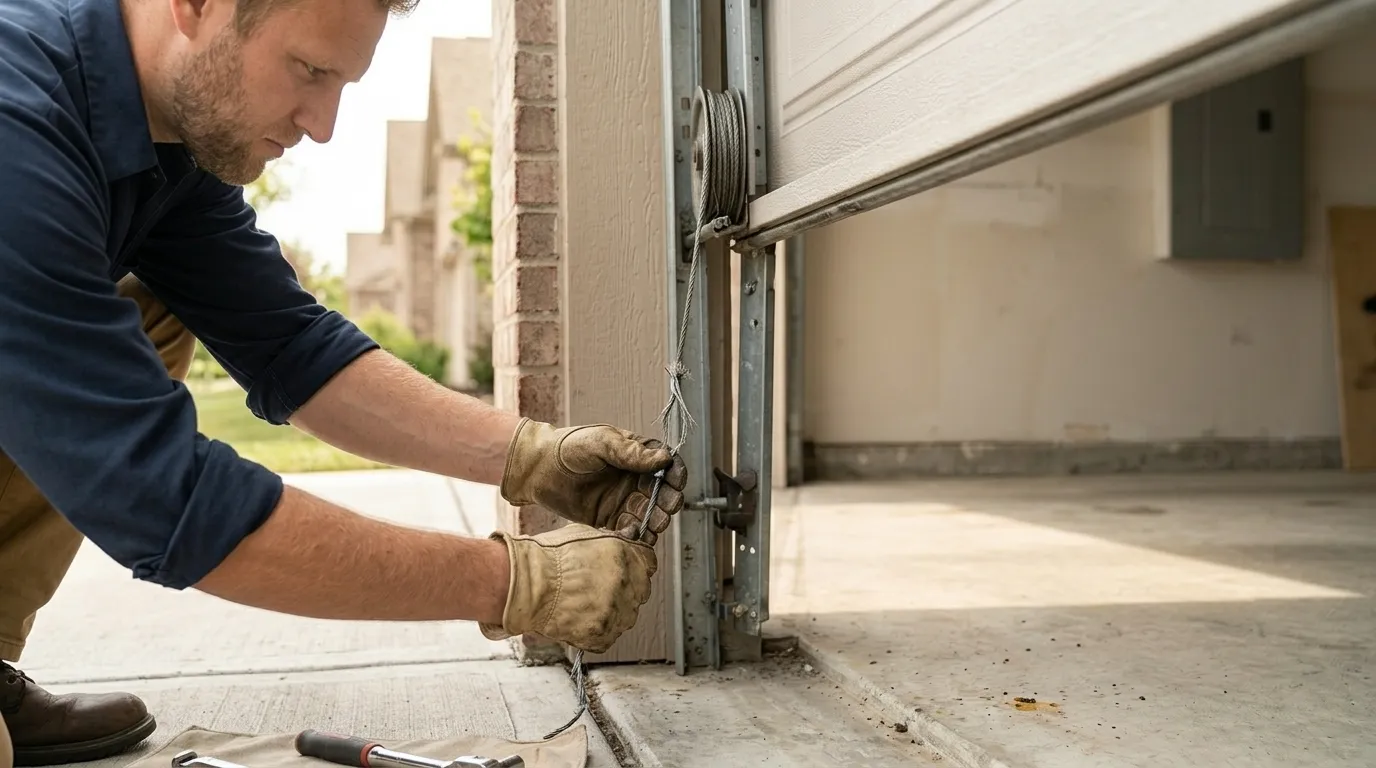
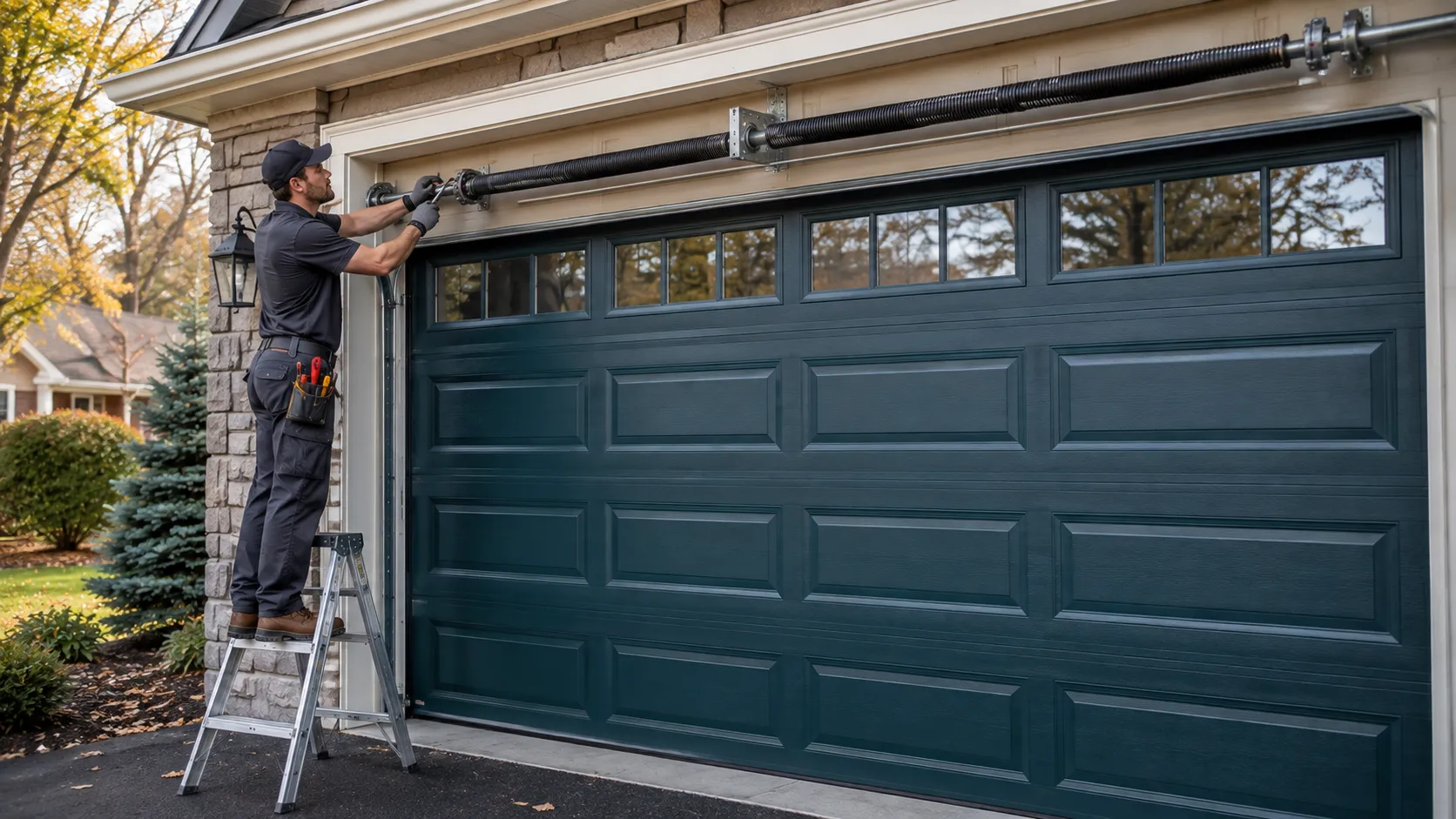
For a door built around 1976, the hardware that fails first is almost always the torsion spring, the galvanized lift cable, and the nylon or steel rollers riding in a track that's been repainted more than once. We carry replacement torsion springs sized for commercial door weights, standard-gauge track sections, and rollers in both nylon and steel, because a bay door that cycles fifteen or twenty times a day wears rollers differently than a homeowner's door that opens twice.
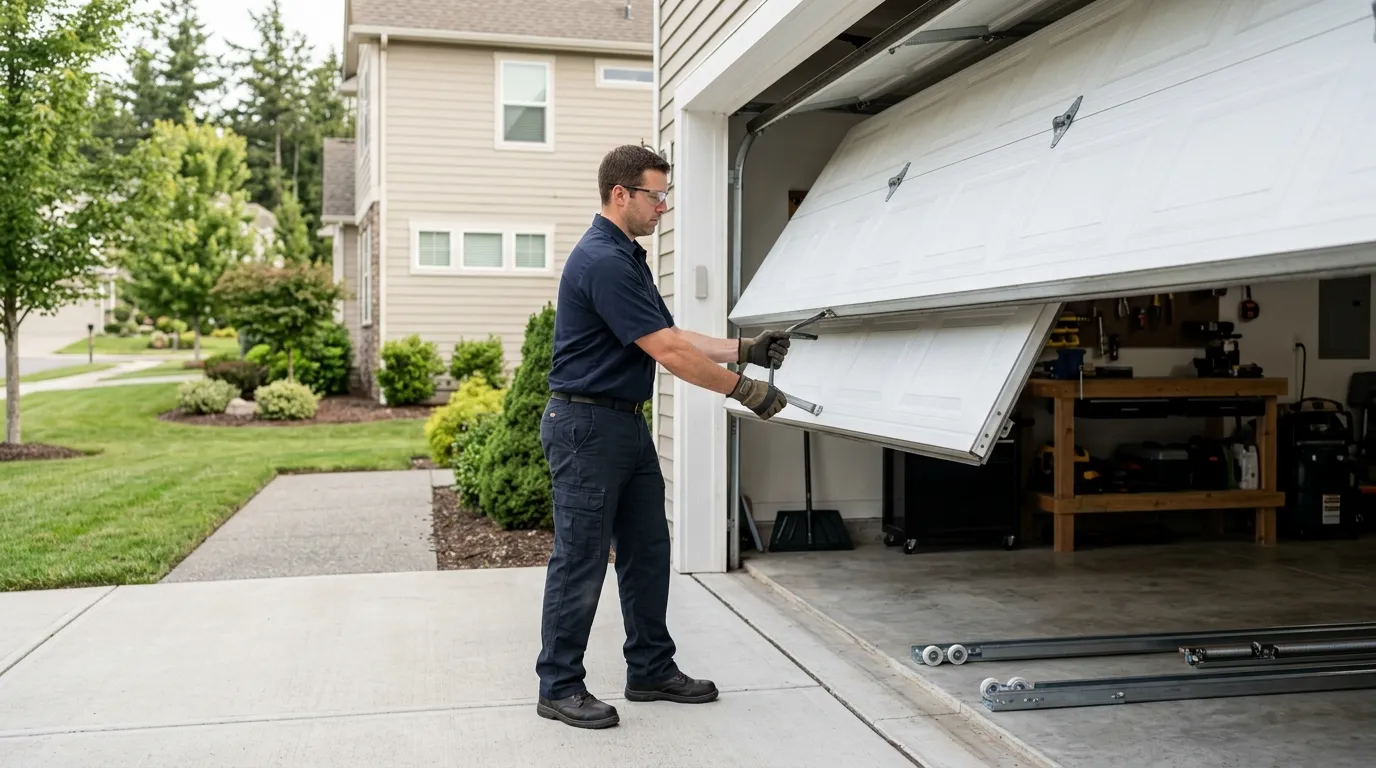
We don't stock every obsolete panel profile from that era. If a section is cracked or dented on a door old enough that the original manufacturer doesn't make a matching panel anymore, that's a straight replacement conversation, not a patch job - we'll tell you that on site rather than order a part that won't fit right.
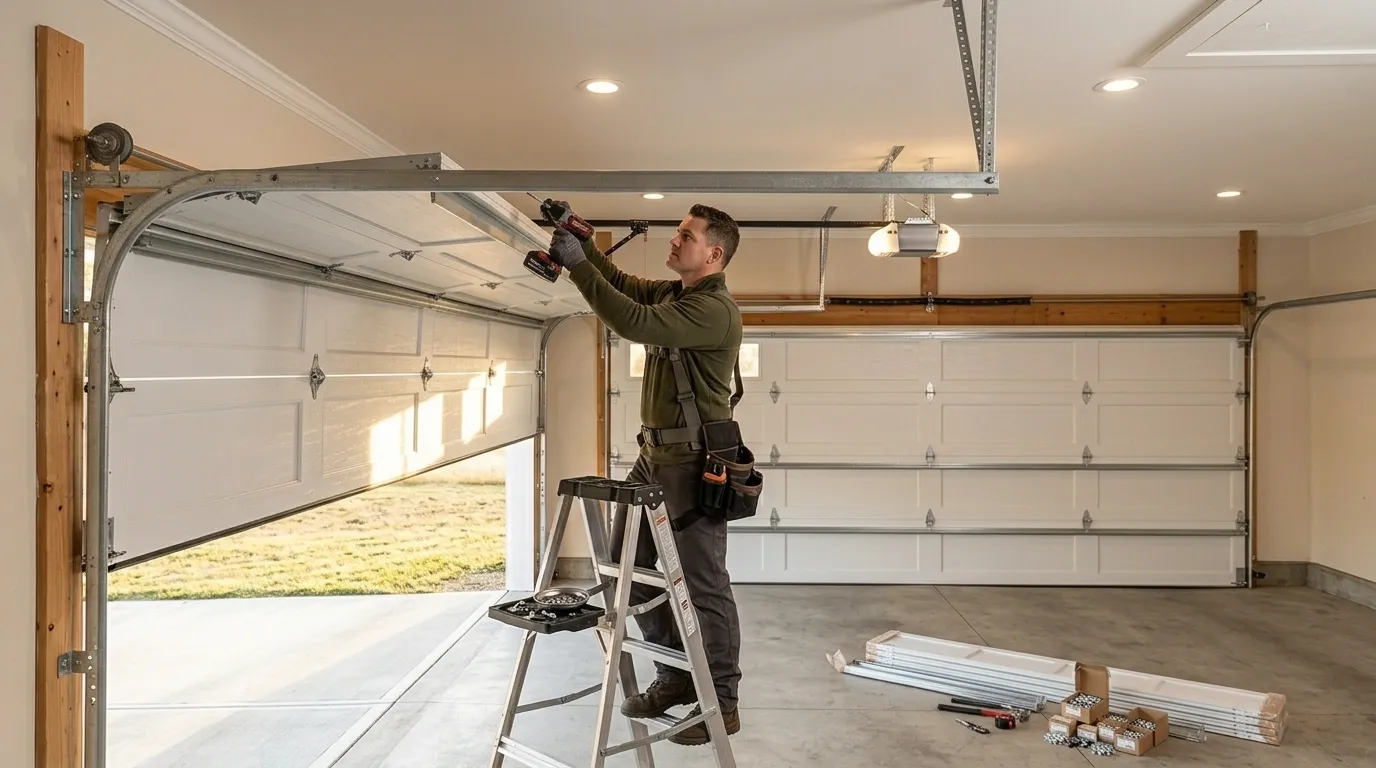
Openers get swapped more than repaired at this age. A commercial operator built in the 1970s or 80s usually isn't worth rebuilding once the drive gear goes; we carry current commercial-grade openers rated for the same door weights these older units were built to move.
What Can Go Wrong
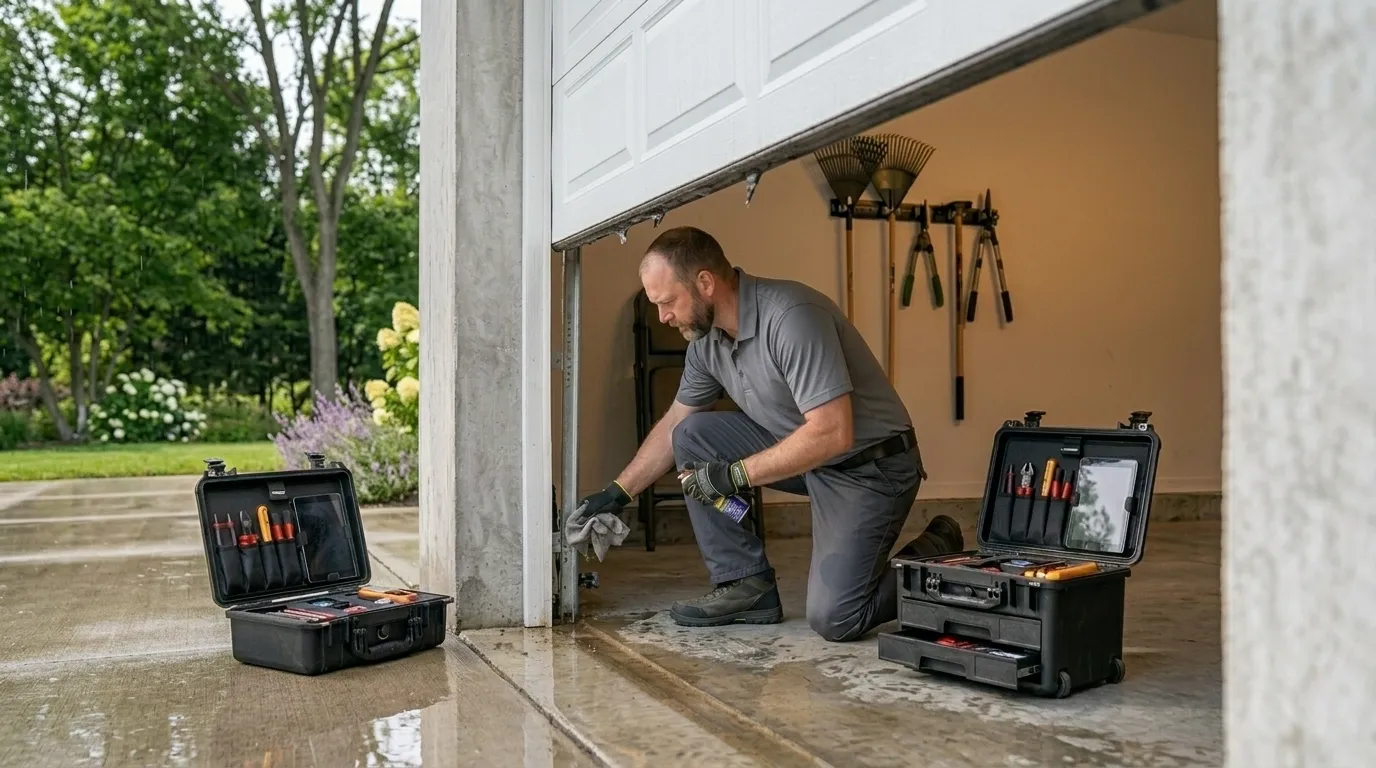
This area sits in a cold-severe climate band, same as the rest of the territory, and winter is where a fifty-year-old torsion spring finally gives out. Cold steel loses flex, lift cables that have a little surface rust seize instead of running smooth, and a spring that's been fatiguing quietly for years snaps on the coldest morning of the stretch rather than a mild one. That's not unique to Libertyville, but a building stock centered on 1976 means more of the springs in this town are original than in newer parts of the territory.
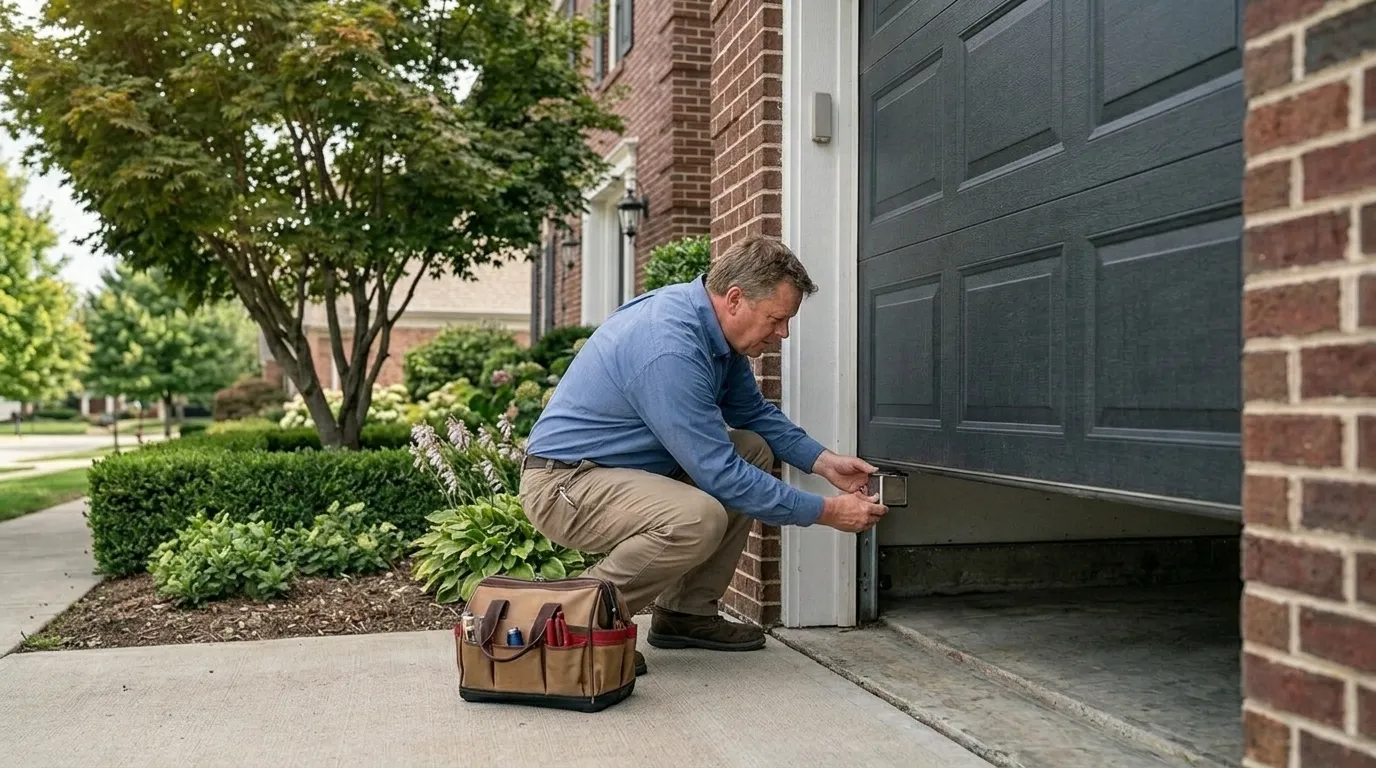
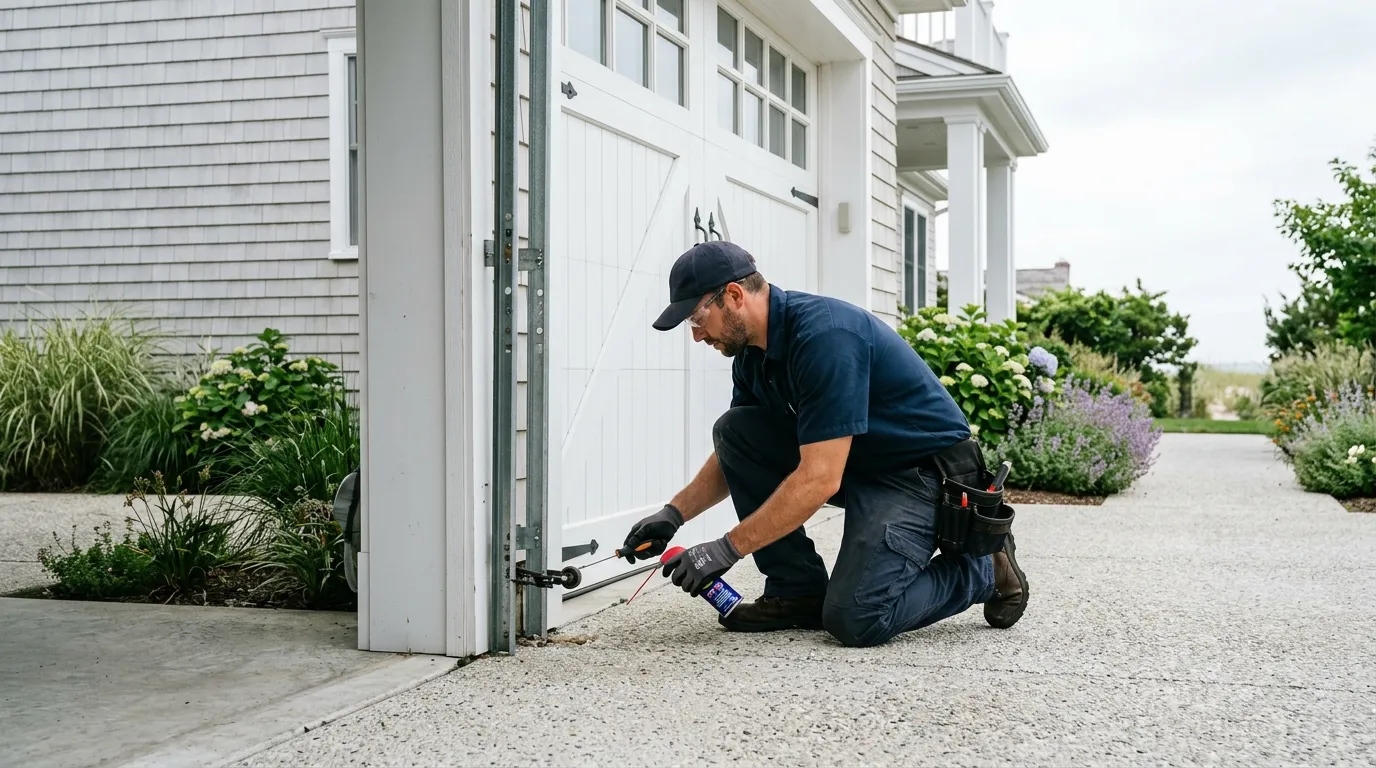
The other thing that goes wrong here is scale mismatch: an opener rated for a lighter residential-style door gets installed on a heavier commercial panel to save money, and it burns out the drive gear in a season or two. We see it on older buildings where a door got replaced at some point but the opener didn't. Photo eyes knocked out of alignment by a forklift or a delivery pallet are the other repeat call - simple fix, but it stops the door cold until someone looks at it.