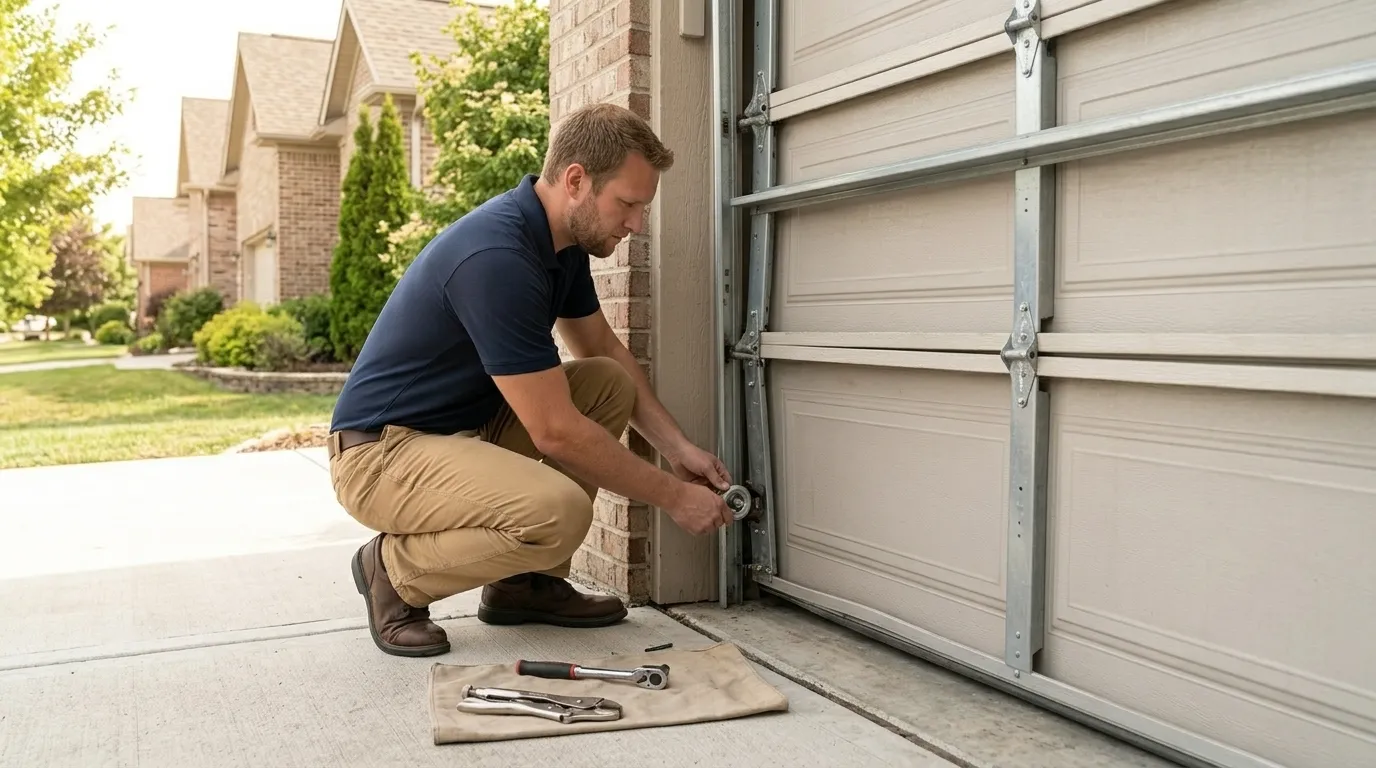

Time on the Job
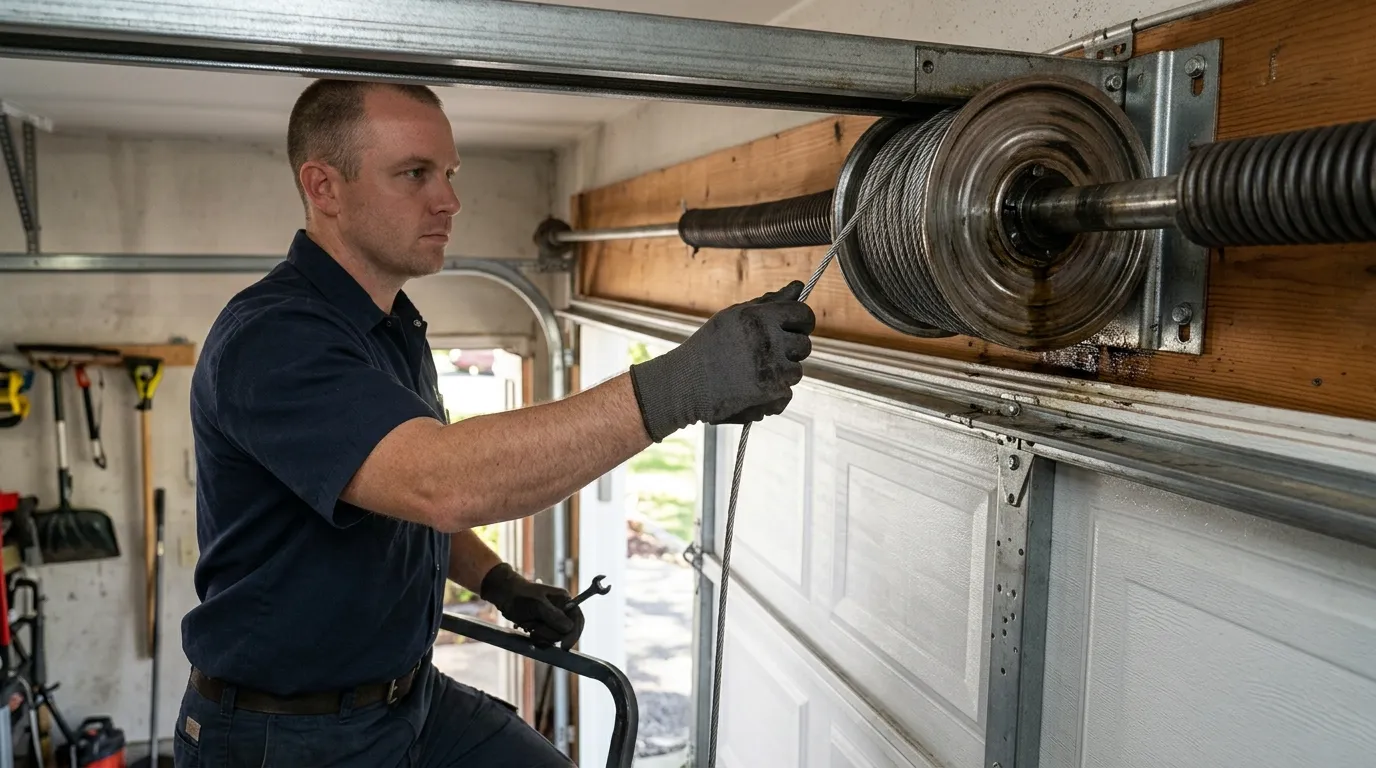
We come from Mundelein, about 2 miles away, so travel isn't the variable here - the door's age is. A broken spring on a door that's original to a mid-70s build often takes longer to diagnose than the repair itself, because we're confirming what's actually behind the panel before we order anything. Extension spring systems on older tracks don't fail the same way modern torsion springs do, and the failure point isn't always obvious from a visual check.
Once we know what we're working with, the repair itself moves at a normal pace. It's the front end - figuring out what generation of hardware is actually installed - that takes the extra few minutes on an older Libertyville house compared to a newer build a few miles down the road. We'd rather spend that time up front than come back a second time because we guessed wrong on a part.
Parts We Carry
Our truck stock leans toward what actually fails on the housing stock in this area, which given the 1976 median here, includes extension springs, older-style bottom brackets, and rollers sized for tracks that predate the current standard width. We carry torsion spring stock too, since plenty of Libertyville doors have already been upgraded at some point in the last few decades.
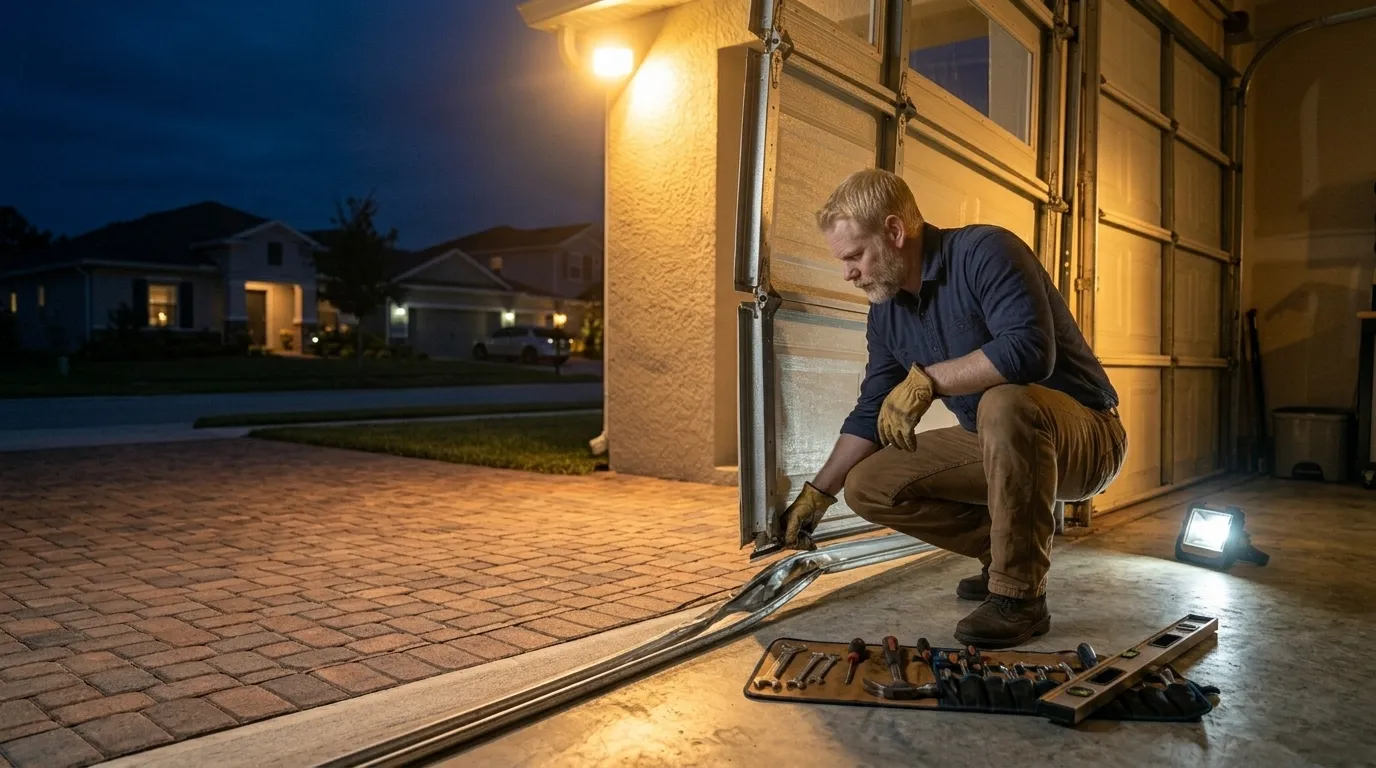
Here's the honest limit: if a door needs a full replacement track system that isn't a common size, or a panel that matches an obsolete profile no longer manufactured, that part isn't riding on the truck. We'll tell you on site whether it's a same-visit fix or something we need to order, and we won't pretend a mismatched part is a good long-term fix just to close the job faster.
What Can Go Wrong
Winter is where older hardware in this area shows its age. The climate here runs cold and severe by federal classification, and extension springs - more common on Libertyville's older housing stock than on newer builds - lose tension and snap more readily in sustained cold than torsion springs do. Bottom brackets on older tracks corrode at the mounting point over enough winters, and that's usually invisible until the door comes off the track on one side.
The other failure we see tied to the age gap: openers retrofitted onto original 1970s-era doors sometimes fight the door's own weight distribution, because the door wasn't balanced for the opener that got added later. That shows up as a motor working harder than it should, which shortens its life even though the door itself is fine. If your door predates 1980 or so, that's worth mentioning when you call - it changes what we check first.