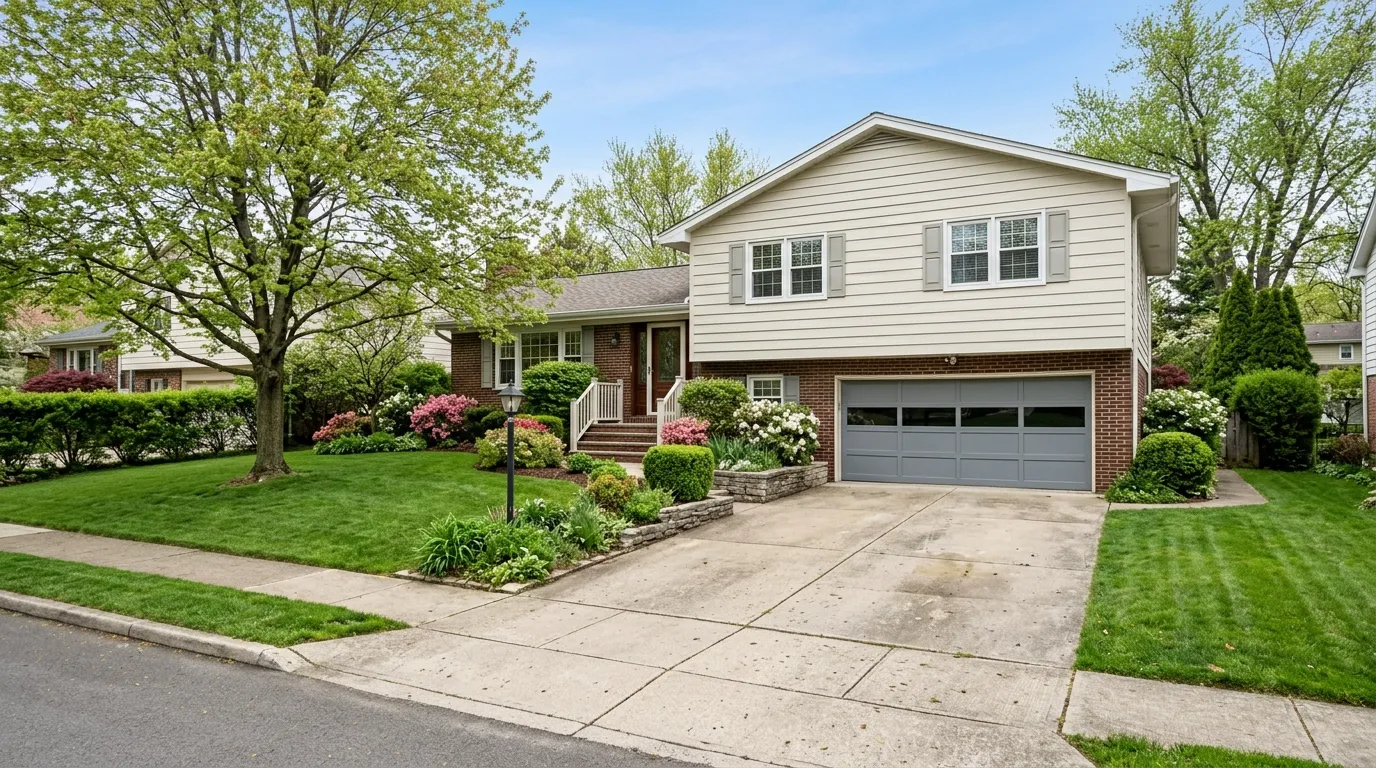
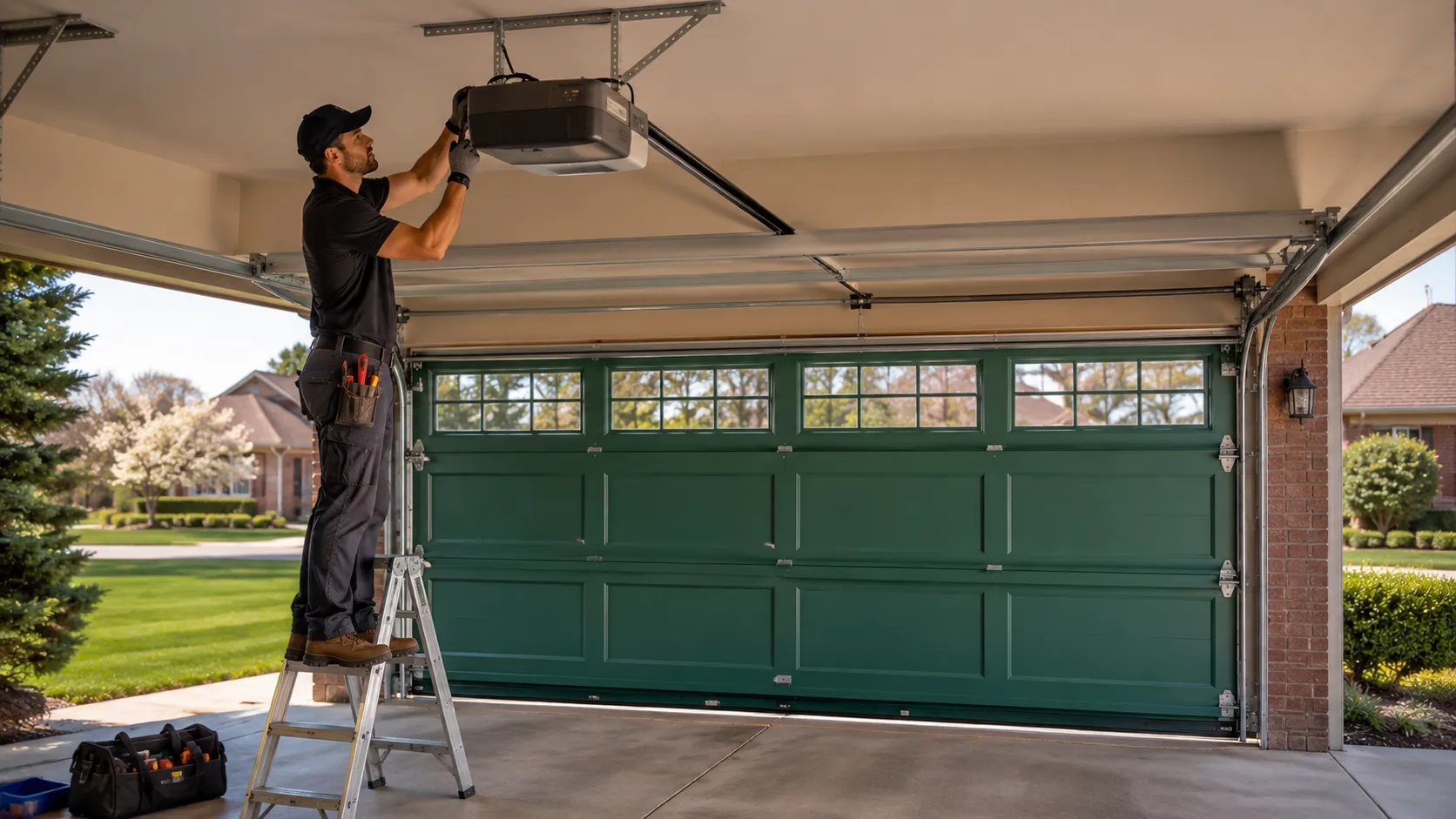
Winnetka homes date to 1938, often with narrow openings and low headroom that limit which openers fit. We travel from Mundelein to diagnose and fix them.
Winnetka's housing stock traces back to 1938, which means a good share of garages here were built before the automatic opener was ever bolted on. That matters for what you can safely do yourself. If your opener won't respond, check the obvious first: the wall switch, the breaker, and whether the remote's battery is dead. Those are fair DIY territory.
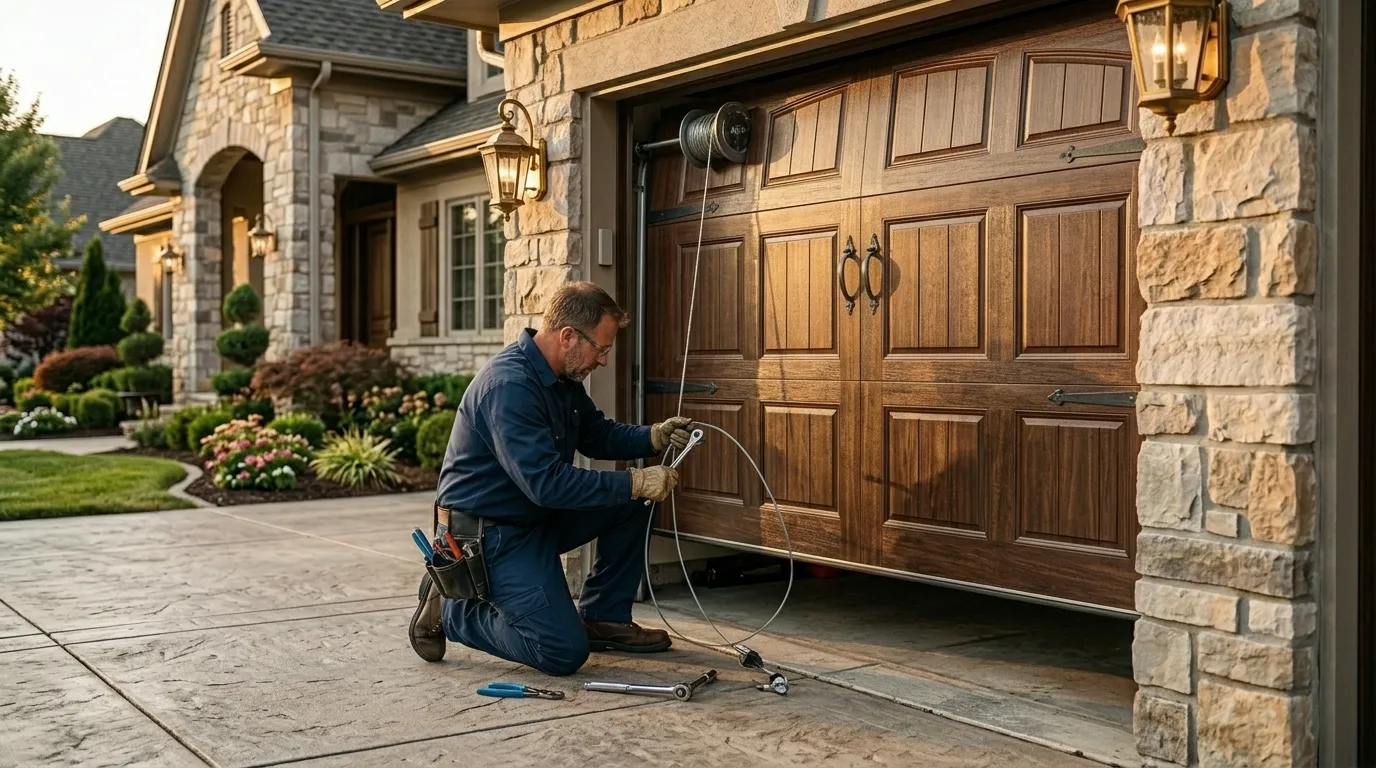
What isn't: pulling the opener head down to look at the gear, or messing with the travel limits on a unit that's fighting a heavier original wood door instead of a lighter modern steel one. In a house from this era, the door itself is often original or close to it, and it can weigh more than the opener was ever sized for. A homeowner troubleshooting a "weak" opener is sometimes actually looking at a door problem - bad springs, dry rollers, a bind in the track - that no amount of opener adjustment fixes.
Our honest limit here: we don't recommend forcing a modern chain-drive or belt-drive unit onto hardware it was never matched to. Sometimes the fix is the opener. Sometimes it's telling you the opener was never the real problem.
What You Are Seeing
With a median build year of 1938 in Winnetka, a lot of these garages were framed for single-car, narrow openings, sometimes with headroom that a standard extension-spring opener rail doesn't love. What you'll typically notice: the opener runs but the door lags or reverses partway, the motor hums without moving the door, or the unit strains audibly on cold mornings - a real issue given this region's severe cold winters, where stiff old lubricant and hardened seals make an opener work harder than it should.
Another pattern in older retrofits: the opener was added years after the door, sometimes to hardware that was never leveled for it, so the travel limits drift and the safety reversal trips constantly. That's not a electronics failure - it's a mechanical mismatch that shows up as an electronics complaint.
What It Costs
We're not going to hand you a number that doesn't apply to your door. Cost on an opener repair depends on what's actually failing - a logic board, a stripped gear, a burned-out capacitor, or a safety sensor knocked out of alignment - and on whether the opener itself is a good candidate for repair or overdue for replacement given the age of the drive and the door it's lifting.
Households in this part of the service area report a median income well above the broader area average, and we see that reflected in the kind of openers we're asked to service: heavier-duty units, some jackshaft models suited to low-headroom garages, and older belt drives that were built to last and are worth repairing rather than swapping. We'll tell you plainly if a part is cheaper to replace than chase, and we won't push a full unit swap when a $30 sensor realignment solves it.
What the Repair Takes
First step is always diagnosis on site - we're coming from Mundelein, about 18 miles out, so we book the visit with enough time to actually solve it rather than rush a guess. On a house from Winnetka's era, we're checking the opener's force and travel settings against the actual weight of the door, not just factory defaults, because a door built in 1938 rarely weighs what a factory setting assumes.
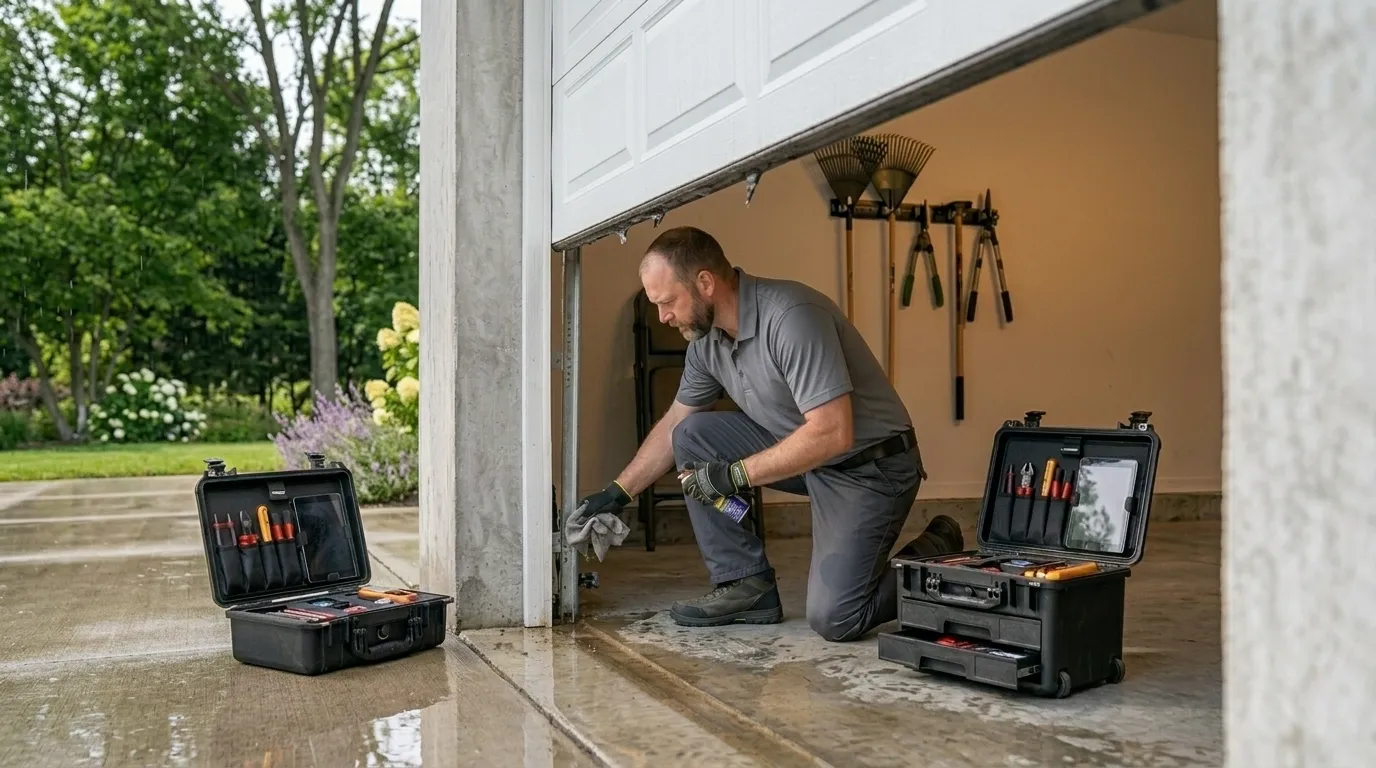
Parts availability is our one real constraint: some older jackshaft or low-headroom opener models use gears or circuit boards that aren't stocked on the truck and take a few days to source. We'll tell you that up front rather than promise a same-visit fix we can't back. Cold-weather calls also mean checking whether the issue is the opener at all, or grease and seals stiffened by the season - a distinction worth making before anyone pays for a new motor.
How it works
From “it’s stuck” to “it’s fixed”
01
Tell us what’s wrong
Describe the symptom - won’t open, loud bang, opener runs but the door won’t move.
02
On-site diagnosis
A technician tests the door under power and by hand and finds what actually failed.
03
Clear, up-front plan
You get the fix that’s needed and what drives the cost - before any work starts.
04
Repaired & tested
The repair is done, the door is set true and tested, and the work area left clean.
Serving Mundelein, IL - tell us what your door’s doing and we’ll take it from there.
My garage door opener works fine in summer but struggles in winter - is that normal?
It's common, especially with older doors. Cold makes lubricant thick and seals stiff, which forces the opener motor to work harder than it should. If the door itself is heavy or original hardware from an older build, the opener may be straining against the door rather than failing on its own. We check both before replacing anything.
Can you fit a modern opener to my older garage door?
Often yes, but not always as-is. Some Winnetka garages from this era have narrow openings or low headroom that rule out a standard rail opener. A jackshaft or low-headroom model is sometimes the better fit. We look at the door and the space before recommending a specific opener type.
Do you carry opener parts on the truck?
For common failures, yes. For older or less common opener models, particularly some low-headroom or jackshaft units, certain gears or boards aren't something we stock and take a few days to order. We'll tell you at diagnosis if that's the case rather than promise a same-day fix we can't deliver.
Ready to get your garage door sorted?
Tell us what it’s doing and where you are in Mundelein - we’ll take it from there.