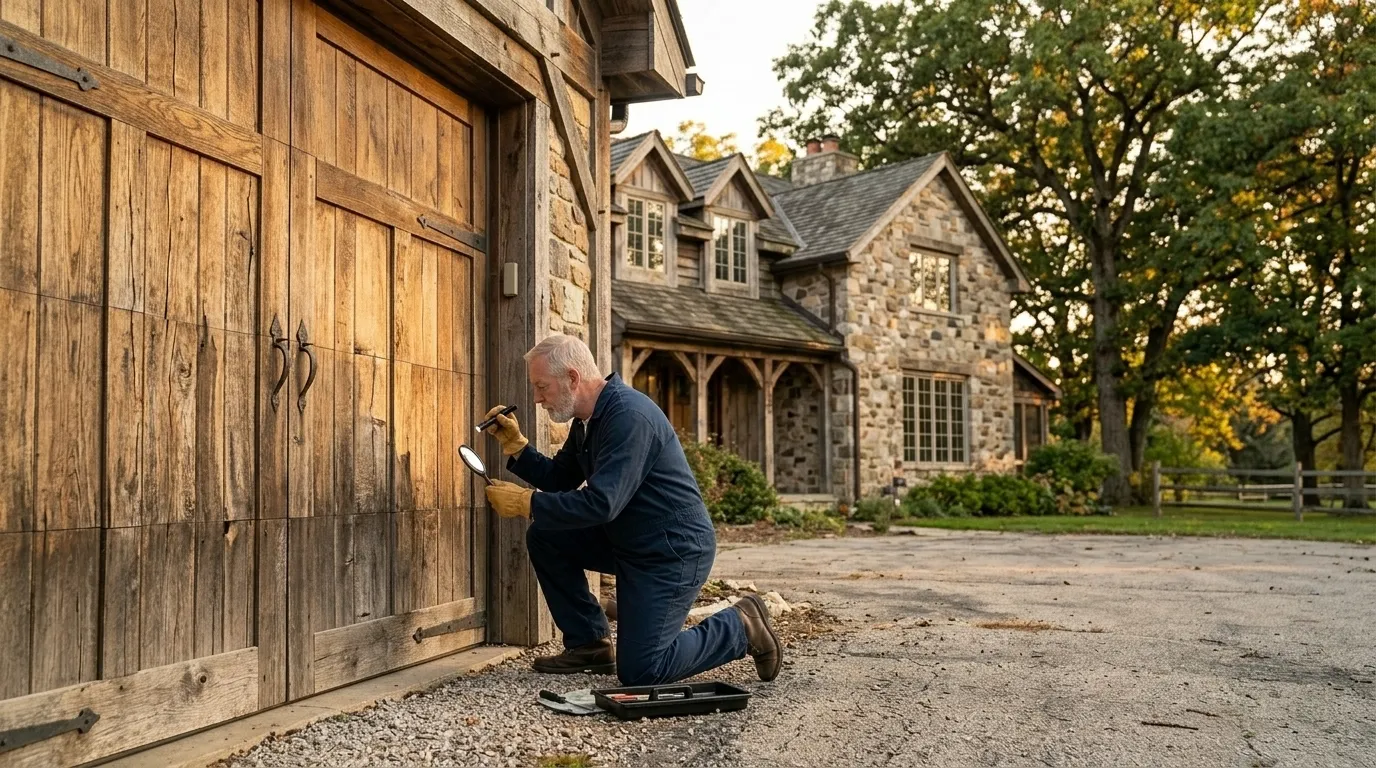
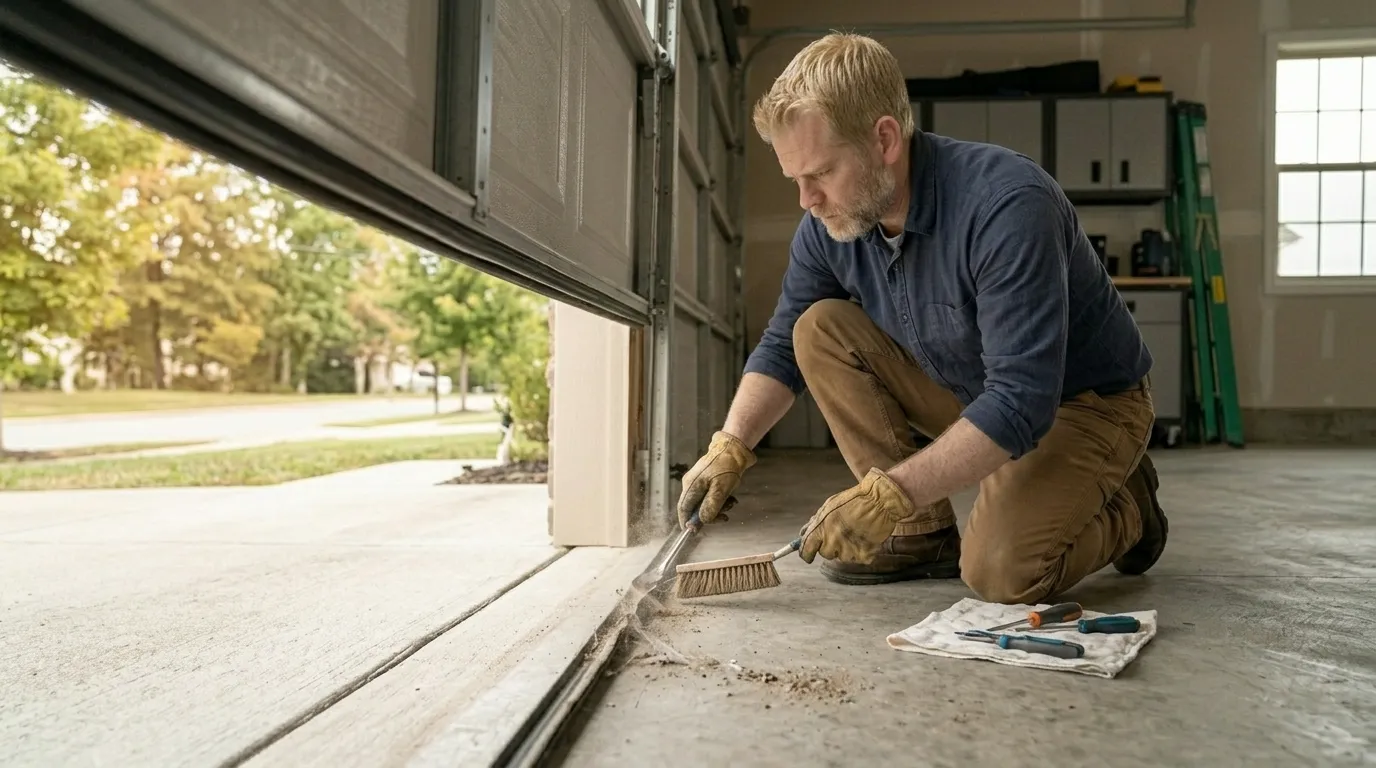
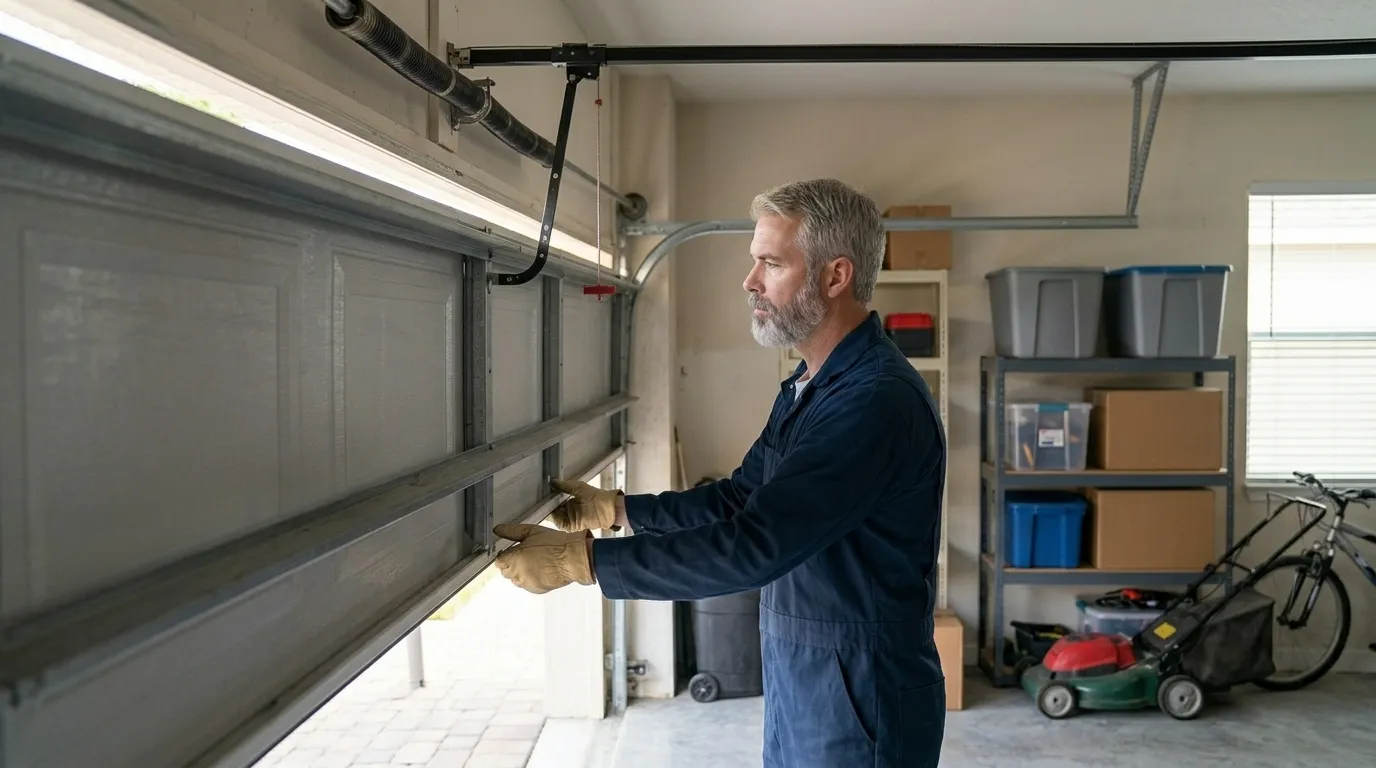
Most houses in this part of Lake County went up between 1938 and 2009, with the bulk of the stock dating to the 1980s and 90s across the 67 named areas around here. That matters because a door installed in 1988 is on its second or third opener by now, but often still running its original track and hinges. Steel expands and contracts more in a severe cold climate than people expect, and Mundelein sits squarely in that band. A door that sounded fine in September starts grinding in January because the grease in the rollers has stiffened and the metal has pulled slightly out of square. That's not the opener failing - it's the building doing what cold buildings do. If your house falls into that common 80s-90s build window, the noise you're hearing is more likely a lubrication or alignment issue than a motor problem. Homes closer to the 1938-1960 end of the range tend to have older jamb framing that's shifted over decades, which shows up as a rubbing or scraping sound on one side of the door rather than a rattle. Knowing roughly when your house was built tells you which noise to expect before you even open the garage.
What It Costs
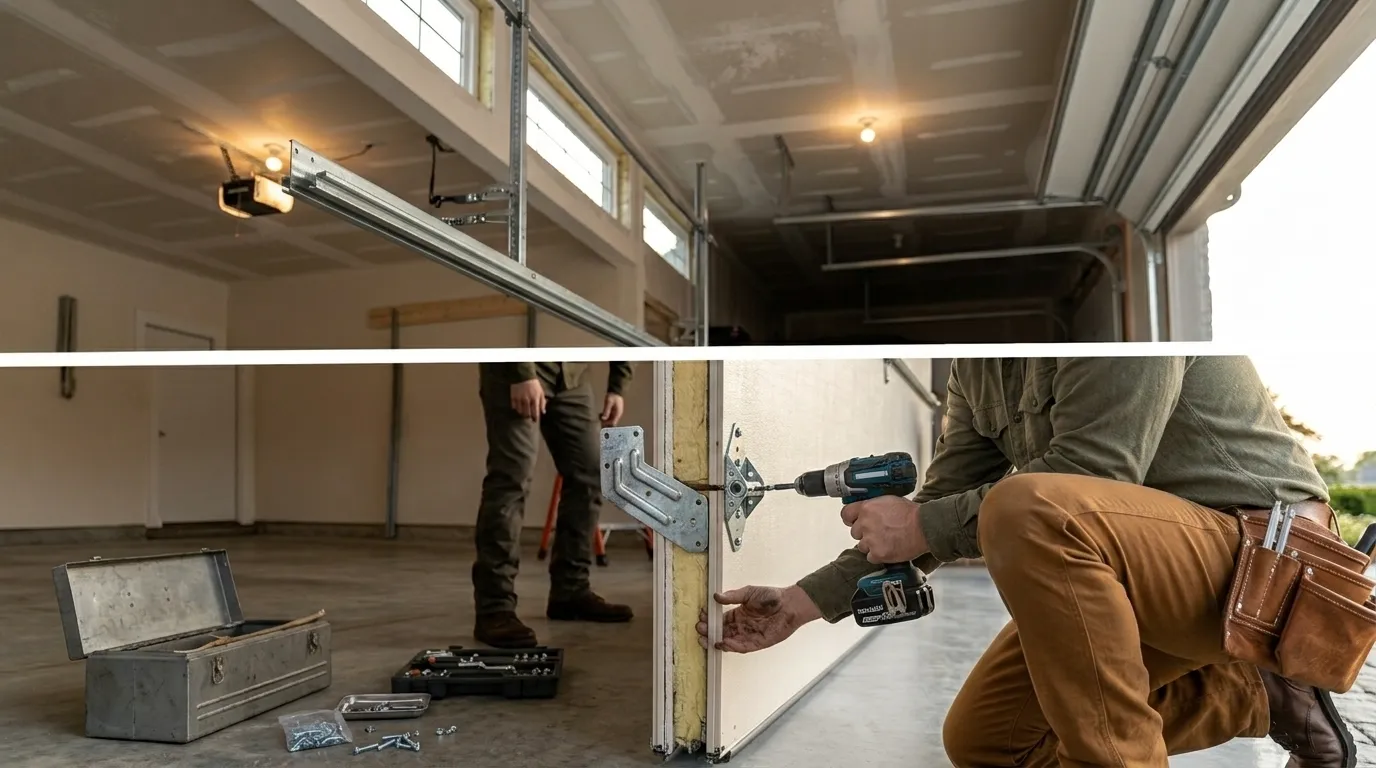
We don't have a set price list to hand you here, and we're not going to guess one. What we can tell you is that the fix for a noise almost never matches the fix people assume. A squeal is usually cheaper to solve than a homeowner expects - often just lubrication and a hinge check. A deep thud on lift, on the other hand, often means a spring that's about to go, and that's a heavier job with parts and labor both involved. The honest limitation here: over the phone we can narrow down what a noise probably is, but we can't quote a firm number without seeing the door, the spring size, and the track condition in person. Median household income across this service area runs north of $121,000, and we find most owners here would rather pay for an accurate diagnosis once than pay twice for guesswork. If a noise has been going on for more than a few weeks, that delay itself usually adds cost, because a small misalignment problem left alone wears the roller or the cable faster.
What Is Going On
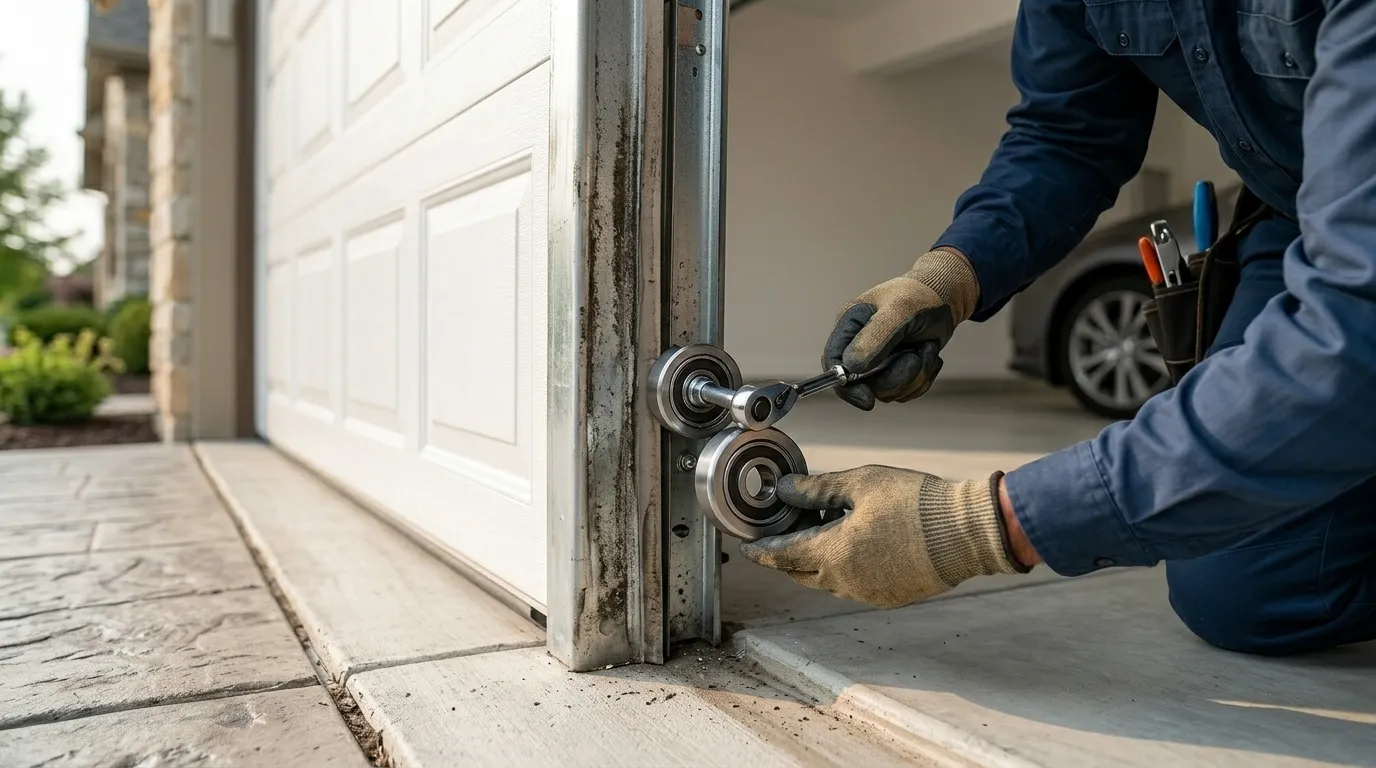
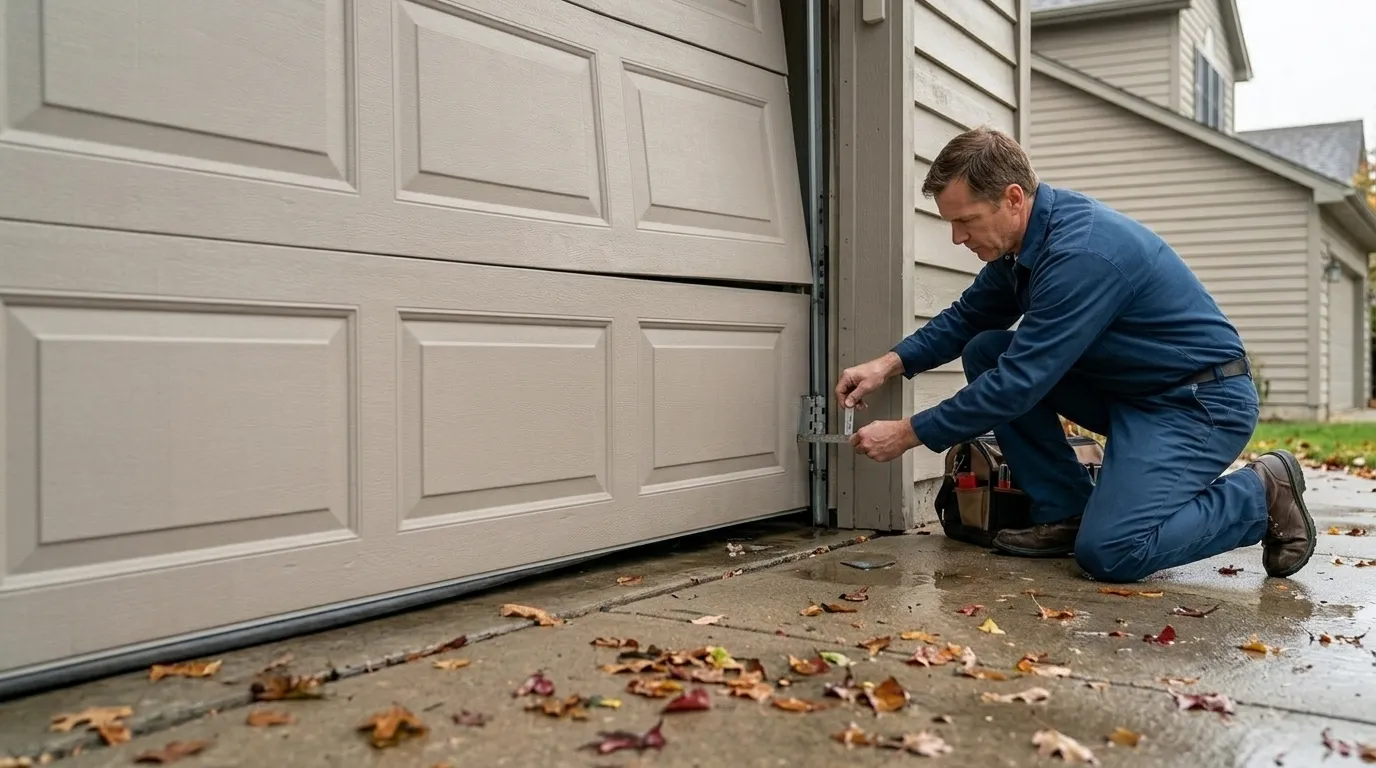
A rhythmic thump as the door travels is almost always a flat spot on a roller, not the motor - plastic rollers wear that way after years of use, and it's common in the 1980s-90s stock that makes up most of this area. A single loud bang, followed by the door refusing to move, is a spring letting go; on a torsion spring that's dangerous to touch and not a DIY fix. A high-pitched squeal that gets worse in cold weather points to dry hinges or rollers, made worse by the severe cold climate here stiffening old grease. A grinding sound low on one side, more common in houses built before 1960, often means the track has pulled away from the jamb as the house has settled. And a chain slapping against the rail on a chain-drive opener is usually just tension, an easy adjustment rather than a repair. None of these sounds are automatically an emergency - but a spring bang means stop using the door until someone looks at it.
Season by Season
Cold hits first in late fall, when steel torsion springs lose tension and openers strain to lift doors they handled easily in summer - across roughly 127,756 owner-occupied houses in this service area, that's the single biggest seasonal call driver. By deep winter, dried-out lubricant on rollers and hinges turns into the squeal and grind homeowners hear daily. Early spring brings thaw-and-refreeze cycles that can shift a track slightly, especially on older framing from the pre-1960 end of the housing stock, showing up as new scraping noises that weren't there in January. Summer is the quiet season for noise complaints but the season we see the most worn weatherstripping and cracked panels from UV and heat swings. If you take one thing from this: listen in November, not January. Catching a spring or roller issue before the hardest cold sets in is cheaper and safer than waiting until the door won't move at all.
How it works
From “it’s stuck” to “it’s fixed”
01
Tell us what’s wrong
Describe the symptom - won’t open, loud bang, opener runs but the door won’t move.
02
On-site diagnosis
A technician tests the door under power and by hand and finds what actually failed.
03
Clear, up-front plan
You get the fix that’s needed and what drives the cost - before any work starts.
04
Repaired & tested
The repair is done, the door is set true and tested, and the work area left clean.
Serving Mundelein, IL - tell us what your door’s doing and we’ll take it from there.
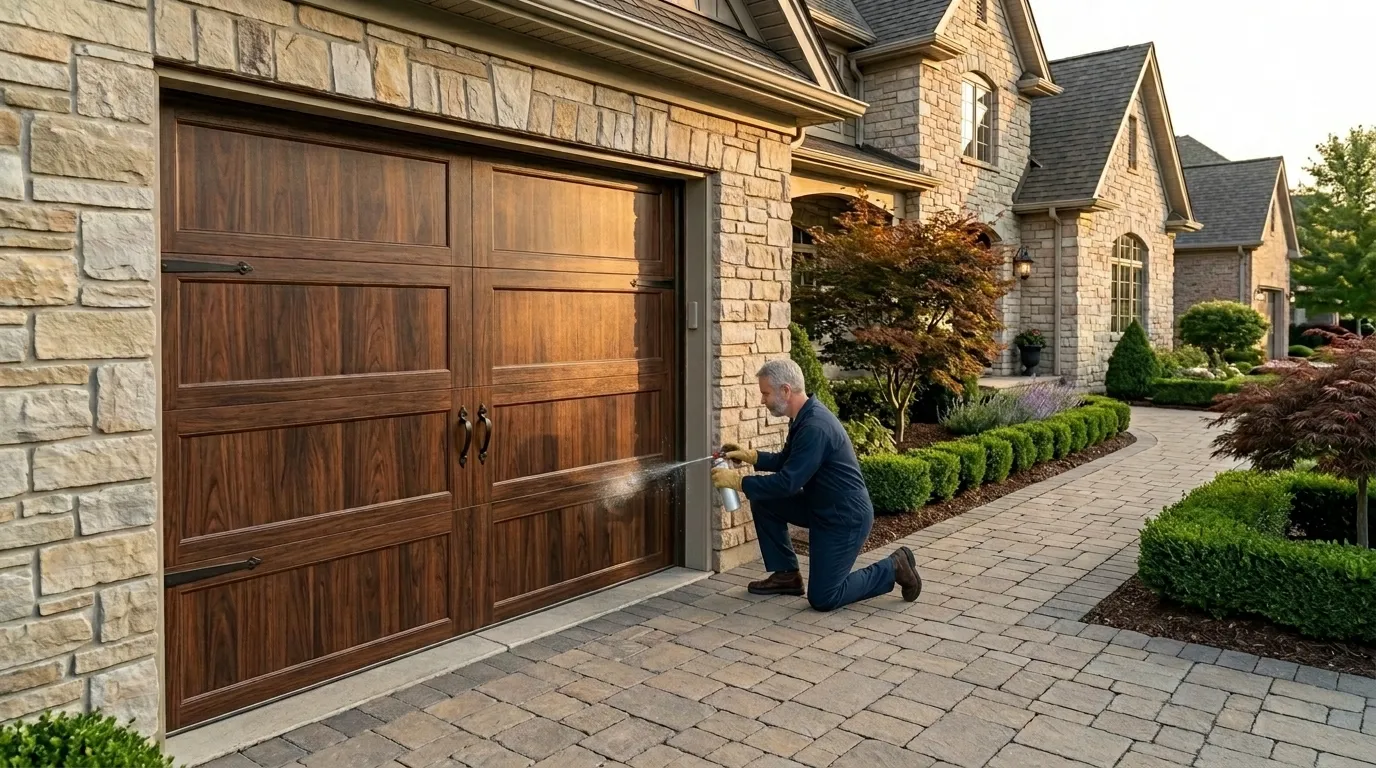
Cold stiffens the grease in rollers and hinges, and steel parts contract slightly, which changes how they sit against the track. In Mundelein's cold climate this shows up every winter on doors that ran quiet all summer. Lubrication built for temperature swings usually fixes it; if the squeal comes with hesitation on lift, have someone check the spring too.
Is a banging noise always a broken spring?
Not always, but a loud bang followed by the door feeling heavy or refusing to open is the classic sign of a torsion spring snapping. Stop using the door and don't try to force it. It's dangerous to handle yourself, and it's one of the more common calls we get from houses built in the area's 1980s-90s stock where original springs are aging out.
My house is older, why does the door scrape on one side?
Houses toward the 1938-1960 end of this area's housing range have had more decades to settle, and the garage jamb can shift slightly out of square. That often shows up as a scraping or rubbing sound on one side of the track rather than a squeal. It's a track alignment issue more than a door problem, and it's worth fixing before it wears the roller.
Ready to get your garage door sorted?
Tell us what it’s doing and where you are in Mundelein - we’ll take it from there.