This Area's Housing
The median year built here is 1977, noticeably older than the 1984 median across the wider Mundelein service area. That decade matters more than it sounds like it should. Doors and openers installed through the late 70s and early 80s were built to a different set of assumptions about insulation, drum size, and spring wind than what's standard now. With around 5,135 households in Fox Lake, this is a smaller, more consistent pocket of that era than some of the newer subdivisions we cover elsewhere. Median household income here runs $69,896, well under the $121,583 median across the full service area, and that gap shows up in how people approach a repair: more patch-and-extend, fewer full teardown replacements, and more interest in getting another decade out of hardware that's already paid for itself. That's not a criticism - it's a reasonable way to own a garage door, and it's the job we're usually asked to do.
How That Shows Up in the Door
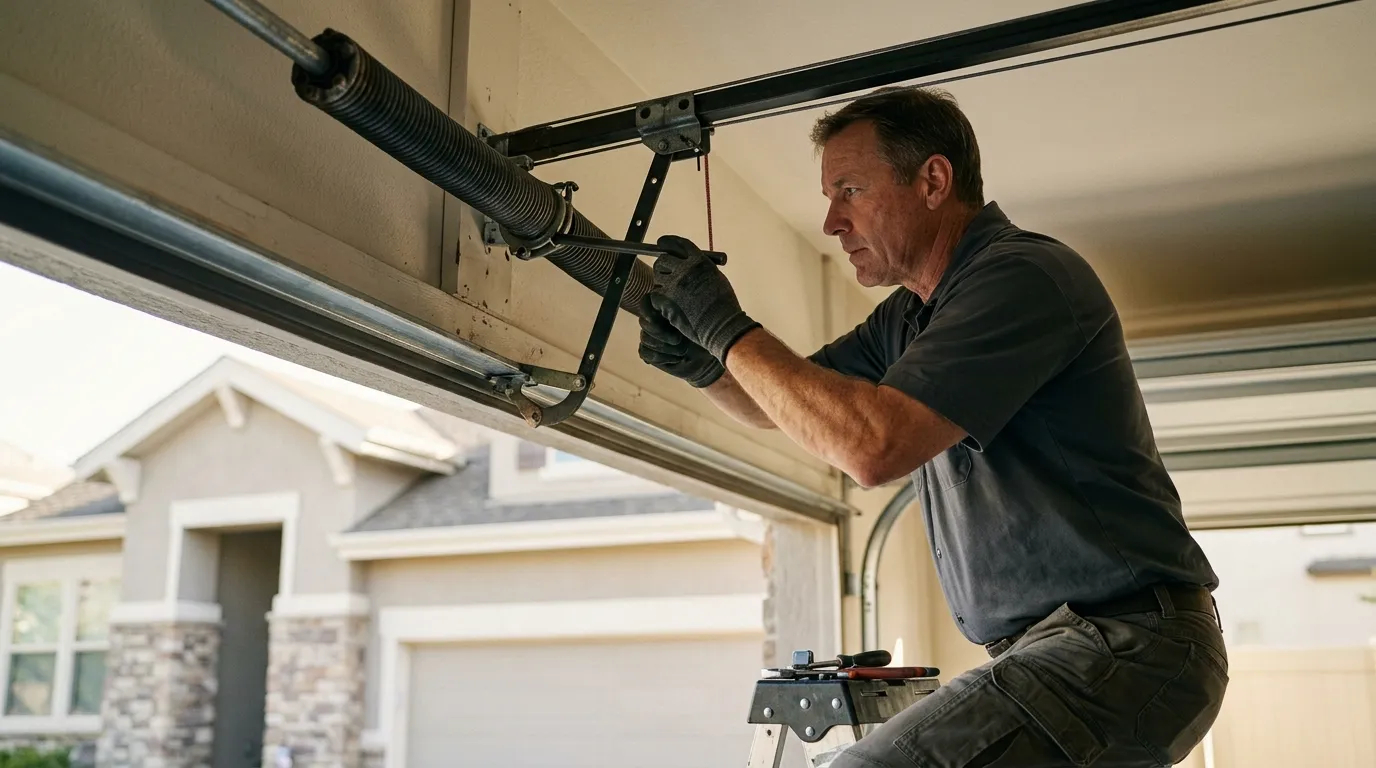
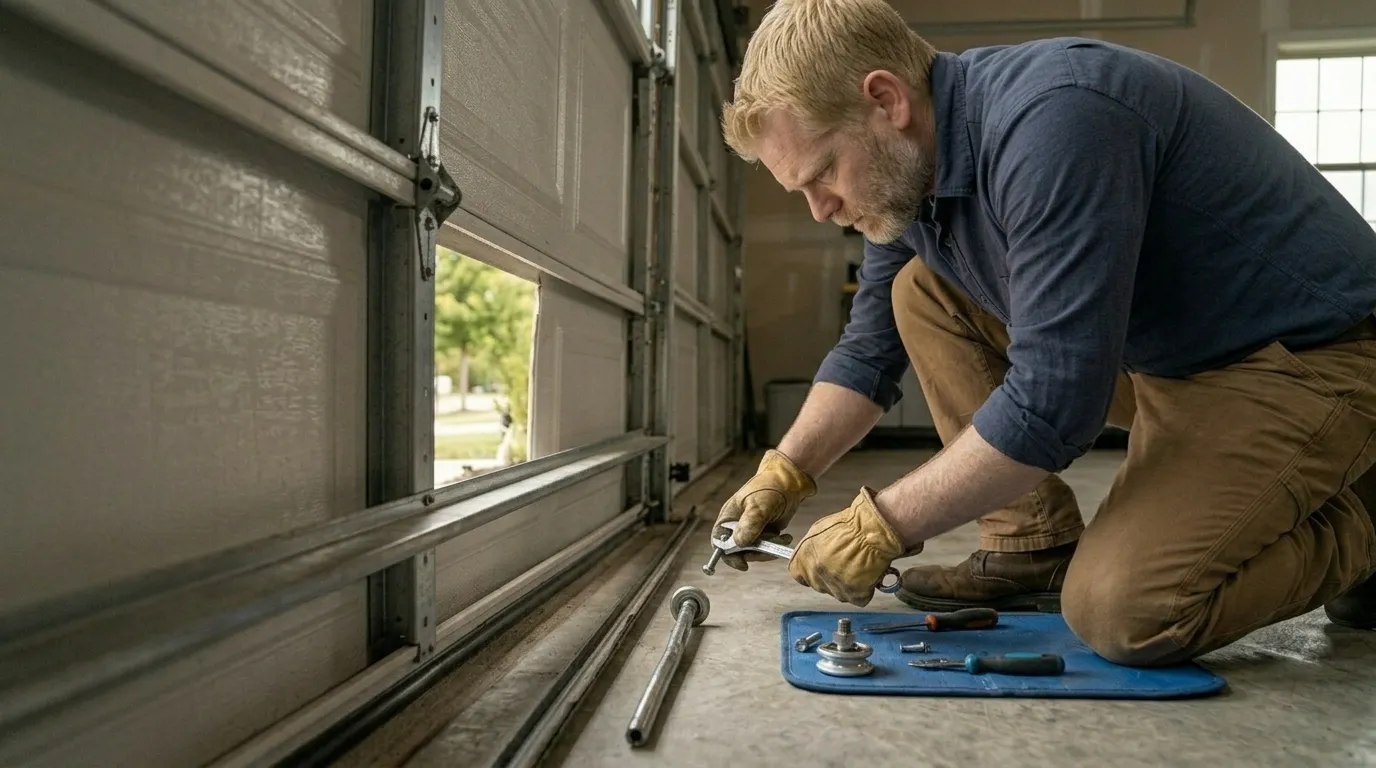
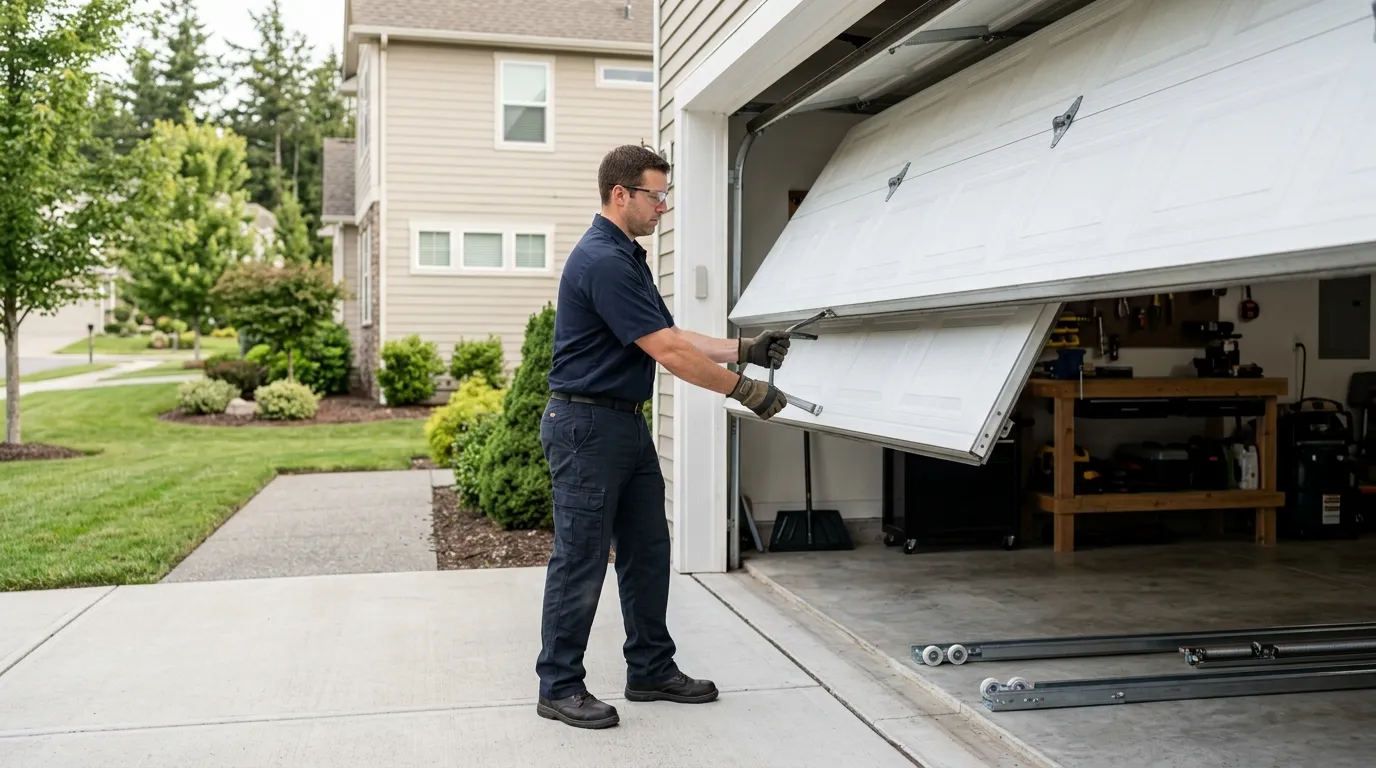
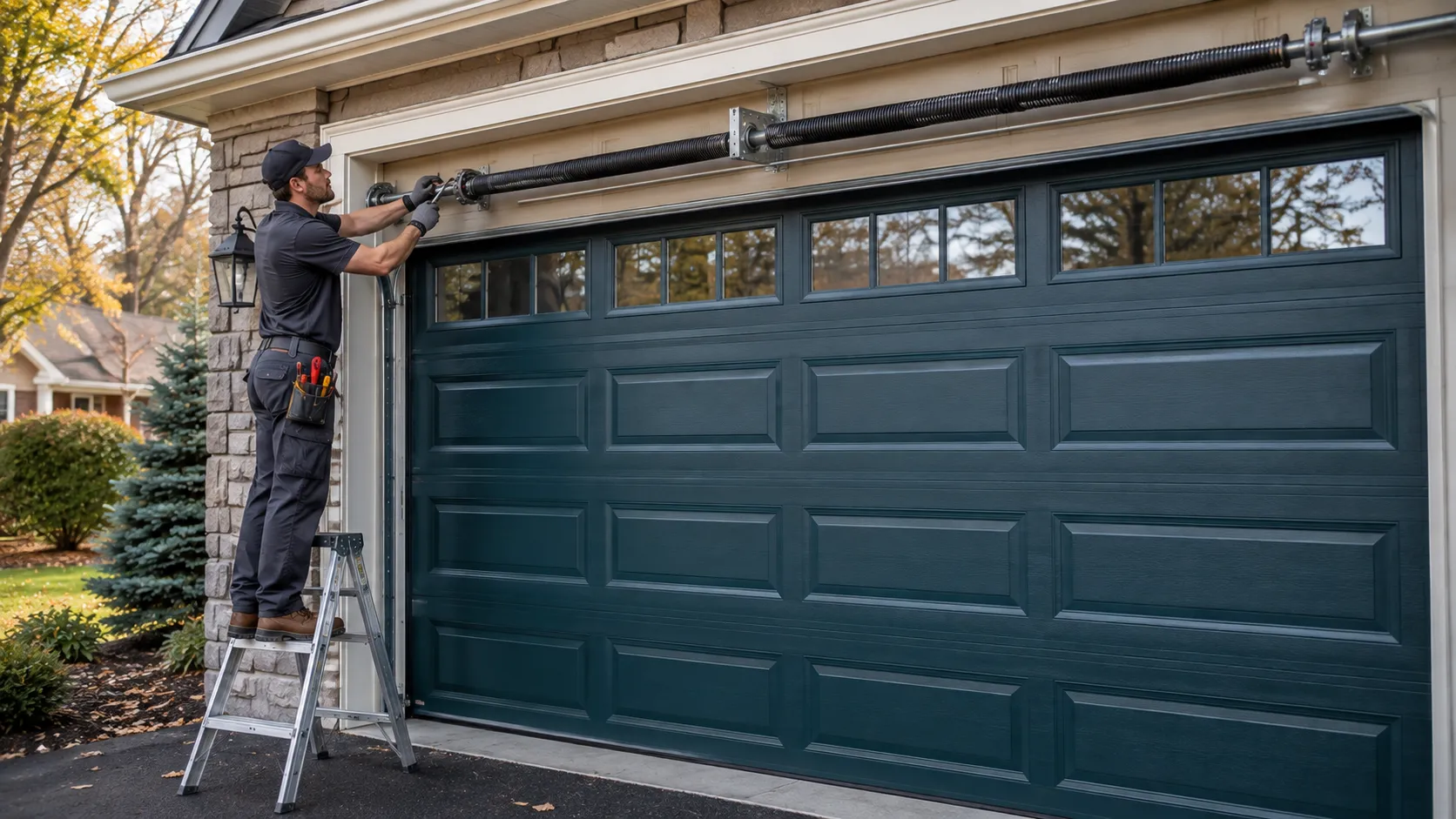
Doors from the 1977 era were mostly built with lighter steel and simpler torsion or extension setups than what ships today, and after enough winters the spring wire fatigues at a different rate than newer high-cycle springs do. Combined with a cold, severe climate, that older steel and hardware sees real stress from repeated freeze-thaw cycling on the track and roller channel. We routinely find rollers that have gone flat-sided from years of cold-stiffened grease, and cables with rust starting at the drum end where moisture collects. None of that means the door needs to be replaced - most of it is a spring, roller, and cable job, not a full unit swap. Where we do recommend replacement is when the door panels themselves have rusted through at the bottom section, which happens more on doors this age that sit low to grade. That's the one honest line we draw: if the steel's gone, no adjustment fixes it, and we'll tell you that instead of billing you for a patch that won't hold.