This Area's Housing
Golf's housing runs older than the median for our whole service area. Where the broader coverage area centers on homes built in the 1980s and 90s, Golf's typical house dates to around 1965. That's a real gap, not a rounding difference, and it shows up in the garage.
A 1965 build usually means a single-layer steel or aluminum door, sometimes still on its original extension springs rather than the torsion setup that became standard later. The opening itself also tends to run narrower than what you'd find in a house built two decades on, since single-car and narrow double bays were common on homes this age.
With median household income here at $238,098, well above the wider area's $121,583, we also see more owners choosing higher-end insulated replacements and custom-width doors than the typical torsion-spring swap you'd get elsewhere. The money's there to do it right the first time, and a lot of Golf homeowners do.
How That Shows Up in the Door
An older door on original hardware fails differently than a ten-year-old door. Extension springs stretch and lose tension gradually, so the door gets heavier to lift by hand months before it fails outright. That's different from a torsion spring, which usually just snaps.
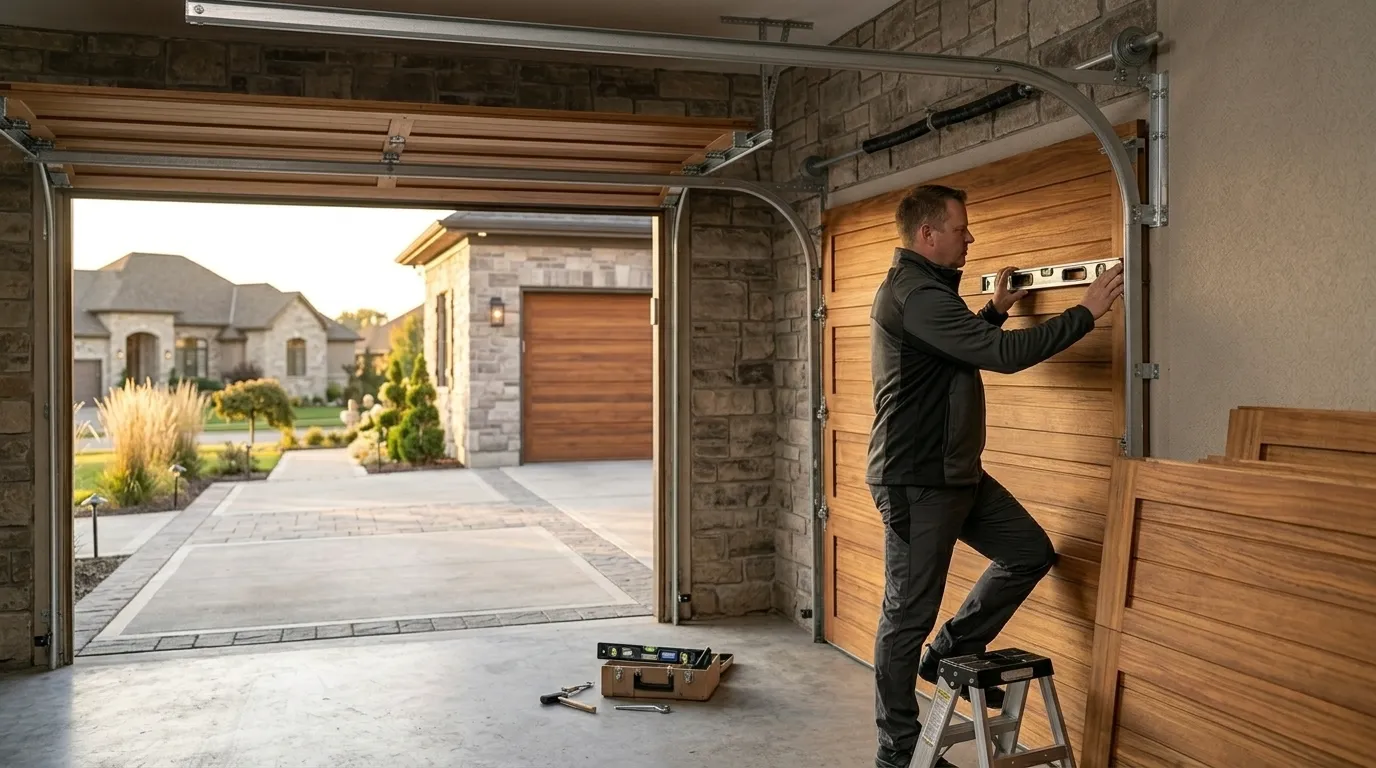
Narrower original openings also mean stock replacement panels don't always drop in without trimming the track or resetting the header bracket. If your door is original to a 1965 build, we check the rough opening before we quote a full replacement, not after.
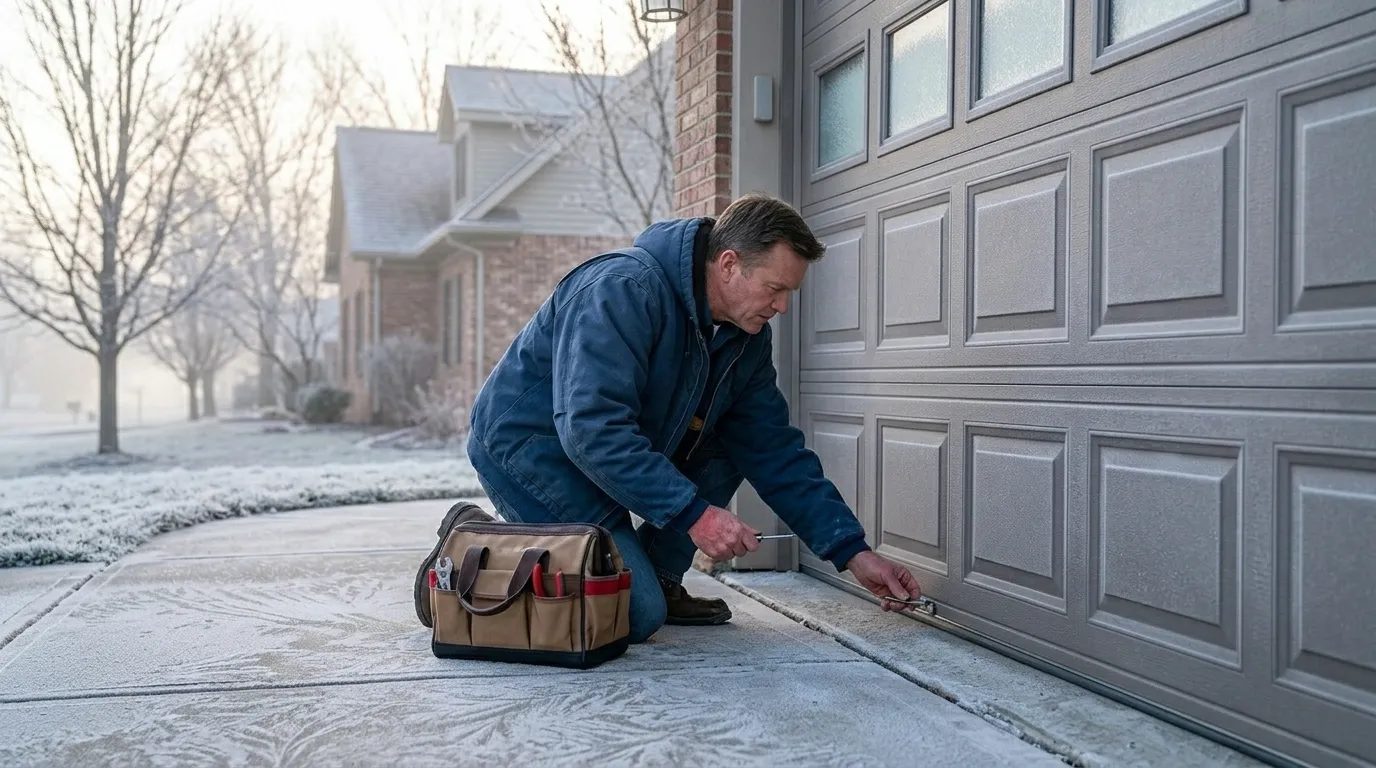
The cold winters here don't help old hardware either. Steel that's flexed for sixty seasons of freeze and thaw gets brittle at the hinges and rollers, and that's usually where we find the actual point of failure, not the spring everyone assumes is the problem.