This Area's Housing
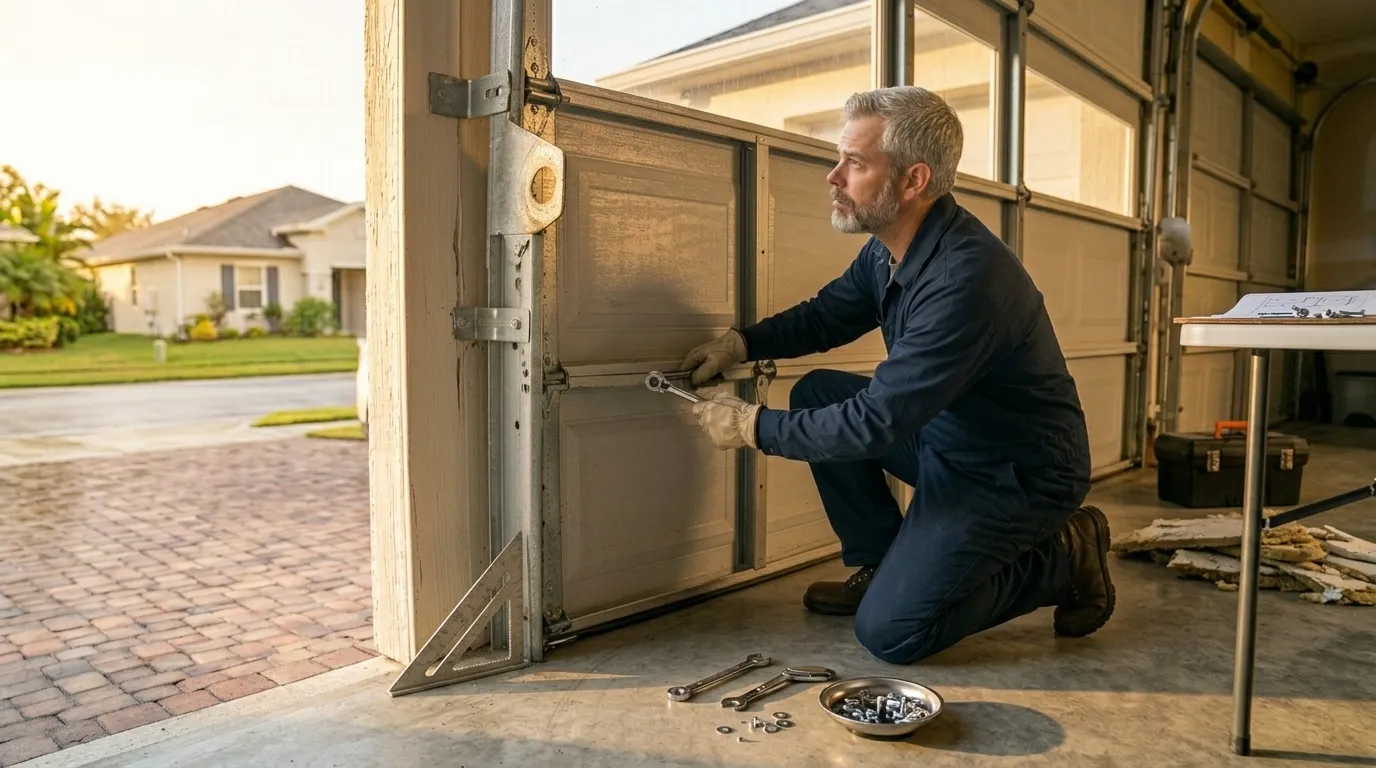
The median year built here is 1985, close to the 1984 median across the broader area we cover, so Lake Barrington isn't an outlier - it's close to the center of the curve. What that means in practice: these are not the oldest doors we see, and they're not the newest either. They're old enough that the original springs are well past a normal cycle life, but the framing and header heights are standard enough that replacement doors fit without carpentry surprises.
Household income here runs higher than the wider area's median of $121,583 - Lake Barrington's figure is $132,857. That doesn't change how a spring fails, but it does show up in what people choose when a door needs replacing rather than repairing: more owners here opt for insulated steel or wood-composite doors instead of patching an original single-layer panel. We don't push one choice over the other. A well-maintained 1985 door with a new spring set can outlast a cheap new one, and we'll tell you that on the phone before we drive out.
How That Shows Up in the Door
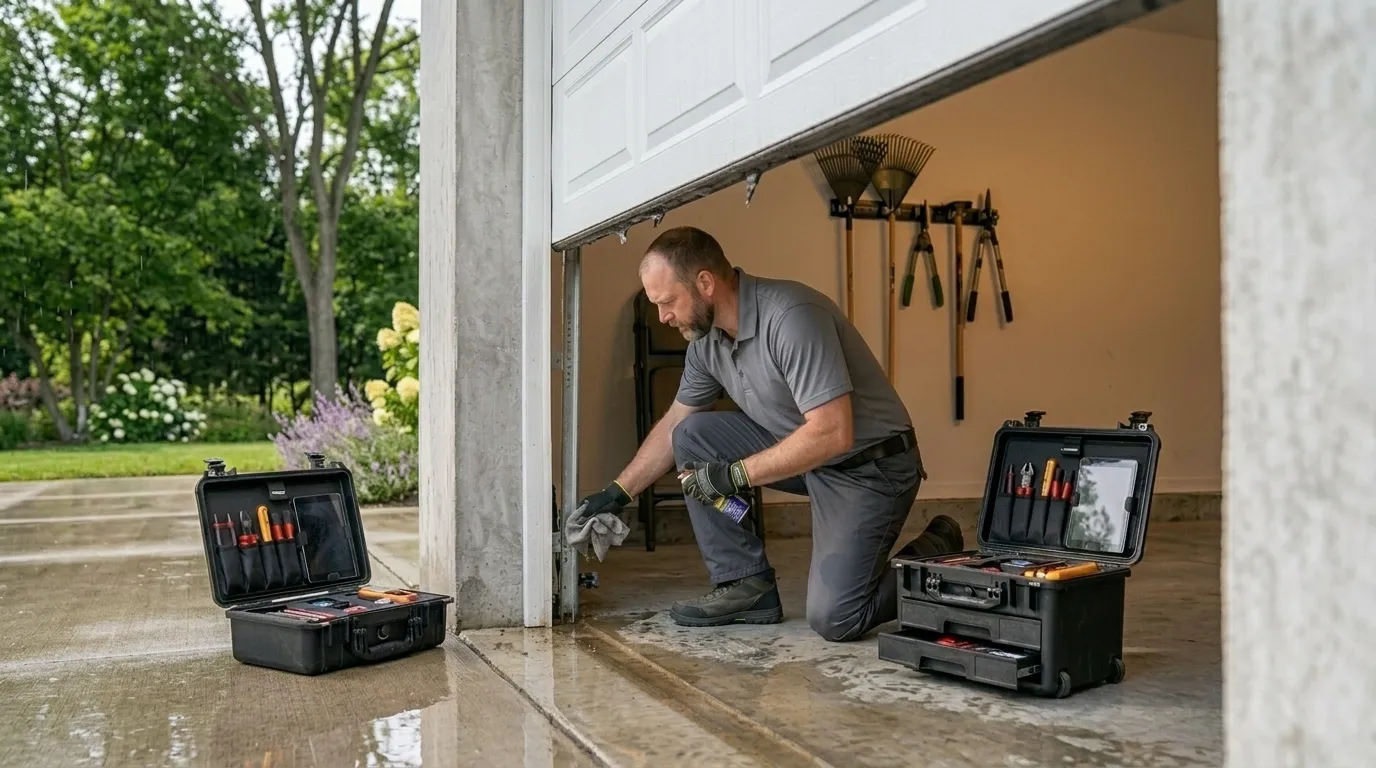
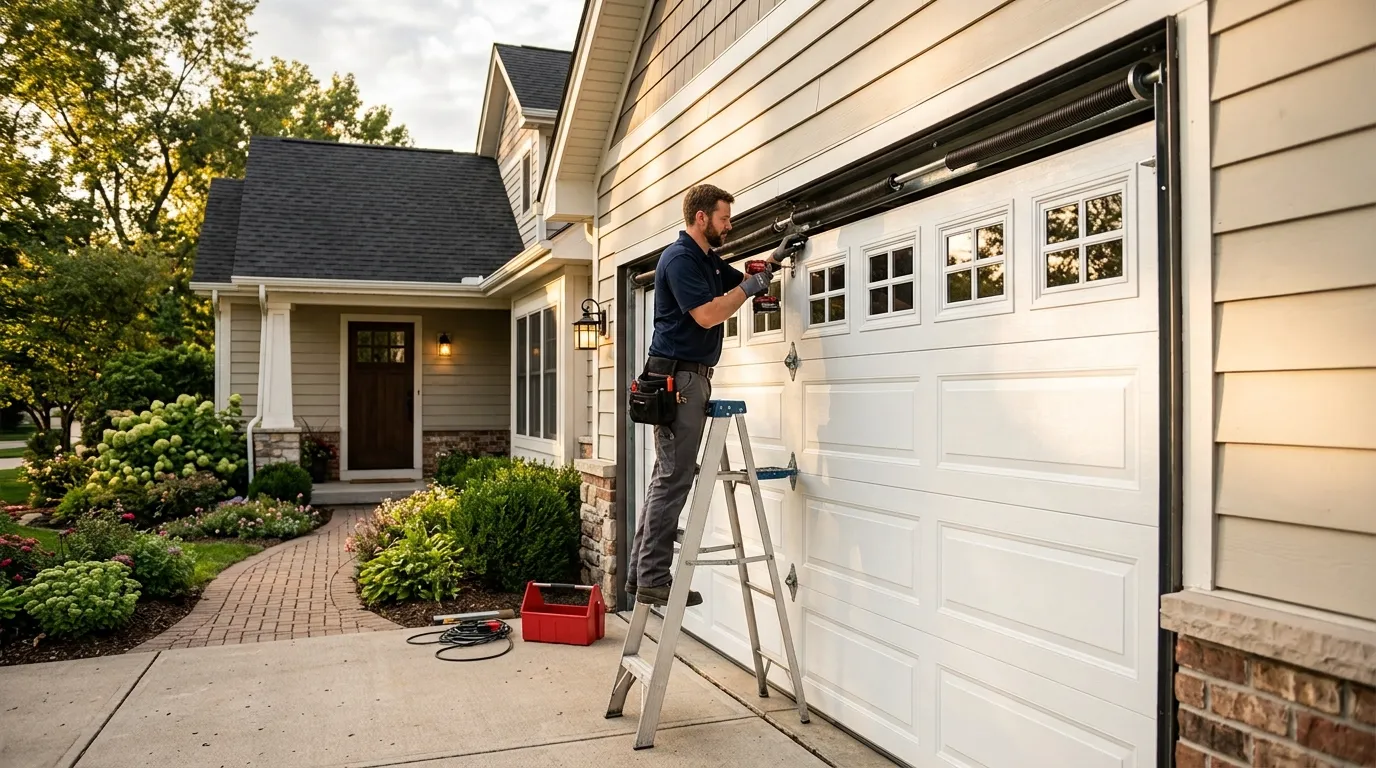
This area falls in a severe cold climate band, and that matters more for a door this age than for a newer one. Original torsion springs from the mid-1980s were wound for a lighter, single-skin panel. Over time, cold contracts the steel and the coil loses tension faster than it would in a milder climate - so a spring that's lasted 25 years can snap in a single cold snap rather than wearing out gradually. We also see brittle nylon rollers on these older doors; nylon gets stiff and cracks in sustained cold, and a cracked roller under a heavy steel panel is what turns a quiet door into one that bangs on every open and close.
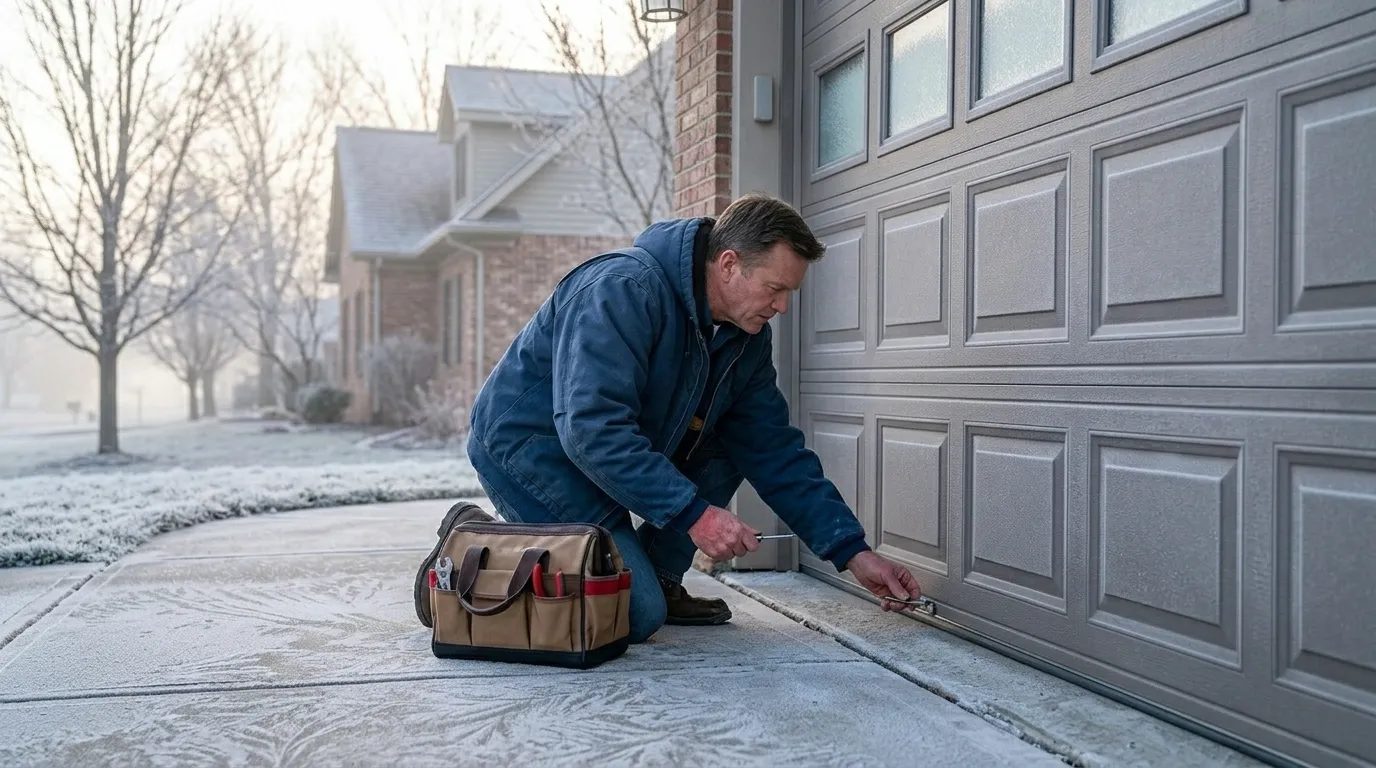
Weatherstripping is the other piece. On a door this age, the bottom seal has usually been replaced once or twice already, but the astragal and side seals are often original and have hardened past the point of actually sealing. In a cold winter that's a real gap, not just a cosmetic one.