This Area's Housing
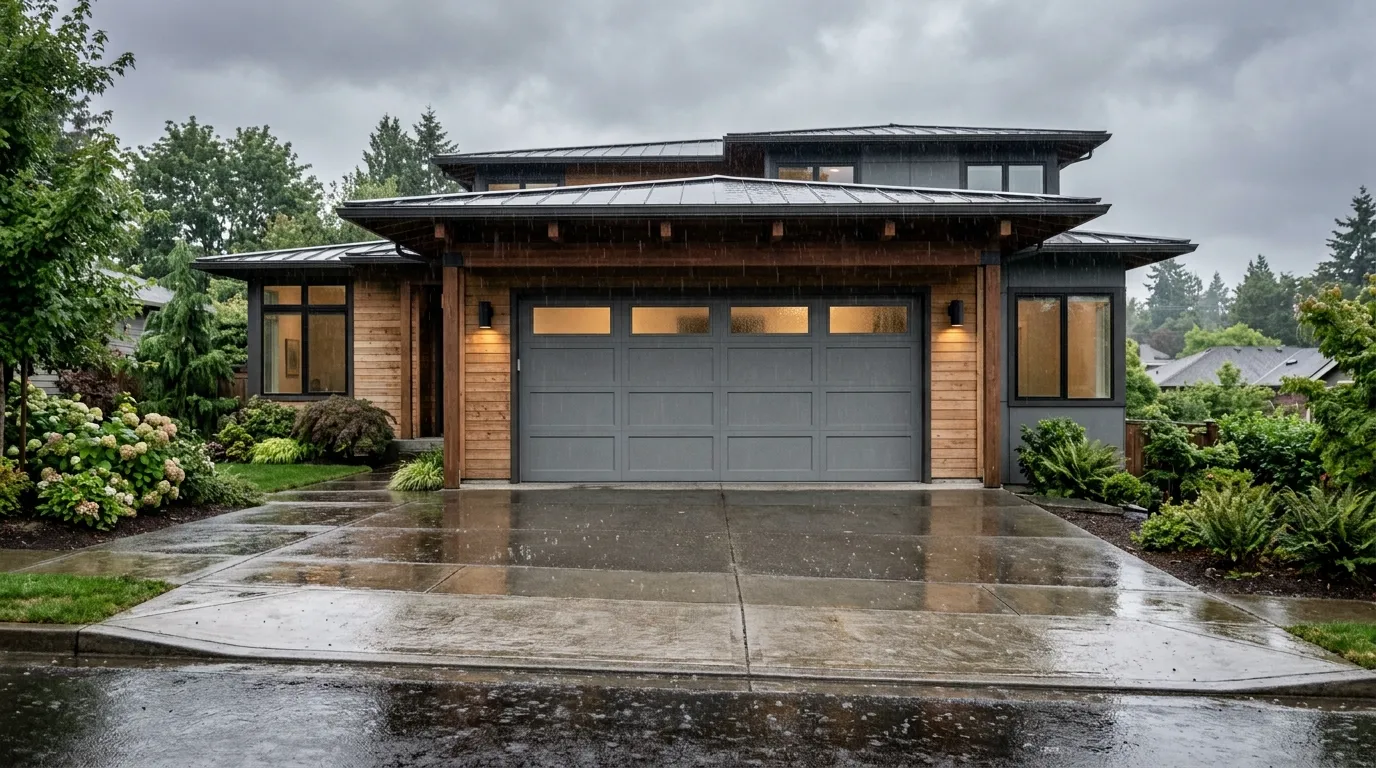
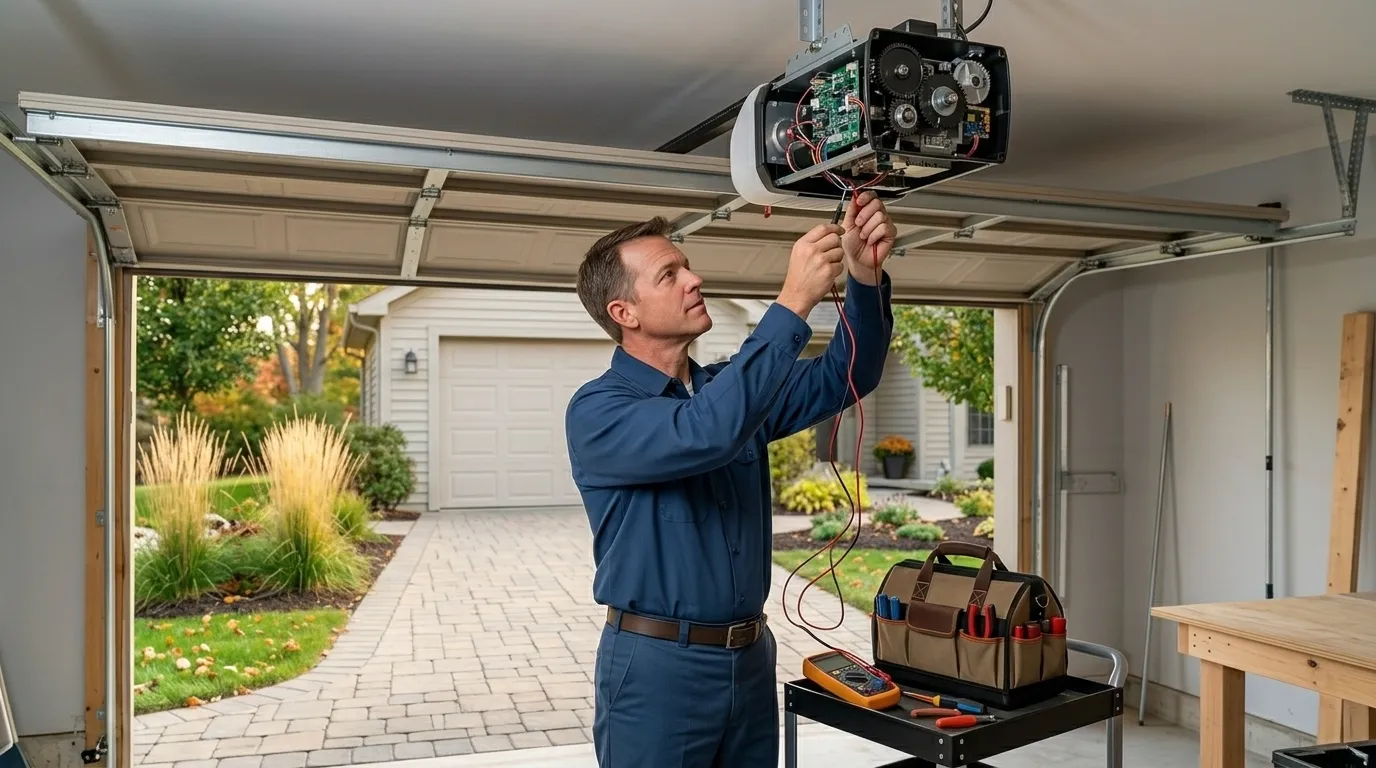
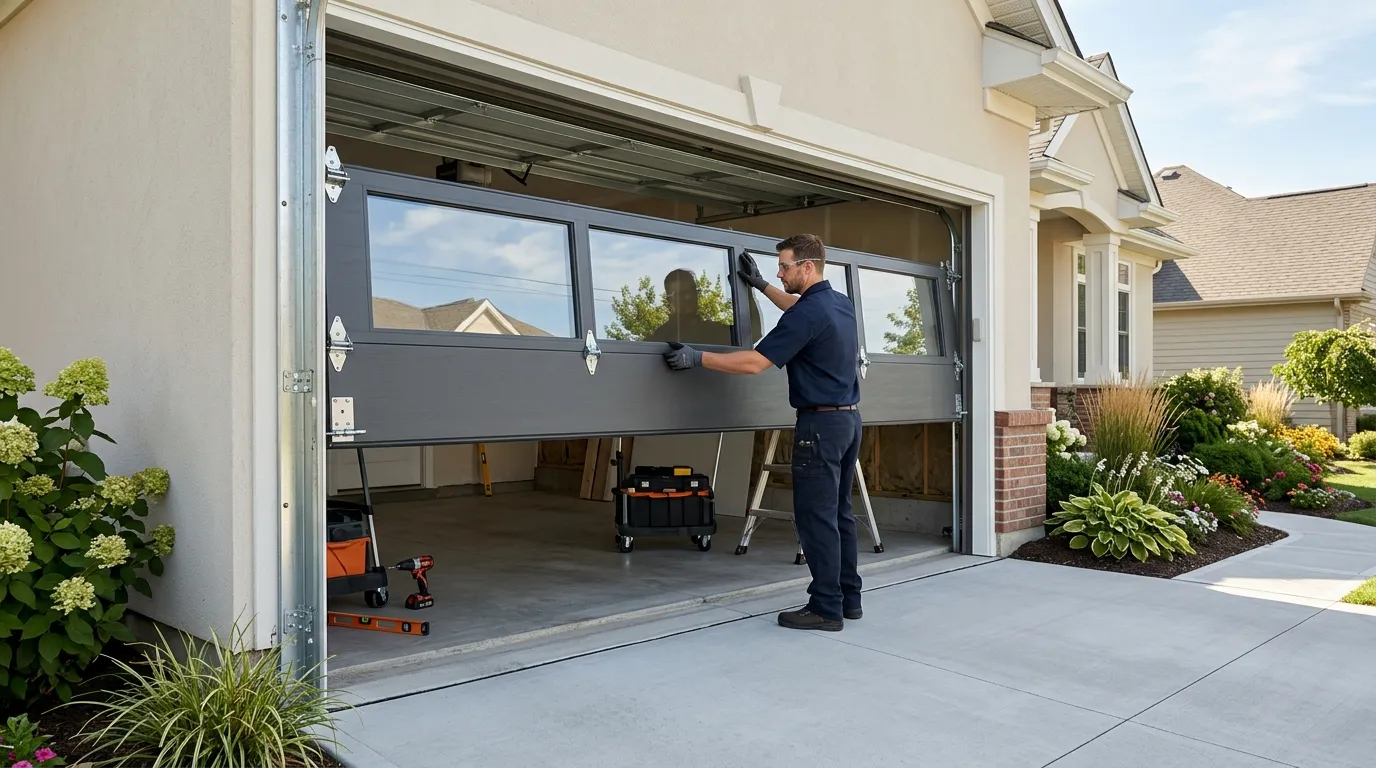
With 749 households, Prairie Grove is a small pocket compared to the 213,471 households across our full coverage area - this isn't a sprawling subdivision grid, it's a tighter cluster of homes built mostly in one construction era. Median household income here runs $138,229, well above the $121,583 median for the rest of the service area, and that shows in the doors we find on service calls: more insulated steel sections, more openers with battery backup, fewer bare single-layer panels. Homes built around 2001 generally follow post-1993 federal opener safety rules as a baseline, meaning auto-reverse and photo-eye sensors came standard rather than retrofitted. That doesn't make these doors trouble-free - it changes what breaks first. Openers in this vintage bracket are old enough now that circuit boards, not belts or chains, tend to be the failure point, and torsion spring cycle life (typically rated for years of daily use) is starting to run out on the earliest houses in the area. The housing stock is more uniform here than in older parts of our territory, which usually means the fix that worked on one street works on the next one too.
How That Shows Up in the Door
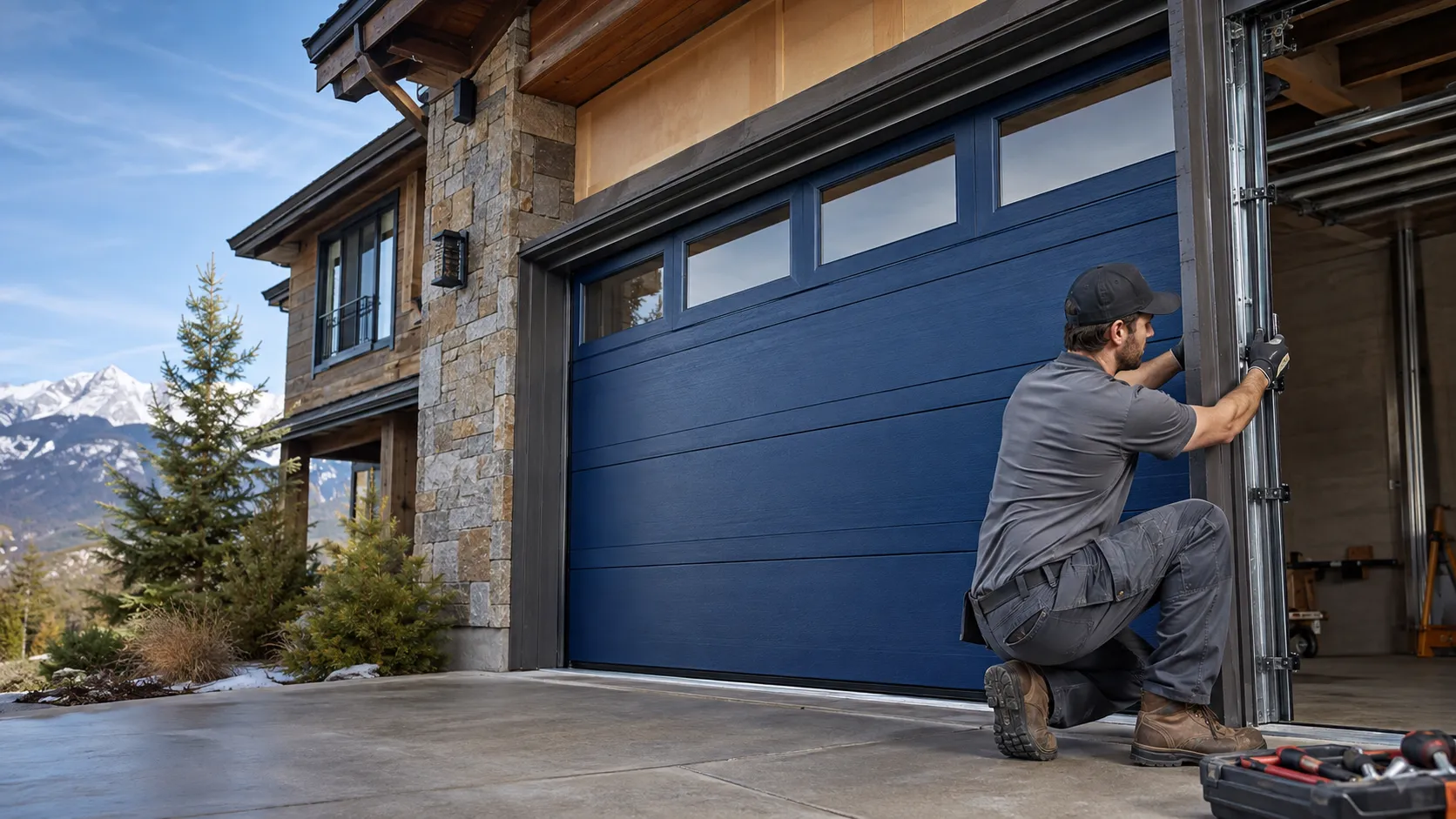
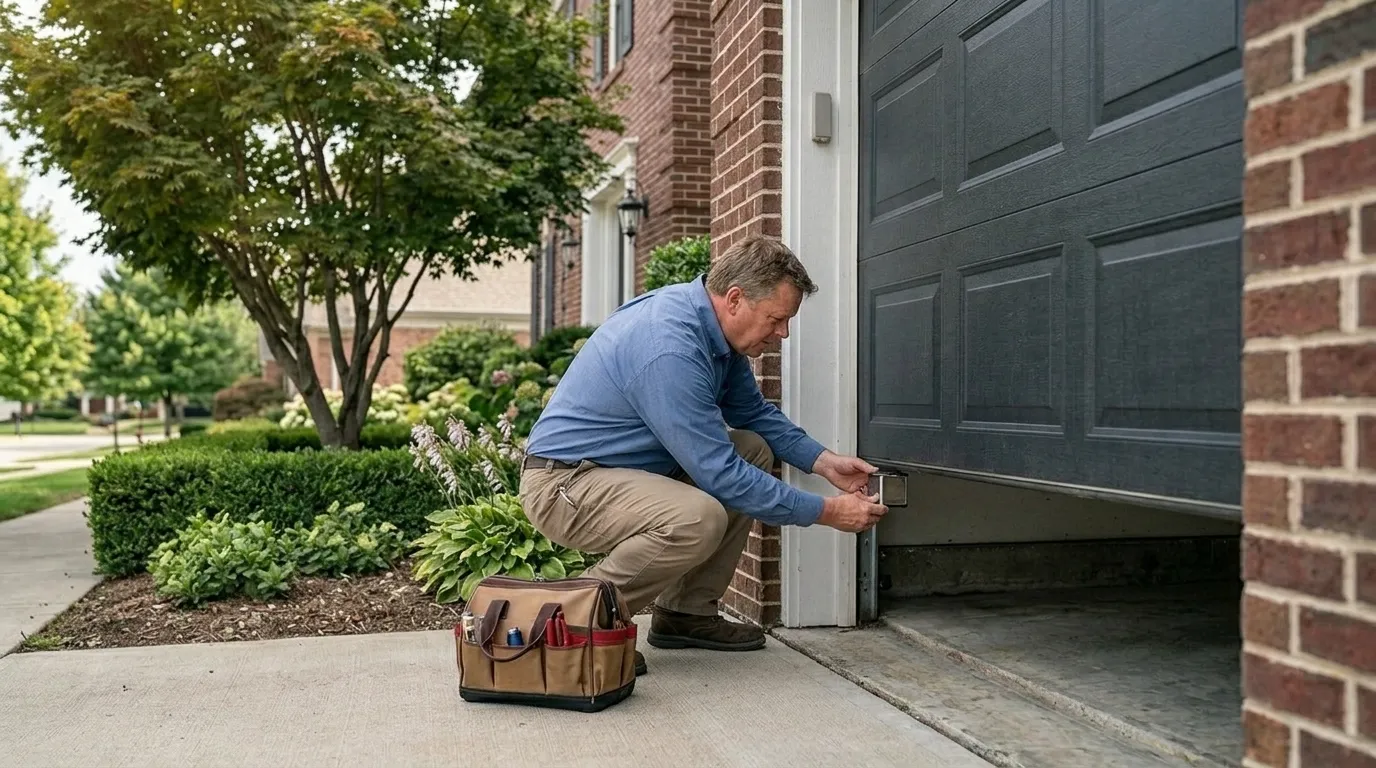
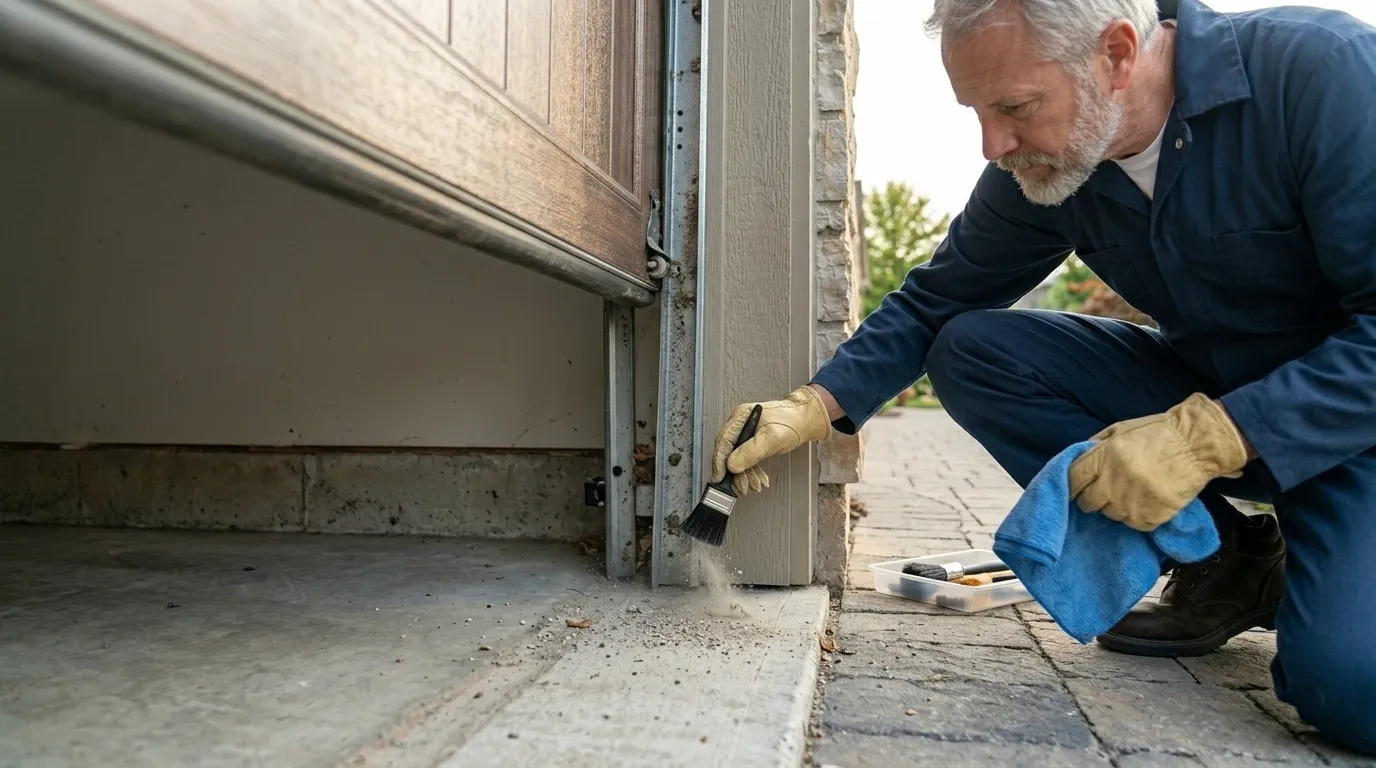
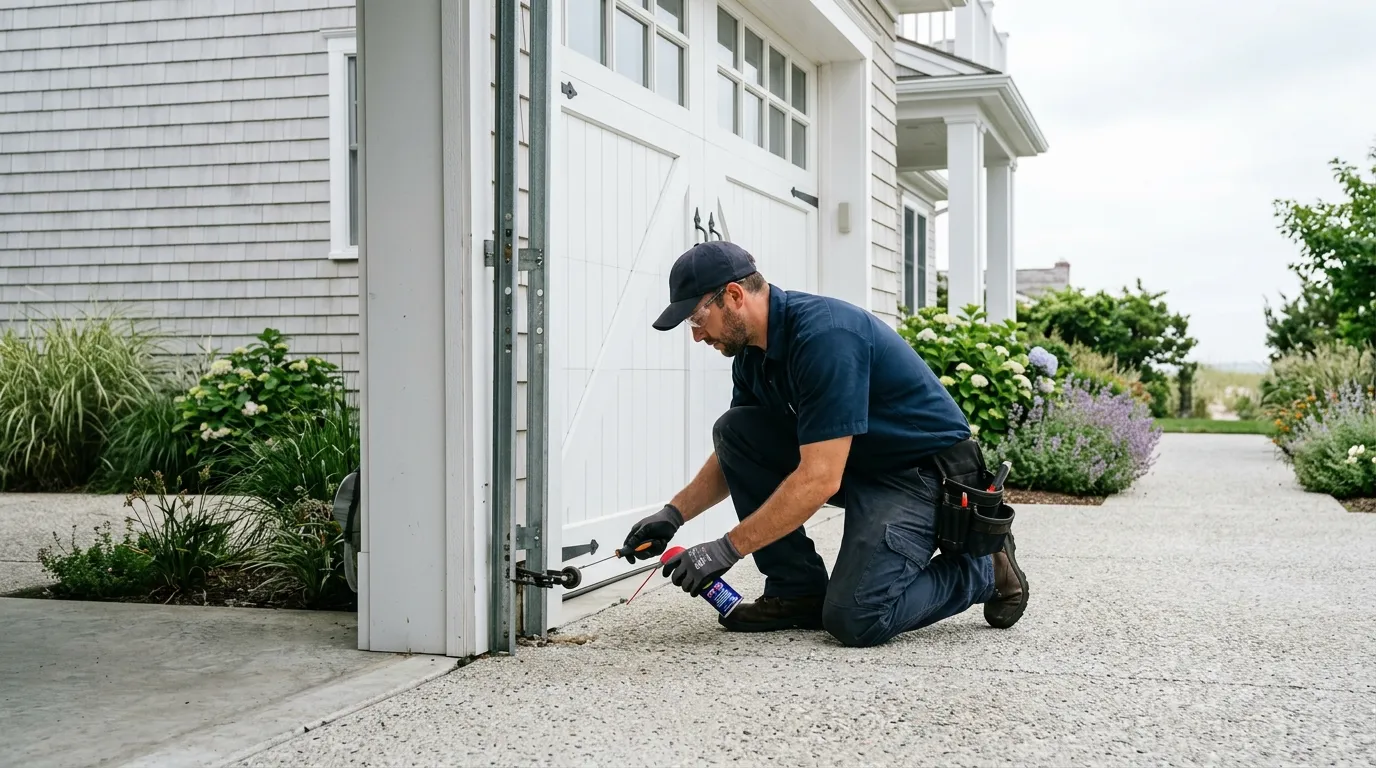
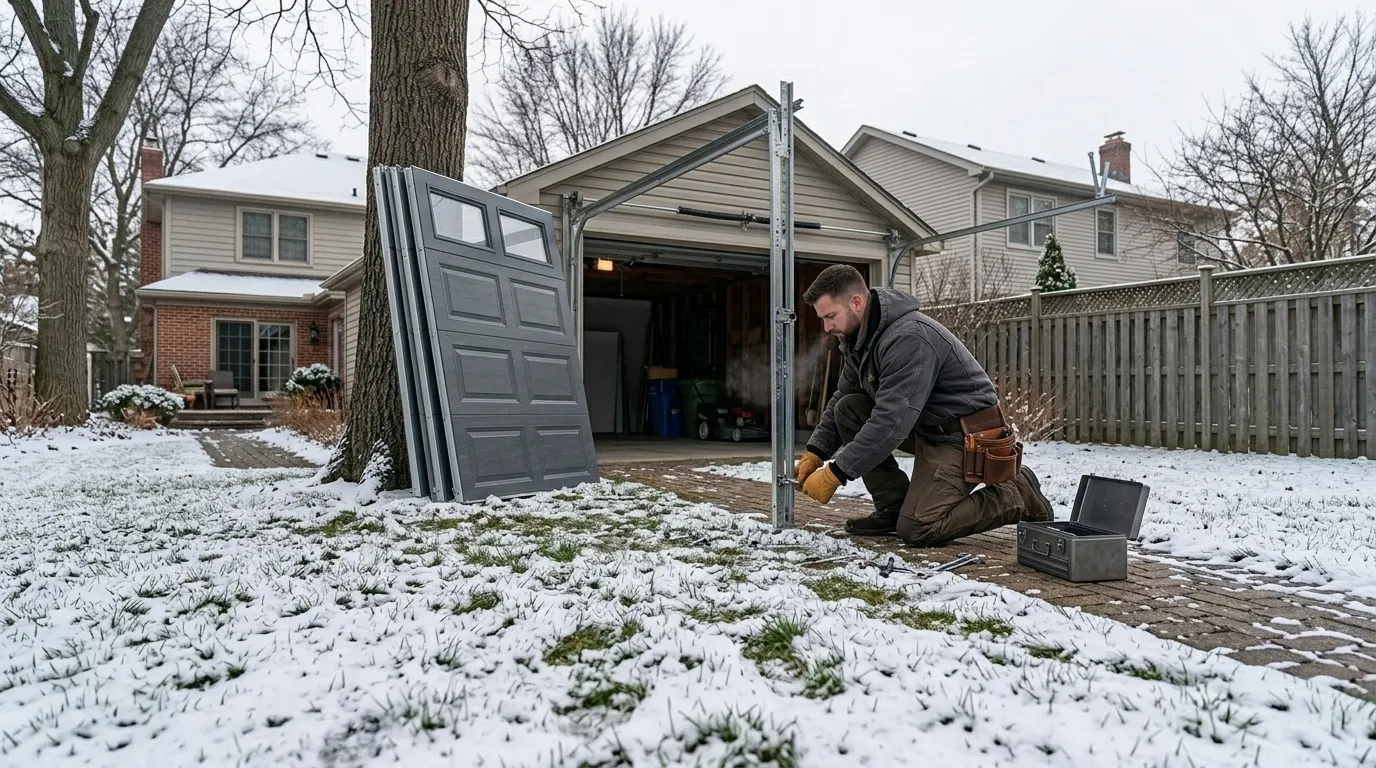
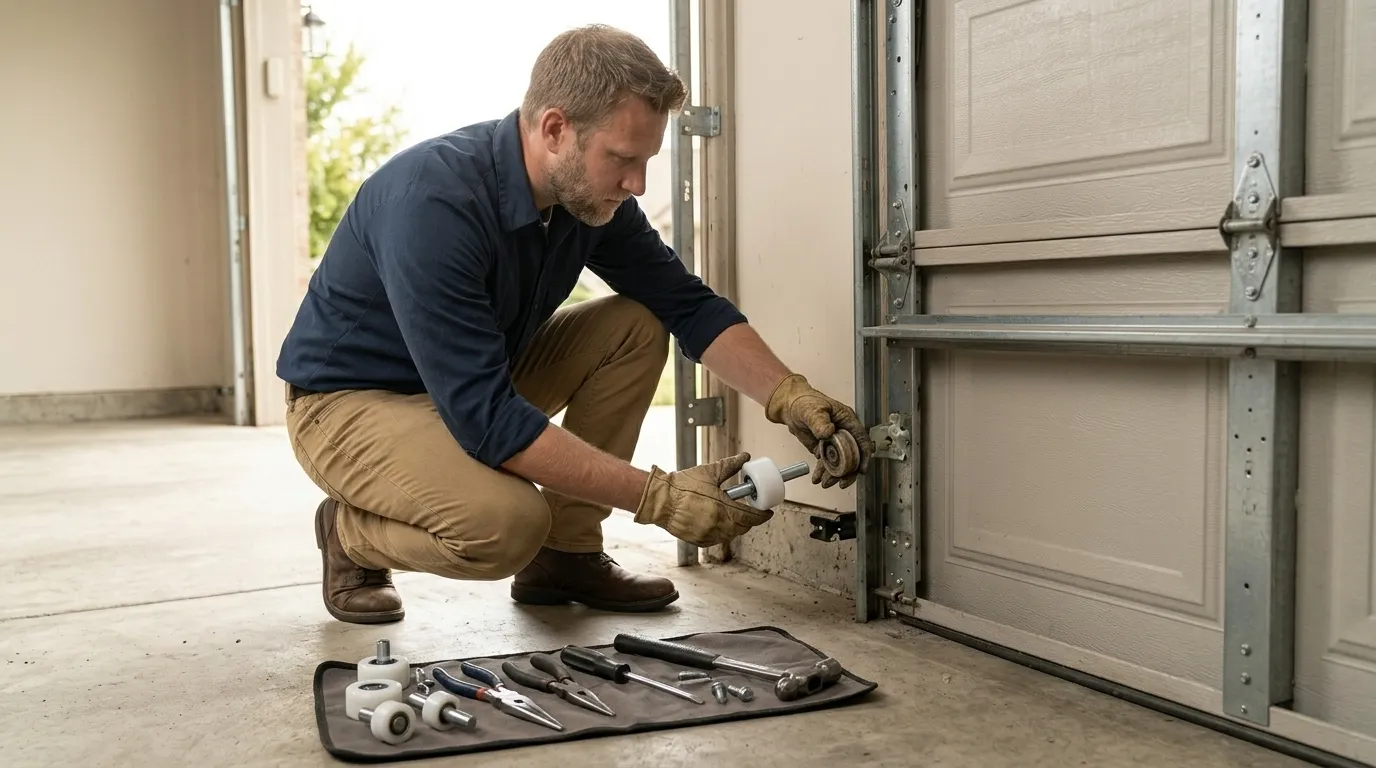
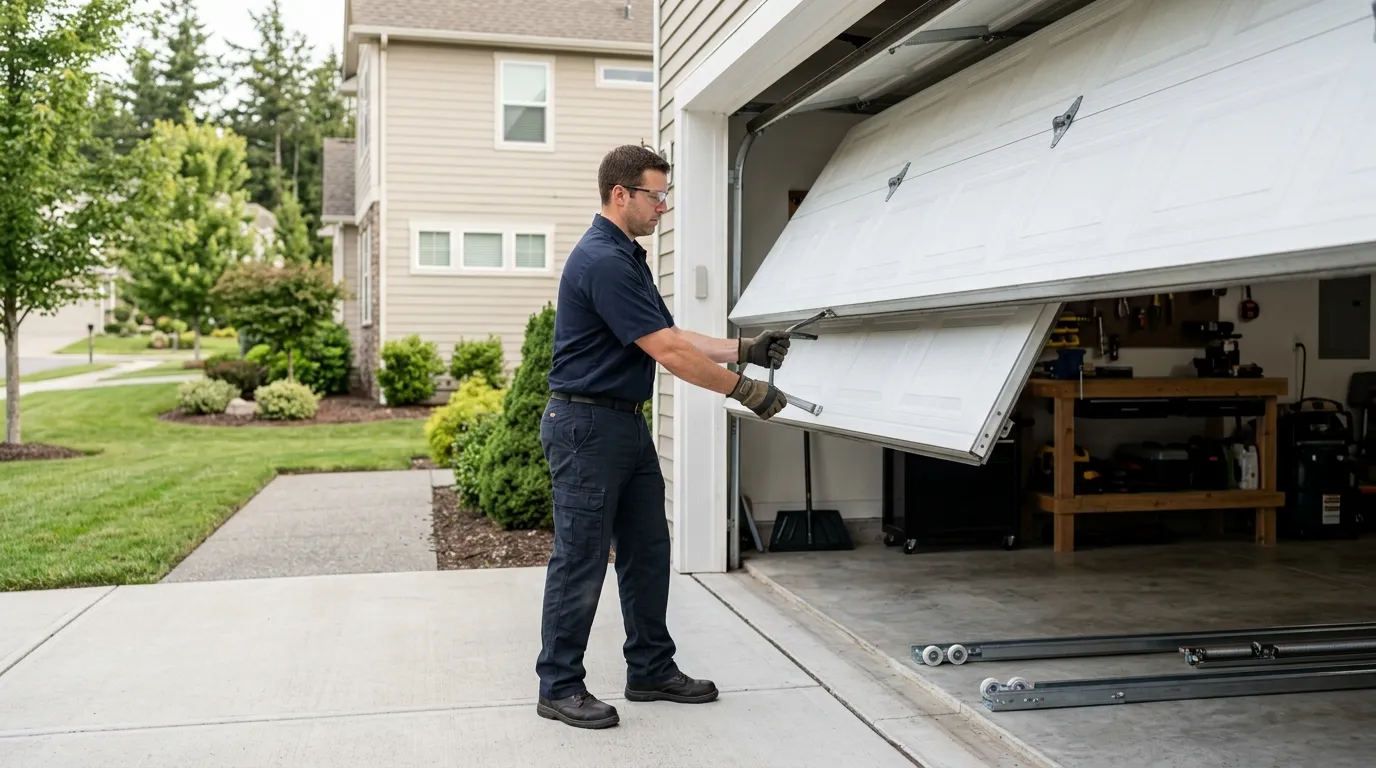
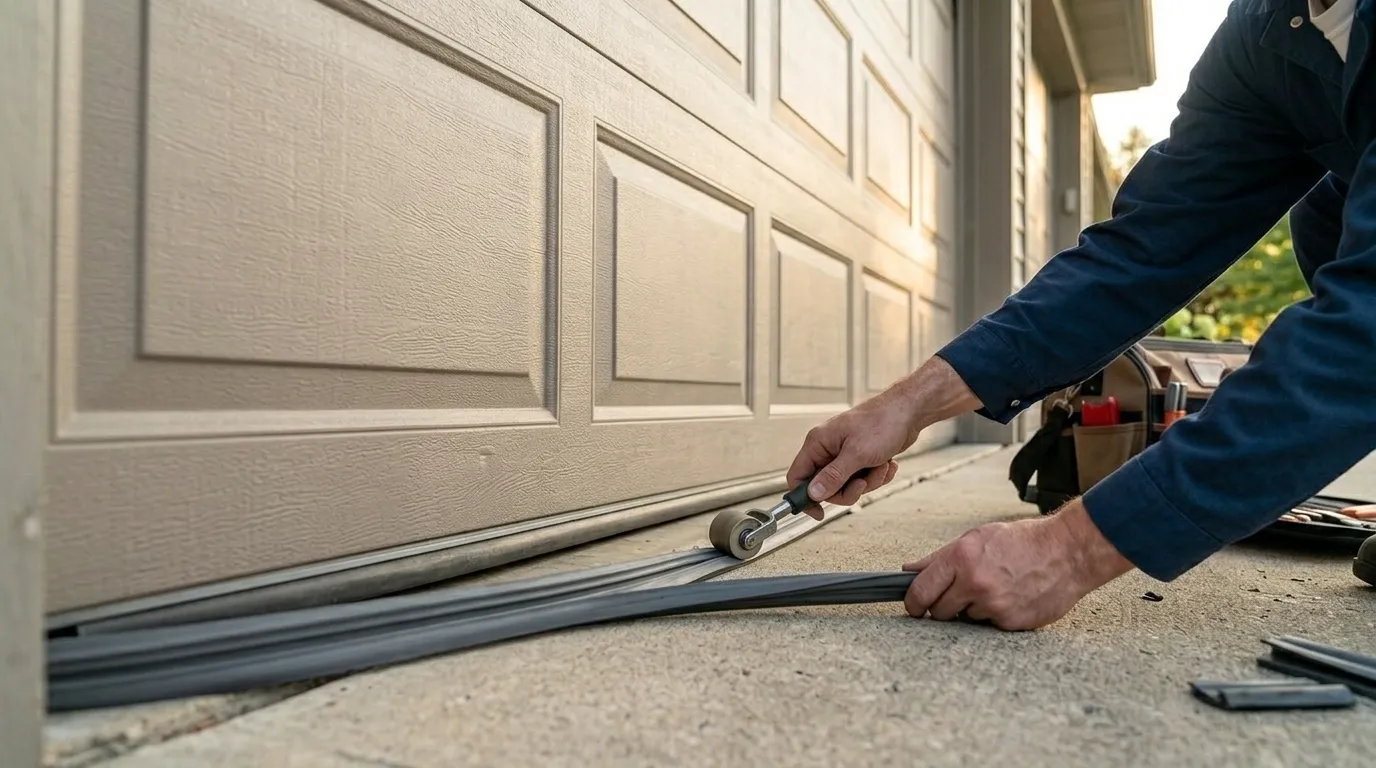
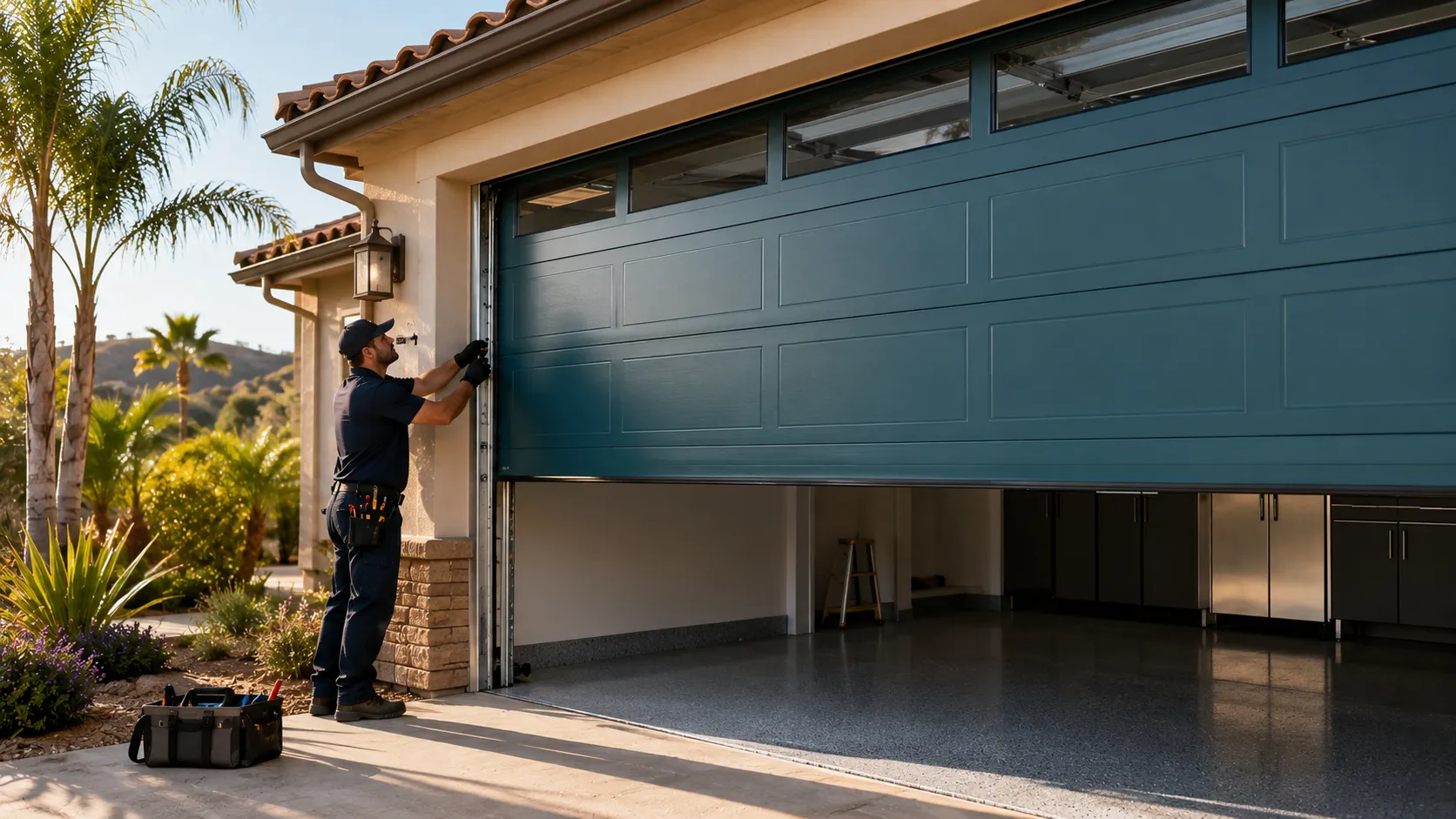
Because Prairie Grove's climate band is COLD and rated severe, temperature swings do real work on hardware here regardless of the house's age. Steel doors from the 2001-era stock expand and contract with winter cold snaps, and that stress lands on the weakest link - usually the bottom seal, the torsion spring, or an opener sensor that's gone out of alignment. We see fewer of the warped, decades-old wood-panel doors that show up on older streets, and more of the vinyl-backed steel sections cracking at the bottom corner where cold and repeated door slams meet. Nylon rollers on these newer doors hold up better in cold than the steel rollers common on older installs, but they're not immune - cold makes plastic brittle, and a roller that's already worn will shatter on a hard freeze morning instead of just squeaking. Torsion springs are the other cold-weather casualty: steel loses a little flex in deep cold, and a spring near the end of its rated cycle count is more likely to snap on a January morning than a July afternoon. None of this is unique to any one house - it's what severe cold does to torsion hardware generally, and it's why late-winter is our busiest stretch for spring calls across the whole territory.